
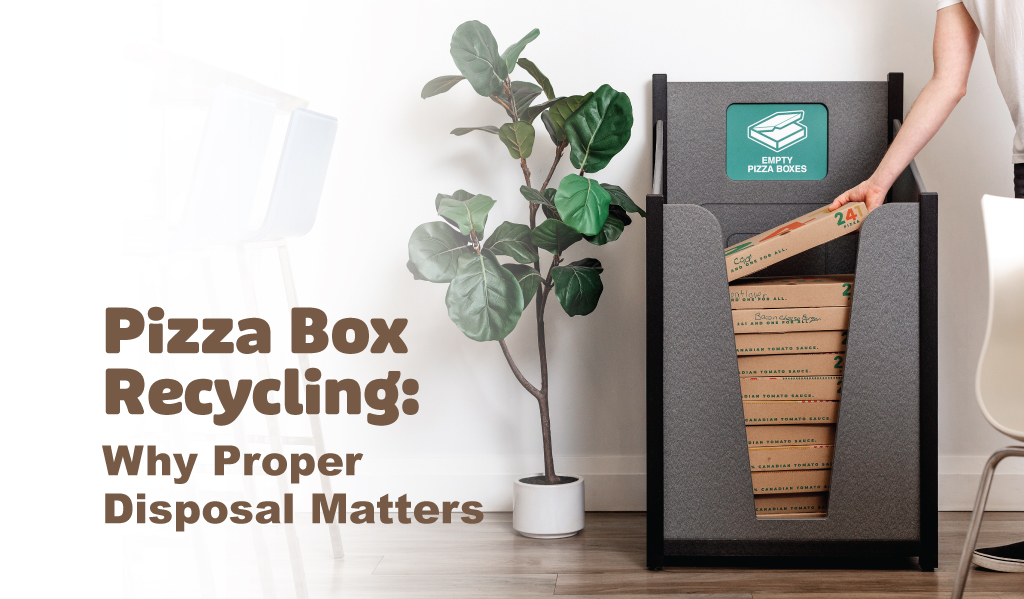
Pizza is a staple in cafeterias, food courts, offices, universities, stadiums, and community spaces. But after the last slice is gone, one often-overlooked waste item remains: the pizza box.
Because pizza boxes are large, frequently greasy, and often discarded alongside food scraps, they can create challenges for waste and recycling programs. Without a designated collection system or clear disposal instructions, recyclable cardboard can end up in the garbage, recycling streams can become contaminated, and waste stations can quickly become messy.
Implementing a proper pizza box recycling system is a simple way to improve waste diversion, reduce unnecessary landfill waste, and make disposal easier for everyone.
Are Pizza Boxes Recyclable?
Yes, many pizza boxes are recyclable, even when they have some grease stains.
Historically, grease contamination has caused confusion about whether pizza boxes belong in the recycling bin. However, research and updated industry guidance have confirmed that typical grease residue does not necessarily prevent corrugated cardboard pizza boxes from being recycled.
The bigger concern is leftover food. Pizza crusts, cheese, sauce, toppings, dipping cups, plastic liners, and other food or packaging waste should be removed before a box is recycled. Excessive food residue can contaminate collected materials and interfere with recycling processes.
Why Proper Pizza Box Collection Matters
1. Keep Recyclable Cardboard Out of the Landfill
Cardboard is a valuable recyclable material that can be processed and used to manufacture new paper-based products and packaging. When pizza boxes are disposed of incorrectly, potentially recyclable cardboard is lost from the recycling stream.
Providing a dedicated collection point encourages users to separate pizza boxes from general waste and makes recycling more convenient in high-traffic areas where pizza is frequently consumed.
2. Reduce Contamination in Recycling Streams
Pizza boxes are often discarded with leftover food still inside. When food scraps, plastic packaging, napkins, and other waste are mixed together, it becomes more difficult to maintain a clean and effective recycling stream.
Proper collection encourages users to empty boxes before disposal and helps keep other recycling containers free of oversized cardboard and food waste.
Clear signage and designated collection bins can reinforce the correct disposal process and reduce confusion about where pizza boxes belong.
3. Improve Waste Station Organization
Pizza boxes are bulky and don’t always fit easily into standard recycling openings. When forced into traditional recycling bins, they can block openings, take up valuable space, or cause bins to overflow.
A dedicated pizza box collector helps accommodate larger cardboard items, keeping surrounding waste stations more organized and making collection and maintenance easier for staff.
4. Make Recycling More Convenient
Recycling programs are more effective when the right disposal option is easy to find and use.
In locations such as food courts, school cafeterias, breakrooms, residence halls, and stadiums, a designated pizza box collector provides a convenient place for users to dispose of their boxes immediately after eating.
When disposal is straightforward, it becomes easier for people to participate in waste diversion programs consistently.
How to Properly Dispose of Pizza Boxes
Establishing a simple, consistent disposal process can help improve pizza box collection and reduce contamination.
Follow these steps:
- Remove leftover food. Discard pizza slices, crusts, toppings, and other food scraps in the appropriate waste or organics stream.
- Remove additional packaging. Take out plastic pizza savers, liners, dipping cups, napkins, and other non-cardboard materials.
- Separate heavily soiled cardboard if necessary. If a box contains excessive food residue or is saturated with grease, follow local recycling guidelines. Some programs may recommend composting the soiled portion or disposing of it as waste.
- Flatten the box when appropriate. Flattening pizza boxes can help maximize collection capacity, provided the collection container and local program allow it.
- Use the designated pizza box collection bin. Keep pizza boxes separate from other recyclables and waste whenever a dedicated collection option is available.
Small changes in disposal habits can make a significant difference in the quality and efficiency of a waste diversion program.
What Is a Pizza Box Recycling Bin?
A pizza box collector is a dedicated waste collection container designed to accommodate empty pizza boxes. Unlike traditional recycling bins, which may have smaller openings designed for bottles, cans, or other recyclables, pizza box collectors are purpose-built to make disposing of bulky cardboard more convenient.
These containers are particularly useful in environments where pizza is frequently served or consumed, including:
- Schools, colleges, and university campuses
- Corporate offices and employee breakrooms
- Food courts and cafeterias
- Stadiums and sports facilities
- Hotels and hospitality spaces
- Community centers and public gathering spaces
Dedicated pizza box collection helps create a more organized disposal area, encourages proper separation of waste, and supports cardboard recycling efforts.
Simplify Pizza Box Recycling with the Busch Systems Pizza Box Collector
Managing oversized cardboard doesn’t have to complicate your recycling program. The Busch Systems Pizza Box Collector™, part of the Vision™ Series, provides a dedicated solution for collecting empty pizza boxes in busy shared spaces.
Designed specifically for pizza box collection, it helps keep bulky cardboard out of standard recycling and waste containers while creating a clearly defined collection point for users.
With a 45-gallon capacity, the Pizza Box Collector offers a practical option for high-traffic environments where pizza boxes are frequently discarded. Its dedicated design makes it easier to establish a consistent collection process and maintain cleaner, more organized waste stations.
Whether you’re managing a school cafeteria, office, food court, or sports facility, incorporating a pizza box collector can help simplify cardboard collection and support your organization’s waste diversion goals.
Make Pizza Box Recycling Part of Your Waste Diversion Strategy
Proper pizza box disposal is a small but meaningful opportunity to improve waste management. By providing dedicated collection containers, educating users about food removal, and following local recycling guidelines, organizations can recover more cardboard, reduce contamination, and create more efficient waste collection systems.
A well-designed waste station makes the right choice easier. With dedicated pizza box collection, businesses and facilities can turn an everyday waste challenge into an opportunity for better recycling habits.