Recycling programs are only as effective as the systems that support them. While organizations often focus on what materials can be recycled, an equally important consideration is how those materials are collected in the first place.
From incorrectly sorted waste to food residue and leftover beverages, contamination can undermine recycling efforts before materials even reach a processing facility. For businesses, campuses, airports, sports venues, and other high-traffic environments, preventing contamination starts with making proper disposal simple, accessible, and intuitive.
By investing in thoughtful waste collection infrastructure, organizations can help improve recycling quality, support better waste diversion, and create more effective waste management programs. One important part of this approach is providing dedicated solutions for materials that don’t belong in recycling bins, including leftover liquids.
Understanding the Impact of Recycling Contamination
Recycling contamination occurs when non-recyclable materials, food residue, liquids, or other unwanted items enter a recycling stream. Even when people intend to recycle correctly, unclear signage, inconvenient disposal options, and a lack of dedicated collection points can lead to mistakes.
Common sources of contamination include:
- Leftover liquids: Beverages poured into recycling bins or containers placed in bins before being emptied.
- Food residue: Leftover food and grease that can soil recyclable materials.
- Incorrectly sorted materials: Items placed in the wrong stream because disposal instructions are unclear or confusing.
- Non-recyclable waste: General garbage, disposable accessories, and other materials mixed with accepted recyclables.
When contamination occurs, it can create additional sorting requirements, increase handling challenges, and reduce the quality of collected materials. Depending on the material and the recycling facility’s requirements, contaminated loads may require additional processing or, in some cases, be rejected.
This can mean that materials intended for recycling do not ultimately get recycled, undermining an organization’s waste diversion goals.
The takeaway is simple: collecting recyclable materials is only one part of an effective recycling program. Keeping those materials clean and properly sorted is just as important.
Why Collection Infrastructure Matters for Better Waste Diversion
The design, placement, labelling, and functionality of collection stations all influence how people dispose of waste.
When recycling stations are difficult to understand or lack the appropriate disposal options, users are more likely to make incorrect decisions. A beverage container with liquid still inside, for example, presents a simple but common challenge: without a convenient place to empty it, someone may place it directly into the recycling bin or dispose of it improperly.
Well-designed collection infrastructure addresses these challenges at the point of disposal.
A comprehensive collection strategy should consider:
1. Make the right choice convenient. Place collection stations where waste is generated and where people naturally dispose of their items. Convenience can help reduce incorrect sorting and encourage participation.
2. Provide a place for every waste stream. Recycling, garbage, organics, and liquid waste each require appropriate collection options. When the right receptacle is available, users have a clearer path to disposing of materials correctly.
4. Design for the people maintaining the program. Accessible, durable, and easy-to-service collection equipment can help facility teams maintain cleaner stations and manage waste more efficiently.
5. Evaluate performance over time. Waste audits, contamination checks, and feedback from cleaning and maintenance teams can reveal where collection systems need improvement.
When these elements work together, organizations can create a collection system that supports better sorting behaviors and stronger diversion outcomes.
The Overlooked Role of Liquid Waste in Recycling Contamination
Leftover beverages are an easy source of contamination to overlook. A coffee cup with a remaining drink, a half-full water bottle, or a disposable beverage container filled with soda can introduce unwanted liquids into the recycling stream.
In high-traffic environments, these small instances can add up. Liquids can leak into collection bags, leave sticky residue in bins, contribute to unpleasant odors, and make routine collection and cleaning more challenging.
They can also create unnecessary weight in collection bags and complicate handling for maintenance teams.
Rather than relying solely on reminders to empty containers, facilities can make the desired behavior easier by giving people the tools and space to do so.
Supporting Cleaner Collection with the Busch Systems Liquid Collection Series
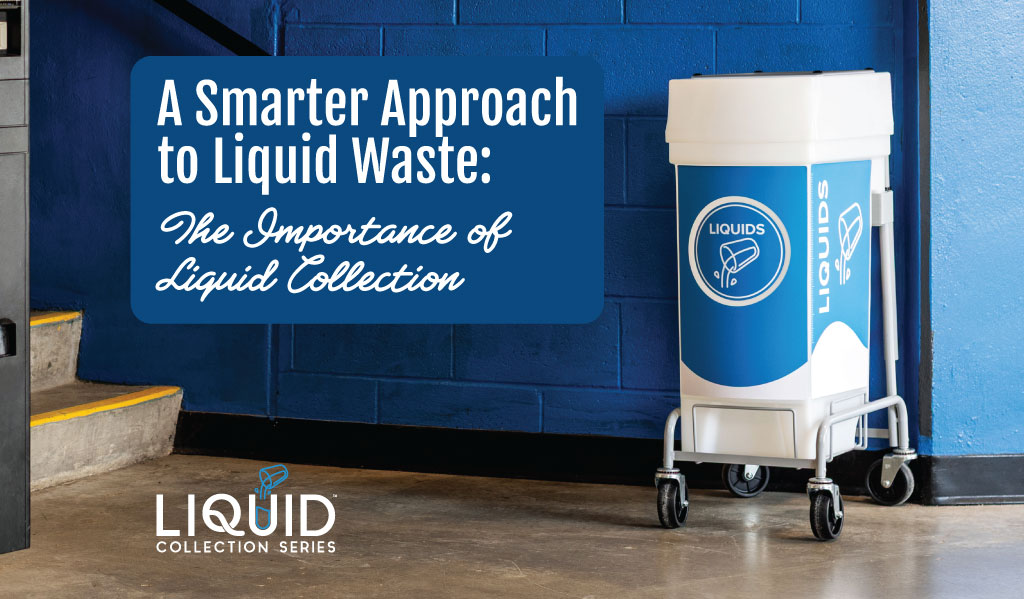
To help facilities address this common challenge, Busch Systems offers the Liquid Collection Series, a dedicated solution for collecting unwanted liquids before beverage containers enter the recycling stream.
Designed for high-traffic environments, the unit combines a durable liquid reservoir with a mobile steel dolly, giving facilities a practical way to incorporate liquid collection into their existing waste management infrastructure.
With a 22.5-gallon capacity, the liquid collection series provides a designated collection point for leftover beverages, helping reduce the likelihood of liquids being poured into recycling bins or carried into the recycling stream inside containers.
Its design also supports day-to-day facility operations:
- Dedicated liquid collection: Gives users a clear place to empty unwanted beverages before recycling their containers.
- Controlled draining: An integrated valve and hose allow staff to empty the reservoir with greater control, helping minimize spills and reduce the need for heavy lifting.
- Mobile construction: Four heavy-duty casters, including two locking casters, make the unit easier to move and secure where needed.
- Debris protection: A top grate helps prevent medium-to-large debris, such as straws and tea bags, from entering the reservoir.
- Clear identification: Optional graphic kits help communicate the unit’s purpose and can be customized to complement facility branding and existing waste station designs.
Together, these features help make liquid disposal a more manageable part of the recycling process. By separating unwanted liquids before containers are collected for recycling, facilities can help maintain cleaner collection areas and support improved material quality.
The liquid collector is not a replacement for clear recycling instructions or a comprehensive waste management strategy. Instead, it addresses one specific source of contamination within a broader collection system designed to make proper disposal easier.
Where Dedicated Liquid Collection Makes a Difference
Liquid collection can be particularly valuable in environments where beverages are consumed frequently and large volumes of containers are collected throughout the day.
Airports and transportation hubs
Travelers regularly move through terminals, lounges, and food courts with beverage containers in hand. A dedicated liquid collection station gives them a convenient place to empty those containers before recycling, supporting cleaner collection in busy public areas.
Sports and entertainment venues
Games, concerts, and large events can generate substantial volumes of beverage containers over a short period. Integrating liquid collection into waste stations can help facility teams manage leftover beverages while maintaining cleaner collection points.
College and university campuses
Dining halls, cafeterias, student centers, and common areas generate a steady flow of recyclable beverage containers. Accessible liquid collection can complement existing recycling stations and help reinforce proper sorting habits among students, staff, and visitors.
Conference centers and food courts
In spaces where drinks are served throughout the day, dedicated liquid collection helps address a recurring disposal challenge. Integrating it into the overall collection layout can make waste sorting more intuitive for visitors and employees.
In each setting, the goal is the same: make it easier for people to dispose of liquids appropriately before recyclable materials enter the collection stream.
Building a More Effective Waste Diversion Strategy
Organizations can strengthen their waste diversion programs by combining dedicated collection solutions with clear signage, strategic placement, staff education, and regular performance monitoring.
Start by evaluating existing collection areas. Are recycling bins positioned where people naturally dispose of their waste? Are instructions easy to understand? Is there a convenient place to empty beverage containers? Are maintenance teams frequently dealing with leaking bags, sticky bins, or incorrectly sorted materials?
These questions can help identify opportunities to improve collection before materials leave the facility.
From there, organizations can introduce targeted changes, such as adding a dedicated liquid collection unit, updating graphics, or adjusting the layout of existing waste stations. Monitoring contamination levels and collecting feedback from facility teams can help determine whether those changes are making a difference.
Importantly, better collection systems should be supported by consistent communication. Employees, visitors, students, and guests need to understand not only which materials can be recycled, but also how to prepare those materials for collection.
When infrastructure and education work together, organizations are better positioned to improve recycling quality and advance their waste diversion objectives.
Better Diversion Begins Before the Bin
A successful recycling program depends on more than collecting recyclable materials. It requires a system that helps keep those materials clean, properly sorted, and ready for recovery.
By addressing overlooked sources of contamination, including leftover liquids, organizations can improve the collection process and reduce avoidable challenges for facility and maintenance teams.
The Busch Systems Liquid Collection Series offers a practical way to support that effort. With dedicated liquid collection, controlled draining, and a mobile design, it helps facilities integrate liquid disposal into a more comprehensive waste management strategy.
Because when it comes to waste diversion, better results start with better collection.