Healthcare facilities are among the most complex environments when it comes to waste management. Hospitals, outpatient clinics, research laboratories, administrative offices and patient care facilities all generate different types of waste, each with its own handling, collection and disposal requirements.
For medical campuses operating across multiple buildings, maintaining a consistent recycling program can be particularly challenging. A recycling station in a hospital cafeteria may look completely different from one in an administrative building, while signage in a patient waiting area may use different terminology or graphics than signage elsewhere on campus.
These inconsistencies can create confusion for employees, patients, visitors and contractors who move between buildings throughout the day. Even when the appropriate collection infrastructure is available, unclear or inconsistent signage can make it difficult to determine where materials belong. Healthcare waste management requires particular attention to proper segregation, as incorrectly handled waste can expose patients, healthcare workers and waste handlers to preventable health and safety risks.
Standardizing recycling signage across a medical campus helps establish a recognizable system that supports better sorting decisions, reduces contamination and makes waste diversion programs easier to manage.
However, standardization in healthcare requires more than choosing a color scheme and printing matching labels. Facilities must consider clinical waste requirements, local recycling guidelines, building-specific collection needs and the people interacting with each waste station.
Here are several considerations for developing a consistent recycling signage strategy across multi-building medical campuses.
1. Establish Consistent Waste Stream Definitions Across Buildings
The first step toward standardizing recycling signage is establishing a common understanding of the waste streams collected across the organization.
Healthcare campuses often operate with different waste management practices depending on the building’s purpose. A laboratory may generate specialized waste, while an administrative office primarily produces paper, packaging and everyday recyclables. Cafeterias and public spaces may also require separate organics collection.
Without clearly defined waste streams, individual departments may develop their own labels, terminology and disposal instructions.
Facilities teams should begin by identifying the materials collected across the campus and establishing consistent names for each applicable waste stream.
For example, commonly used categories may include:
- Mixed Recycling: Accepted recyclable containers, packaging and other approved materials.
- Paper Recycling: Office paper, newspapers and other accepted paper products, where collected separately.
- Organics: Food scraps and other compostable materials accepted by the local collection program.
- Landfill: Materials that cannot be accepted through the facility’s recycling or organics programs.
Clinical and regulated waste categories must be addressed separately through the organization’s approved healthcare waste management procedures.
For medical campuses, this means establishing a standardized waste management framework that clearly distinguishes general recycling from clinical, infectious, sharps, pharmaceutical and other specialized waste streams.
The objective is to create consistency without treating every type of waste as interchangeable.
2. Develop a Standardized Color-Coding System
Color is one of the quickest ways people recognize and distinguish waste streams. When employees and visitors encounter the same colors throughout a campus, they can begin to recognize collection categories without having to interpret an entirely new system in every building.
However, healthcare facilities should avoid assuming that one universal color scheme applies to every waste category.
Color-coding requirements for regulated medical waste can vary by jurisdiction and must follow applicable legislation, healthcare standards and organizational procedures.
For general recycling and waste collection, facilities teams should establish an organization-wide color standard that aligns with local recycling expectations.
A standard may include:
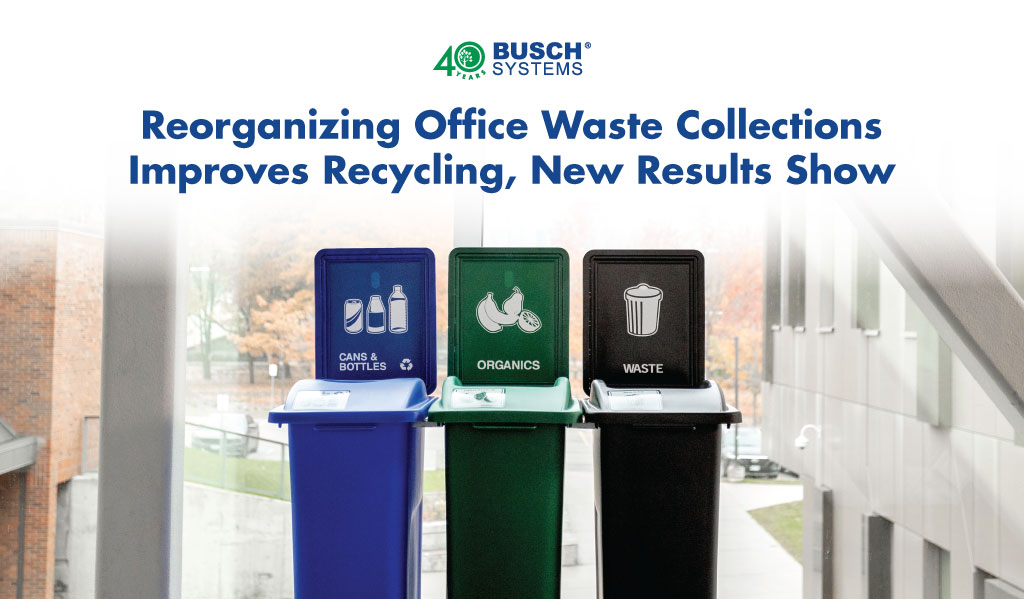
- Blue for mixed recycling.
- Green for organics.
- Grey or black for landfill.
These colors are examples for general waste diversion, not a replacement for regulated healthcare waste color-coding requirements.
Once selected, the same color assignments should be used across applicable buildings, floors and departments.
For example, a blue recycling container in the main hospital should communicate the same general recycling stream as a blue container in an outpatient clinic or administrative building.
Consistency also means avoiding unnecessary variations between departments. If one building uses blue for recycling, another should not introduce an unrelated color for the same collection stream.
The goal is to establish a recognizable visual language that makes waste sorting more intuitive while maintaining the separate identification systems required for clinical waste.
3. Use Clear, Consistent Graphics and Accepted-Material Images
Color alone cannot tell someone exactly what belongs in a recycling container.
Clear graphics, recognizable icons and images of accepted materials provide additional guidance, particularly in environments where people may be unfamiliar with the facility’s waste management procedures.
This is especially important in healthcare settings, where employees, patients, visitors and contractors may come from different backgrounds and speak different languages.
Signage should use simple language and visual examples to communicate what can and cannot be placed in each container.
For example, a mixed recycling sign might display images of:
- Plastic beverage bottles.
- Aluminum cans.
- Accepted plastic containers.
- Paper and cardboard, if included in the same collection stream.
Equally important is showing what does not belong in the stream.
For example, a recycling sign could include a short reminder that food waste, contaminated materials and other non-accepted items should not be placed in the container.
Healthcare facilities should also consider using images that reflect the materials generated in specific environments.
A sign in a cafeteria may benefit from examples of beverage containers and food packaging, while signage in a clinical area should reflect the actual recyclable materials generated there, where applicable.
This reinforces an important principle: standardized signage should be familiar across the campus, but the examples should remain relevant to the people using each space.
4. Maintain Consistent Sign Placement and Layout
Even when buildings use the same colors and terminology, inconsistent sign placement can make waste stations harder to navigate.
A person should not have to search for disposal instructions every time they encounter a different recycling station.
Establishing a standard layout helps create a predictable experience across the campus.
Consider developing guidelines for:
- Sign positioning: Place labels in consistent, highly visible locations on containers or immediately above waste stations.
- Typography: Use the same fonts, text sizes and formatting across applicable signage.
- Information hierarchy: Display the waste stream name prominently, followed by recognizable imagery and accepted-material instructions.
- Sign dimensions: Establish standard sizing for common container types and collection stations.
- Accessibility: Ensure signage is legible, appropriately positioned and understandable for people with different visual and communication needs.
The Rockefeller Foundation’s Zero Waste Design Guidelines emphasize the importance of clear visual cues, standardized signage and consistent communication throughout buildings.
In multi-building medical campuses, these principles can be extended across the entire property.
When someone encounters a recycling station in a different building, the layout should feel familiar even if the number of collection streams or accepted materials varies.
5. Account for Different Building Functions Without Losing Consistency
One of the biggest challenges of standardizing recycling signage across a medical campus is that no two buildings necessarily generate the same waste.
A hospital, research facility, medical office and outpatient clinic all have different operational requirements.
Attempting to install identical collection stations and signage everywhere may not be practical or effective.
Instead, facilities teams should standardize the visual framework while adapting the information to each building’s specific needs.
For example:
Patient Care Areas
Signage should clearly distinguish general recycling from clinical and regulated waste. Instructions must align with approved infection prevention and waste handling procedures.
Administrative Offices
Messaging can focus on common materials such as paper, cardboard, beverage containers and other accepted recyclables.
Cafeterias and Food Services
Signage may need to distinguish between food scraps, recyclable packaging, beverage containers and landfill materials.
Research Laboratories
Collection instructions should reflect the specific materials generated and the laboratory’s established safety and waste management procedures. General recycling signage should never encourage disposal of hazardous or contaminated materials in standard recycling streams.
Public Areas and Waiting Rooms
Instructions should be straightforward and easy to understand for visitors who may be unfamiliar with the facility.
This approach allows facilities teams to maintain a consistent campus-wide signage identity without overlooking the operational differences between buildings.
6. Coordinate Signage With Waste Collection Infrastructure
Effective signage should work alongside the physical waste collection system.
If recycling signage is standardized but containers are inconsistently placed, difficult to identify or separated from landfill options, people may still struggle to make the correct disposal decision.
Whenever possible, general recycling and landfill containers should be positioned together to make sorting easier at the point of disposal.
Facilities teams should also consider establishing consistent guidelines for:
- Number of collection streams at common waste stations.
- Container colors and labelling.
- Opening shapes and sizes.
- Placement of recycling and landfill containers.
- Signage and label positioning.
- Container capacity based on expected waste volumes.
The Spectrum®, Aura™, and Aristata® Series from Busch Systems offer different design approaches that can support consistent waste collection infrastructure across a medical campus.
The Spectrum Series provides modular configurations that can be adapted as collection requirements change. The Aura Series offers durable construction and customizable signage options, while the Aristata Series provides multi-stream configurations suited to professional indoor environments.
These options demonstrate how facilities can maintain a recognizable approach to waste collection while selecting container styles and configurations that complement individual spaces.
Ultimately, the infrastructure should reinforce the same sorting instructions communicated through the signage.
7. Create a Campus-Wide Signage Standard and Implementation Guide
Once the visual and operational standards have been established, facilities teams should document them in a centralized signage guide.
Without a formal reference, individual departments may gradually introduce their own labels, colors or messaging, undoing the consistency the organization is trying to establish.
A signage guide provides a single source of truth for facilities managers, environmental services (EVS) teams, custodial staff, contractors and department representatives.
Consider including the following:
Visual Standards
- Approved color palette for general recycling and waste streams.
- Standard icons and graphics.
- Approved fonts and typography.
- Sign dimensions and layouts.
- Guidelines for multilingual signage.
Messaging Standards
- Approved waste stream names.
- Accepted and prohibited material lists.
- Standard disposal instructions.
- Building-specific messaging requirements.
- Procedures for clinical and regulated waste signage.
Placement Standards
- Recommended sign locations.
- Container label positioning.
- Sign height and visibility.
- Guidelines for centralized waste stations.
Implementation Standards
- Approved signage templates.
- Procedures for replacing damaged or outdated signs.
- Guidelines for new building construction and renovations.
- Responsibilities for reviewing and updating signage.
This documentation becomes particularly valuable when a campus expands, renovates an existing building or introduces new waste collection streams.
New facilities should be incorporated into the same signage framework from the beginning rather than developing an entirely separate approach.
8. Train Staff and Communicate Changes Across the Campus
Even the most carefully designed signage system requires ongoing communication.
Employees may be familiar with the waste sorting procedures in their primary workplace but unfamiliar with collection requirements in another building.
This can be particularly relevant for healthcare professionals who rotate between departments, temporary staff, contractors and employees who work across multiple locations.
Facilities teams should communicate changes before introducing new signage or collection procedures.
Effective communication strategies may include:
- Staff orientation and refresher training.
- Department-specific waste sorting guides.
- Internal newsletters and email announcements.
- Posters in staff rooms and common areas.
- Digital screens and facility communication platforms.
- Quick-reference guides for environmental services teams.
Training should also explain why certain materials must be separated and how incorrect disposal can affect recycling quality, waste management costs and healthcare safety.
Consistent communication helps ensure that the signage system is understood and applied throughout the organization.
9. Audit Signage and Measure Program Performance
Standardization should be treated as an ongoing process rather than a one-time signage replacement project.
As healthcare operations change, new departments open, collection contracts evolve and accepted materials may differ. Regular reviews help ensure signage remains accurate and consistent.
Consider reviewing:
- Whether all applicable buildings follow the approved signage standards.
- Whether container labels are visible, legible and in good condition.
- Whether accepted-material lists reflect current collection requirements.
- Whether recycling and landfill containers are appropriately positioned.
- Whether clinical waste signage follows applicable procedures.
- Whether contamination rates vary between buildings.
Waste audits can provide particularly valuable insight.
For example, if one building consistently experiences contamination from food packaging or non-recyclable materials, facilities teams can investigate whether signage is unclear, collection stations are poorly positioned or staff require additional training.
Useful performance indicators include:
Contamination Rate: Measures the amount of non-accepted material entering recycling streams.
Diversion Rate: Tracks the proportion of waste diverted from landfill through recycling, organics and other approved diversion programs.
Participation: Helps determine whether employees and other building occupants are consistently using the available collection systems.
Signage Compliance: Measures how consistently individual buildings follow the organization’s established signage standards.
Comparing these indicators across buildings can help facilities managers identify where additional education, infrastructure improvements or signage adjustments may be needed.
Building a More Consistent Healthcare Waste Diversion Program
Standardizing recycling signage across a multi-building medical campus is about more than creating a uniform appearance. It is about developing a reliable system that helps employees, patients, visitors and contractors make informed disposal decisions wherever they are on the property.
By establishing consistent waste stream definitions, color-coding guidelines, visual communication standards and collection infrastructure, healthcare organizations can reduce confusion and create a more coordinated approach to waste diversion.
Importantly, standardization should never come at the expense of healthcare safety. General recycling communication must remain distinct from regulated medical waste procedures, and all signage should reflect applicable legislation, collection requirements and organizational policies.
When supported by staff education, regular waste audits and ongoing program reviews, standardized signage becomes an important part of a broader waste management strategy.
For healthcare facilities managing multiple buildings, the goal is simple: create a familiar, easy-to-understand recycling experience that supports better waste sorting, stronger diversion practices and more consistent program management across the entire campus.