When it comes to improving recycling performance, organizations often focus on employee education, waste reduction initiatives and increasing the number of recycling bins throughout their facilities. While these efforts are important, one factor that can have an equally significant influence on recycling outcomes is often overlooked: bin design.
The way waste and recycling containers are designed, labelled and positioned can influence how people interact with them. From the visibility of signage to the shape of an opening, seemingly small design decisions can make the difference between materials being sorted correctly and ending up in the wrong waste stream.
For facility managers looking to improve recycling compliance and reduce contamination, understanding how bin design influences behavior is an important step toward building a more effective waste diversion program.
1. Make the Right Choice the Easy Choice
People rarely spend much time deciding where to dispose of an item. In busy environments such as offices, schools, airports and commercial facilities, waste disposal is often a quick, routine decision.
This means recycling systems should be designed to minimize the effort required to make the correct choice.
Research published in 2026 in Environmental Psychology examined 44 studies on observable waste bin behavior. The systematic review found that the visibility and design of waste containers can influence whether people notice and use them. Features such as recognizable colors, clear visual cues and distinctive designs can help attract attention and guide disposal decisions.
For facilities, this means considering more than the number of containers available. The overall design should make each waste stream easy to recognize and understand.
How to put this into practice:
- Use clearly differentiated containers for landfill, recycling and organics.
- Establish consistent colors and visual identifiers across the facility.
- Choose container designs that make each waste stream easy to distinguish.
- Avoid overly complicated collection stations that require users to interpret multiple instructions.
The goal is to reduce the number of decisions people need to make when disposing of waste. When the correct option is immediately recognizable, proper sorting becomes easier to incorporate into everyday routines.
2. Use Clear, Consistent and Effective Signage
Even the most thoughtfully designed recycling station can be ineffective if users do not understand what belongs in each container.
Signage plays an important role in communicating disposal instructions, particularly in shared spaces where employees, visitors, customers and contractors may have different levels of recycling knowledge.
However, more information does not necessarily mean better communication. Research published in 2026 in Environmental Psychology found that prompts, logos and signs can improve recycling behavior, but that explicit symbols and only necessary words are preferable.
The placement and visibility of signage also matter. Instructions should be positioned where people naturally look when approaching a waste station, rather than somewhere that requires additional effort to find.
How to put this into practice:
- Use recognizable images alongside short, straightforward descriptions.
- Clearly identify accepted materials rather than relying on general labels such as “Recycling.”
- Include common problem materials that should not enter a particular waste stream.
- Use consistent terminology throughout the facility.
- Position labels directly on containers and additional signage at eye level where possible.
For facilities with diverse populations, consider using universally recognizable graphics or multilingual instructions where appropriate.
It is also important to ensure that signage reflects the actual materials accepted by the facility’s waste hauler or local recycling program. Recycling requirements can vary by location, so generic instructions may unintentionally contribute to contamination.
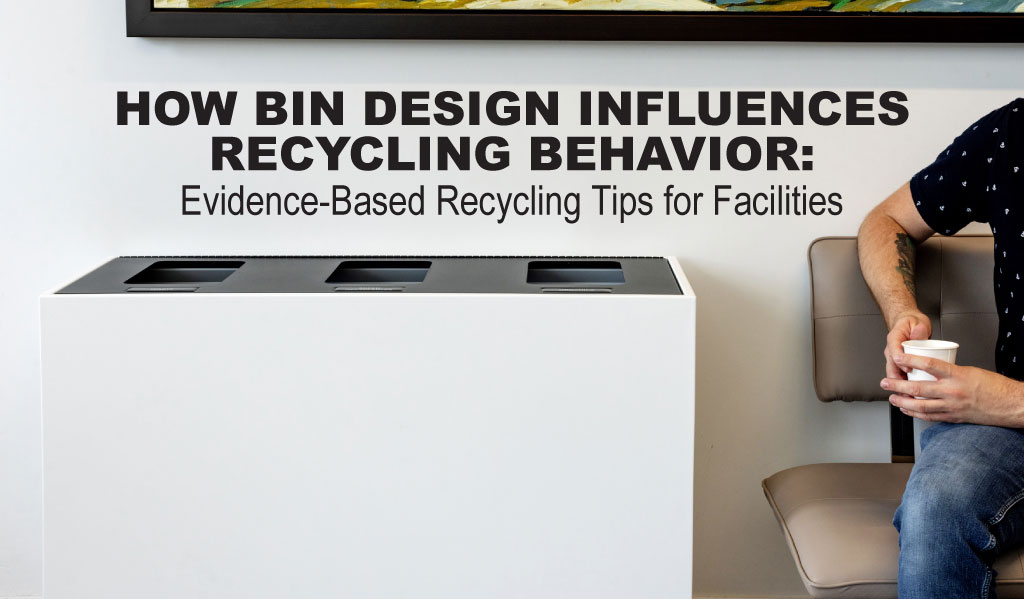
The Mezzo Series demonstrates how container design can reinforce proper sorting habits. Featuring color-coded lids, optional restrictive openings and clear labelling options, the series helps distinguish between different waste streams while making disposal instructions easier to recognize. Available in double- and triple-stream configurations, the Mezzo Series allows facilities to create organized collection points that support consistent recycling practices.
3. Consider Bin Placement and Accessibility
Providing recycling containers is only part of the equation. People also need to be able to access them conveniently.
If a recycling station is difficult to locate, positioned away from high-traffic areas or separated from landfill containers, users may default to whichever option is easiest to reach.
Research published in Resources, Conservation & Recycling in 2021 examined how the proximity of waste and recycling bins influenced disposal behavior. The study also found that specific instructions about how clean recyclables needed to be helped reduce contamination.
While individual facilities will have different operational requirements, the findings demonstrate how the physical environment can influence waste disposal decisions.
How to put this into practice:
- Position waste and recycling containers together so users can compare disposal options at the same location.
- Place collection stations along natural walking routes and near areas where waste is generated.
- Ensure containers are visible and accessible without obstructing hallways or emergency exits.
- Consider centralized waste stations in offices instead of relying exclusively on individual deskside bins.
- Review high-traffic areas regularly to identify locations where additional collection capacity may be needed.
Strategic placement is particularly important in cafeterias, breakrooms, reception areas and other shared spaces where large volumes of waste are generated.
4. Choose Container Openings That Encourage Proper Sorting
The physical features of a recycling container can also influence how people dispose of materials.
Opening shapes, lid configurations and compartment layouts can help communicate which materials belong in each collection stream. For example, a container designed with an appropriate opening for bottles or paper can provide an additional visual cue that reinforces the intended use.
A 2019 study published in the Journal of Cleaner Production examined the relationship between recycling bin design and PET bottle collection performance. Researchers tested different configurations, including opening shapes, signage and container layouts. Their findings showed that certain opening designs could reduce contamination, although results depended on the collection setup.
For facility managers, this highlights the importance of selecting containers based on the materials being collected and the environment in which they will be used.
How to put this into practice:
- Consider specialized openings for specific waste streams where appropriate.
- Use compartmentalized containers to keep multiple collection streams organized.
- Select openings that accommodate commonly disposed materials without encouraging incorrect sorting.
- Consider accessibility requirements and ensure openings are practical for all users.
- Evaluate container capacity to prevent overflowing, which can lead to improper disposal around collection stations.
A well-designed container should make its intended purpose clear while supporting the practical needs of the people using and maintaining it.
Container design should also complement the environment in which it is used. The Aristata Series illustrates how functionality and aesthetics can work together without compromising waste diversion goals. With customizable finishes, stainless steel lids and restrictive lead-in openings, the Aristata Series helps facilities create visually cohesive collection stations while providing clear disposal cues. Its multiple stream configurations also allow organizations to integrate recycling and waste collection into professional environments such as corporate offices, hotels and commercial buildings.
5. Prioritize Consistency Across Your Facility
Consistency is an important part of building long-term recycling habits.
When employees encounter different bin colors, labels or collection configurations throughout the same facility, they may become uncertain about where materials belong. This is particularly challenging for organizations operating across multiple buildings or locations.
Establishing standardized bin designs and signage helps create a predictable disposal experience.
For example, a facility might establish blue containers for recycling, green containers for organics and grey or black containers for landfill. The exact color scheme is less important than choosing a system that aligns with local recycling expectations and applying it consistently.
How to put this into practice:
- Develop facility-wide standards for bin colors, labels and configurations.
- Use consistent signage across departments, floors and buildings.
- Document approved container specifications for future purchasing.
- Ensure replacement bins follow the same design standards.
- Regularly review collection stations to identify inconsistencies.
For larger facilities or organizations managing multiple collection areas, flexibility and consistency are equally important. The Mosaic Series offers a modular approach to waste collection, allowing facilities to connect multiple containers and customize signage, colors and lid configurations to suit their recycling programs. Its customizable body panels and elevated back sign frame provide additional opportunities to communicate disposal instructions, making waste streams more visible and easier to identify. As facilities grow or their diversion requirements change, the interlocking design also allows collection stations to expand without sacrificing consistency.
Standardization makes recycling easier to understand for users while simplifying purchasing, maintenance and waste program management for facility teams.
6. Measure Performance and Adjust Your Approach
Even a well-designed recycling station should not be considered a finished project. Facility managers need to understand whether their current setup is actually encouraging proper disposal.
Waste audits provide valuable insight into how people interact with collection systems and where improvements may be needed.
By examining the contents of landfill, recycling and organics containers, organizations can identify recurring disposal mistakes, contamination patterns and opportunities to improve collection infrastructure.
How to put this into practice:
- Conduct regular waste audits to evaluate sorting accuracy.
- Identify frequently misplaced materials and update signage accordingly.
- Monitor overflowing containers and adjust capacity where necessary.
- Collect feedback from custodial teams and employees.
- Test different container configurations or signage approaches and compare results.
It is also important to remember that bin design is only one component of a successful waste diversion strategy. Employee education, clear recycling policies, appropriate collection infrastructure and regular communication all contribute to long-term results.
Designing Better Recycling Habits Starts with the Bin
Improving recycling performance does not always require a complete overhaul of an organization’s waste management program. Sometimes, meaningful improvements begin with rethinking the containers people interact with every day.
Research continues to demonstrate that visibility, signage, accessibility and physical design can influence waste disposal behavior. By making collection stations easier to recognize, understand and access, facilities can help reduce confusion, improve sorting accuracy and support more effective waste diversion.
For organizations looking to strengthen their sustainability initiatives, the takeaway is simple: better recycling starts with better design.
At Busch Systems, we believe effective waste diversion begins with providing the right collection infrastructure for the people and spaces it serves. By combining thoughtful container design with clear communication and strategic placement, organizations can create waste management systems that make responsible disposal an easier everyday choice.