A successful recycling program starts before a container ever reaches a recycling bin. From providing clear signage to making collection stations accessible, the way waste is collected plays an important role in determining how effectively materials can be sorted and recovered.
One often-overlooked part of this process is liquid disposal. Leftover coffee, water, soda, and other beverages can create challenges when containers are placed in recycling bins without being emptied first. In busy public spaces, these small oversights can contribute to spills, messy collection areas, heavier bags, and potential contamination of recyclable materials.
Providing a dedicated place to pour away liquids before recycling containers is a simple but important step toward improving waste collection. By addressing liquid disposal at the source, organizations can support cleaner recycling streams, simplify maintenance, and create a more effective waste diversion program.
Why Liquid Collection Matters
In environments where beverages are consumed throughout the day, leftover liquids are an inevitable part of waste management. Airports, sports venues, conference centers, food courts, and college campuses all generate beverage containers that may still hold liquid when they reach a waste station.
Without a convenient disposal option, people may pour leftover drinks into recycling bins, leave liquids inside containers, or dispose of recyclable materials incorrectly. These behaviors can create several challenges for facility operators.
Reducing recycling contamination
Maintaining cleaner collection areas
Leftover beverages can lead to sticky spills, unpleasant odors, and messy collection bags. These issues can make waste stations less inviting for visitors and increase the cleaning required to keep public spaces presentable.
A dedicated liquid capture point helps manage unwanted beverages before they end up in recycling bins or on surrounding surfaces.
Simplifying waste collection and maintenance
Liquid-filled containers and bags can add unnecessary weight to collected waste and make routine handling more difficult. Spills and residue can also create additional work for maintenance teams.
By providing a designated disposal point and a practical way to manage accumulated liquids, facilities can help make collection and servicing routines more manageable.
Ultimately, liquid collection addresses a small but important part of the waste disposal process, helping organizations create cleaner, more efficient collection systems.
Better Waste Diversion Starts at the Point of Disposal
Improving waste diversion requires more than encouraging people to recycle. It also means making sure collection systems support the correct disposal behaviors. Effective waste diversion is an important part of Canada’s broader approach to reducing the amount of waste sent to disposal and supporting a more circular economy.
When recycling stations are missing a dedicated liquid disposal option, users may have to decide what to do with leftover beverages themselves. In busy environments, convenience often influences these decisions.
Making it easy to pour away liquids before recycling removes an unnecessary barrier. Rather than relying solely on reminders or signage, facilities can provide the infrastructure needed to make proper disposal more intuitive.
There are several ways organizations can incorporate liquid capture into their broader waste management strategy:
- Place collection stations strategically. Position liquid collection near recycling bins and in areas where beverages are commonly consumed.
- Make disposal options clear. Use visible labels and graphics to help visitors understand where liquids should go and which containers belong in each recycling stream.
- Consider the complete waste station. Design collection areas around how people move through a space, ensuring liquid disposal, recycling, and garbage receptacles are easy to access.
- Support maintenance teams. Choose collection equipment that can be serviced efficiently and is appropriate for the volume of waste generated.
- Monitor results. Regularly review collection areas, conduct waste audits, and gather feedback from maintenance staff to identify recurring contamination issues.
These measures help make correct disposal easier while supporting broader recycling and waste diversion objectives.
Where Liquid Collection Makes a Difference
Although liquid collection can benefit almost any facility that generates beverage waste, it is particularly valuable in high-traffic environments where large volumes of containers are collected throughout the day.
Airports and transportation hubs
Travelers frequently move through terminals, lounges, and food courts with beverages in hand. Convenient liquid capture points can help passengers empty their containers before recycling, supporting cleaner collection areas in busy public spaces.
Sports and entertainment venues
Games, concerts, and other large events can generate significant quantities of beverage containers over a short period. Providing dedicated liquid disposal helps manage leftover drinks while supporting the efficient servicing of waste stations.
College and university campuses
Cafeterias, student centers, and common areas experience consistent foot traffic and beverage consumption. Integrating liquid collection into existing waste stations can help encourage proper sorting among students, employees, and visitors.
Conference centers and food courts
In spaces where refreshments are readily available, leftover beverages are a common part of everyday waste. Accessible liquid collection makes it easier for people to empty containers before recycling and helps facility teams maintain cleaner disposal areas.
Across these environments, the principle remains the same: when collection infrastructure reflects how people actually use a space, proper disposal becomes easier to achieve.
A Practical Solution for Liquid Collection
Recognizing the importance of liquid disposal is one step toward improving collection practices. Providing the right infrastructure is another.
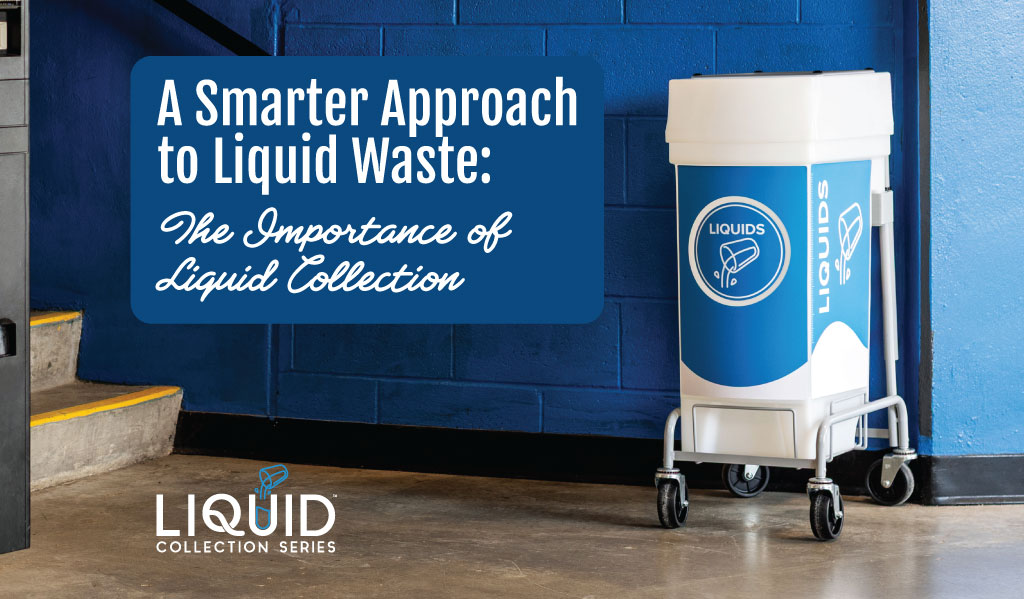
To help facilities address this need, Busch Systems has introduced the Liquid Collection Series, a mobile solution designed to collect unwanted liquids before containers enter the recycling stream.
The unit features a 22.5-gallon reservoir mounted on a rugged steel dolly, offering a dedicated collection point for leftover beverages in high-traffic environments. Its integrated valve and hose allow for controlled draining, while four heavy-duty casters, including two locking casters, support mobility and secure positioning.
A top grate helps prevent medium-to-large debris, such as straws and tea bags, from entering the reservoir. Optional graphic kits also make it easier to identify the unit and integrate it into an existing waste station layout.
By providing a designated place to pour away liquids, the Liquid Collection Series helps facilities incorporate liquid disposal into their broader recycling strategy. It is one practical way to address liquid-related messes, support cleaner collection, and make routine maintenance more manageable.
Building a More Effective Waste Management Strategy
Liquid collection is most effective when it is part of a coordinated approach to waste management. Dedicated disposal points work alongside clear signage, accessible recycling stations, staff education, and regular program evaluation to help reduce contamination and improve collection practices.
Organizations should consider not only which materials they collect, but also what happens immediately before those materials enter the waste stream. Are beverage containers being emptied? Are disposal options easy to identify? Are collection stations positioned where people need them? Are maintenance teams dealing with recurring spills or liquid-filled bags?
Answering these questions can reveal opportunities to improve existing systems and make better use of waste collection infrastructure.
The goal is not simply to collect more material, but to create the conditions that allow recyclable materials to be collected properly and recovered effectively.
Better Collection Starts with the Details
Liquid disposal may seem like a small part of a recycling program, but overlooking it can create avoidable challenges for both facility teams and recycling operations.
Providing a convenient place to pour away liquids helps address a common source of mess, supports cleaner recycling collection, and makes proper disposal easier for the people using a facility. When combined with thoughtful waste station design and consistent recycling education, liquid collection can contribute to a more effective waste diversion strategy.
With solutions such as the Busch Systems Liquid Collection Series, facilities have another practical way to incorporate liquid disposal into their waste management infrastructure.
Because better recycling isn’t just about what goes in the bin. It’s about everything that happens before it gets there.