For decades, recycling has been one of the most recognizable sustainability actions people can take. Yet despite widespread participation, recycling programs continue to struggle with contamination, inconsistent sorting, and declining public confidence.
The problem isn’t that people don’t know recycling exists. It’s that many have started to question whether it actually makes a difference.
If you’ve ever heard someone say, “Doesn’t it all just end up in the landfill anyway?“ you’re not alone. Years of conflicting headlines, changing recycling rules, and stories about contaminated materials have created doubt around a system that depends on public participation.
The challenge today isn’t simply teaching people what to recycle, it’s encouraging recycling behavior by giving people a reason to believe their efforts matter.
Recycling Behavior Is Driven by More Than Knowledge
Many recycling programs focus almost entirely on education. Clear signage, accepted materials lists, and sorting instructions are all important, but information alone doesn’t change behavior.
Research consistently shows that people recycle when they believe three things:
- Their effort makes a difference.
- The recycling system actually works.
- They know they’re doing it correctly.
When any of these beliefs are weakened, participation drops and contamination rises.
In other words, successful recycling programs don’t just reduce confusion, they build confidence.
Why Trust Matters
Over the past several years, public confidence in recycling has taken a hit.
Stories about contaminated loads, market disruptions, and materials being landfilled have led many people to assume recycling is broken altogether. While these challenges have been real, they’ve also overshadowed the significant progress the industry has made.
Today’s recycling infrastructure continues to evolve, with improved processing technologies, stronger domestic markets for recycled materials, and growing investment in circular economy initiatives. Yet many people are still operating on outdated perceptions.
If people believe their efforts don’t matter, even the best-designed recycling program will struggle.
Show People Their Impact
One of the most effective ways to encourage recycling behavior is to make the process tangible.
Rather than simply telling people to recycle, show them what happens next.
When someone learns that an aluminum can becomes another aluminum can, or that recycled plastic can become outdoor furniture or new packaging, recycling becomes more than a chore, it becomes a visible part of the circular economy.
This “product transformation” approach helps people connect their daily actions with real-world outcomes, reinforcing that their effort has value.
Organizations can strengthen this connection by:
- Sharing what recyclable materials become.
- Explaining how materials are sorted and processed.
- Highlighting local recycling facilities or manufacturing partners.
- Celebrating diversion successes and environmental impact.
The more visible the journey, the more meaningful the action becomes.
Design Can Shape Behavior
Behavior isn’t driven by motivation alone. The environment people interact with every day also influences their decisions.
That’s why recycling stations should make the right choice the easy choice.
Effective recycling stations use:
- Clear, consistent signage.
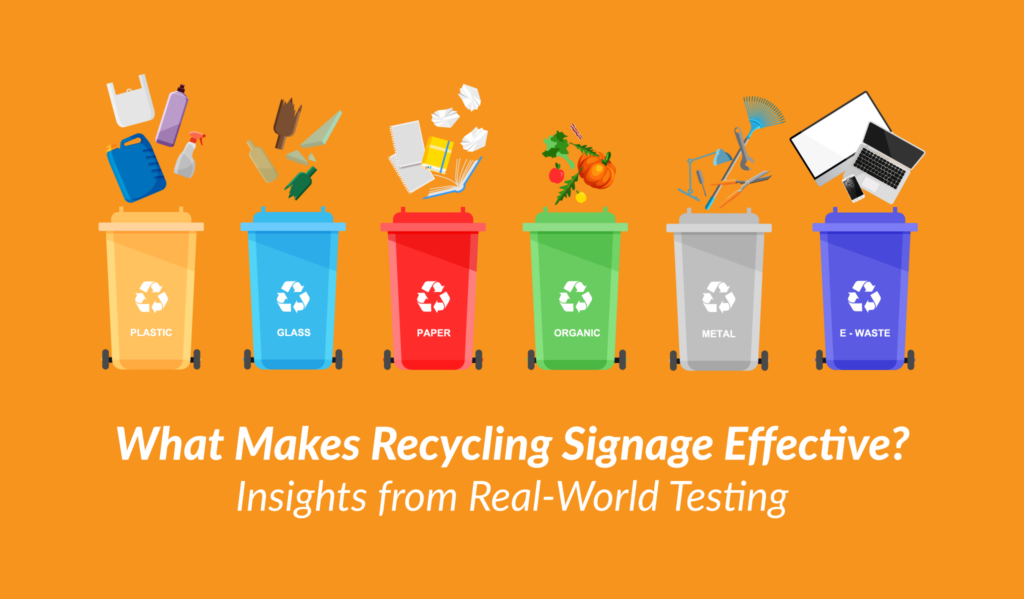
- Color coding that minimizes confusion.
- Restrictive openings that guide proper disposal.
- Standardized labels across an entire facility.
- Placement where waste is actually generated.
When recycling is intuitive, contamination decreases and participation improves.
Turning Good Intentions into Better Recycling Habits
Creating a recycling program people trust starts with making the right choice the easy choice. That’s where thoughtfully designed recycling stations can make a measurable difference. The Spectrum Series was built with behavior in mind, featuring restrictive openings, customizable labeling, and modular streams that guide users toward the correct disposal choice. As recycling needs evolve, its adaptable design allows organizations to add or reconfigure waste streams without replacing the entire station, helping maintain a clear, consistent recycling program that encourages participation and reduces contamination.
Focus on Motivation, Not Just Instructions
Many recycling campaigns spend most of their effort explaining how to recycle.
While that’s necessary, it isn’t sufficient.
People also need to understand why their participation matters.
Instead of leading with messages like:
“Recycle plastics here.”
Consider messages like:
“Your bottle could become tomorrow’s park bench.”
or
“Every correctly recycled container helps reduce the need for new raw materials.”
These messages reinforce purpose, helping people feel their individual actions contribute to something larger.
Better Recycling Starts with Better Communication
Improving recycling behavior isn’t about overwhelming people with more information.
It’s about reducing doubt, building trust, and making recycling feel worthwhile.
When organizations combine thoughtful communication with intuitive recycling station design, they create programs that people are more likely to use, and use correctly.
At the end of the day, people don’t need to become environmental experts to recycle well.
They simply need confidence that their effort matters.
Additional Resources
Plastic Waste Management: A Review of Existing Life Cycle Assessment Studies
LIFE CYCLE IMPACTS FOR POSTCONSUMER RECYCLED RESINS: PET, HDPE, AND PP