Achieving a high waste diversion rate doesn’t happen by accident. While education campaigns, sustainability initiatives, and stakeholder engagement all play important roles, the most successful waste diversion programs share something much more fundamental: they make the right decision easy for users.
A recent survey of 170 colleges and universities conducted as part of Busch Systems’ research into higher education waste and diversion practices revealed a noteworthy trend. Institutions with diversion rates above 41% were 15% more likely to have implemented bin standards than lower-diversion schools.
The findings suggest that high-performing waste diversion programs are often built on a foundation of consistency. From bin design and signage to color coding and placement, leading campuses are reducing confusion and creating a more intuitive waste-sorting experience.
Standardization Reduces Confusion
College campuses are dynamic environments. Students, staff, faculty, and visitors move between academic buildings, residences, dining halls, athletic facilities, and public spaces every day. When waste stations look different from one location to the next, uncertainty increases, and so does contamination.
Research from the survey found that campuses are increasingly adopting standardized approaches to waste collection infrastructure. Consistent design standards help improve participation, increase diversion, and create a more streamlined user experience.
High-performing programs recognize that users should not have to relearn how to sort waste every time they enter a new building.
Consistent Bin Design Creates Familiarity
One of the most common characteristics of successful diversion programs is the use of consistent bin designs across campus.
Bin standards often include purchasing guidelines that establish common design specifications, openings, and features for various collection streams and locations. Whether users are disposing of materials in a student center, library, or outdoor common area, the waste station should feel familiar.
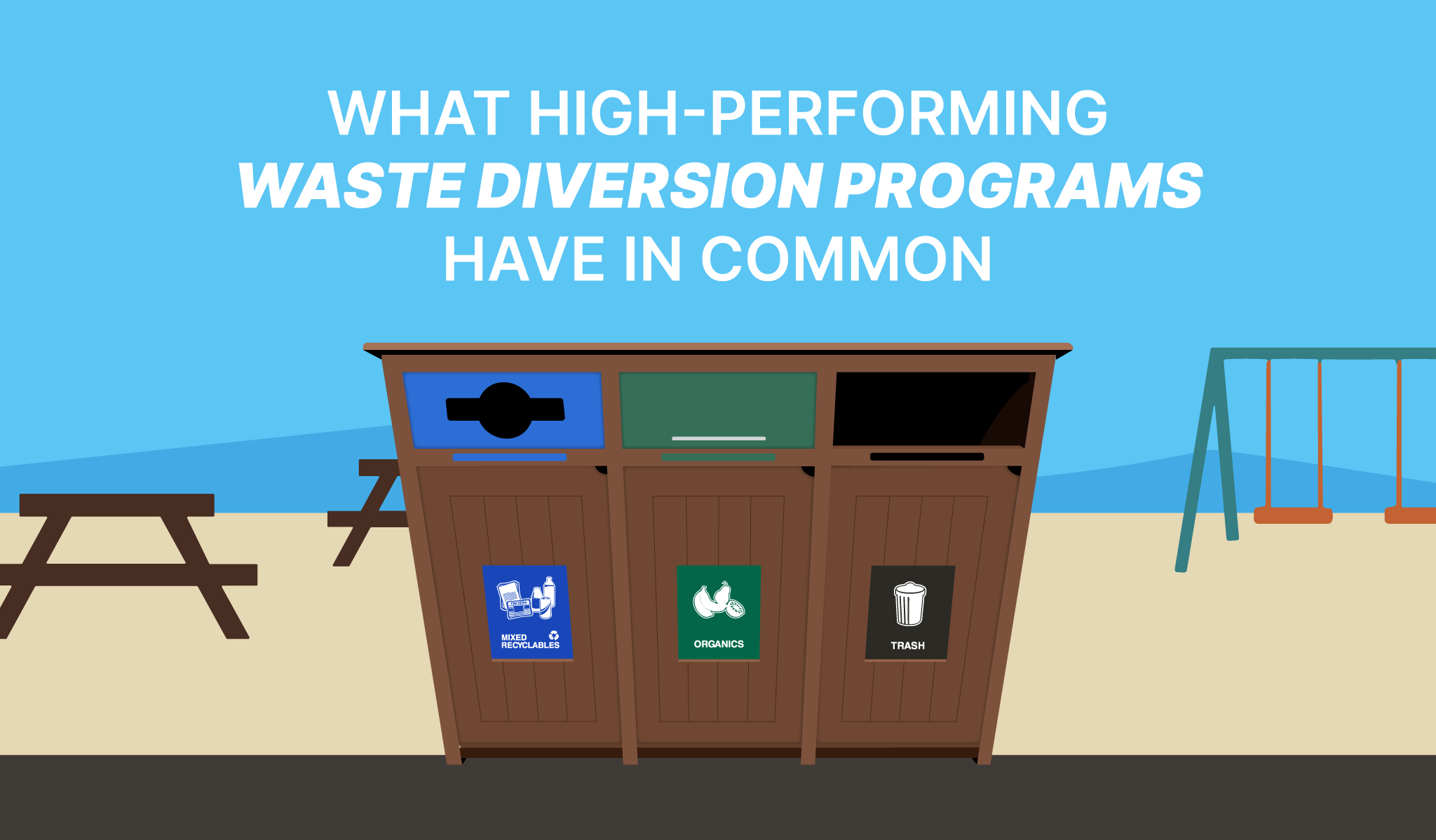
This consistency helps reduce decision fatigue while supporting operational efficiency for facilities teams. Solutions like the Aura Series help campuses create a cohesive waste collection experience with a modern, streamlined design that can be customized to support different waste streams while maintaining a consistent look throughout facilities. By implementing recognizable waste stations across campus, institutions can reinforce proper sorting behaviors and make disposal decisions easier for users.
Clear Signage Improves Sorting Accuracy
The survey found that 74% of institutions have standardized labels and signage across their waste collection systems.
Uniform signage ensures that terminology, imagery, and messaging remain consistent throughout campus. When users repeatedly encounter the same visual cues, they can make disposal decisions more quickly and confidently.
For campuses looking to reduce contamination, standardized signage can have a significant impact. Clear communication eliminates ambiguity and helps reinforce proper waste-sorting behaviors over time.
Color Branding Makes Collection Streams Instantly Recognizable
Color plays a critical role in helping people identify collection streams.
Among surveyed institutions:
- 85% use blue to identify recycling
- 81% use green to identify compost
These findings highlight the importance of color consistency in waste diversion programs. When the same colors are applied across bins, signage, and other visual communication materials, users can quickly recognize where materials belong, even when they aren’t taking time to read detailed instructions.
For busy campus environments, these visual shortcuts help improve participation and reduce contamination.
Strategic Placement Supports Better Outcomes
Even the best-designed waste station cannot be effective if it is located in the wrong place.
The survey identified placement guidelines as another key component of bin standardization. These guidelines help ensure waste stations are positioned where disposal decisions naturally occur while remaining accessible and compliant with operational and safety considerations.
Although only 37% of institutions reported having formal placement guidelines, this presents a significant opportunity for campuses seeking to improve diversion performance.
High-performing institutions understand that convenience matters. When recycling and compost containers are located alongside garbage bins in highly visible areas, users are more likely to sort materials correctly.
The Most Successful Programs Think Long-Term
The survey also collected practical lessons from sustainability professionals and campus waste managers who have implemented bin standards.
Several recommendations stood out:
Conduct a Campus-Wide Audit
Before creating standards, inventory existing waste infrastructure and identify which waste streams and bin styles are currently being used across campus.
Involve Key Stakeholders
Facilities teams, sustainability offices, custodial staff, procurement departments, and other stakeholders should all have input into the standardization process.
Balance Form and Function
While aesthetics are important, participants cautioned against design decisions that prioritize appearance at the expense of performance. Poorly designed stations can lead to lower diversion rates and higher contamination.
Invest in Flexible Infrastructure
Create a Transition Plan
Standardization is rarely achieved overnight. Successful campuses often phase in new bins and signage over time while gradually retiring older infrastructure.
Monitor Compliance
Standards only work when they are consistently applied. Campuses should establish processes to ensure new purchases align with approved specifications and branding guidelines.

High Diversion Rates Start with Consistency
The strongest takeaway from the survey is simple: high-performing waste diversion programs create consistent experiences for users.
Whether through standardized bin designs, uniform signage, recognizable color branding, or strategic placement, successful campuses reduce confusion and make proper waste sorting intuitive.
While no single initiative guarantees higher diversion rates, the data suggests that infrastructure standardization is a common characteristic among leading institutions. As colleges and universities continue to pursue ambitious sustainability goals, creating a consistent waste management system may be one of the most effective steps they can take toward improving diversion performance.
When users know exactly what to expect, making the right disposal choice becomes second nature, and that’s where high-performing waste diversion programs separate themselves from the rest.