Updated: September 3, 2026
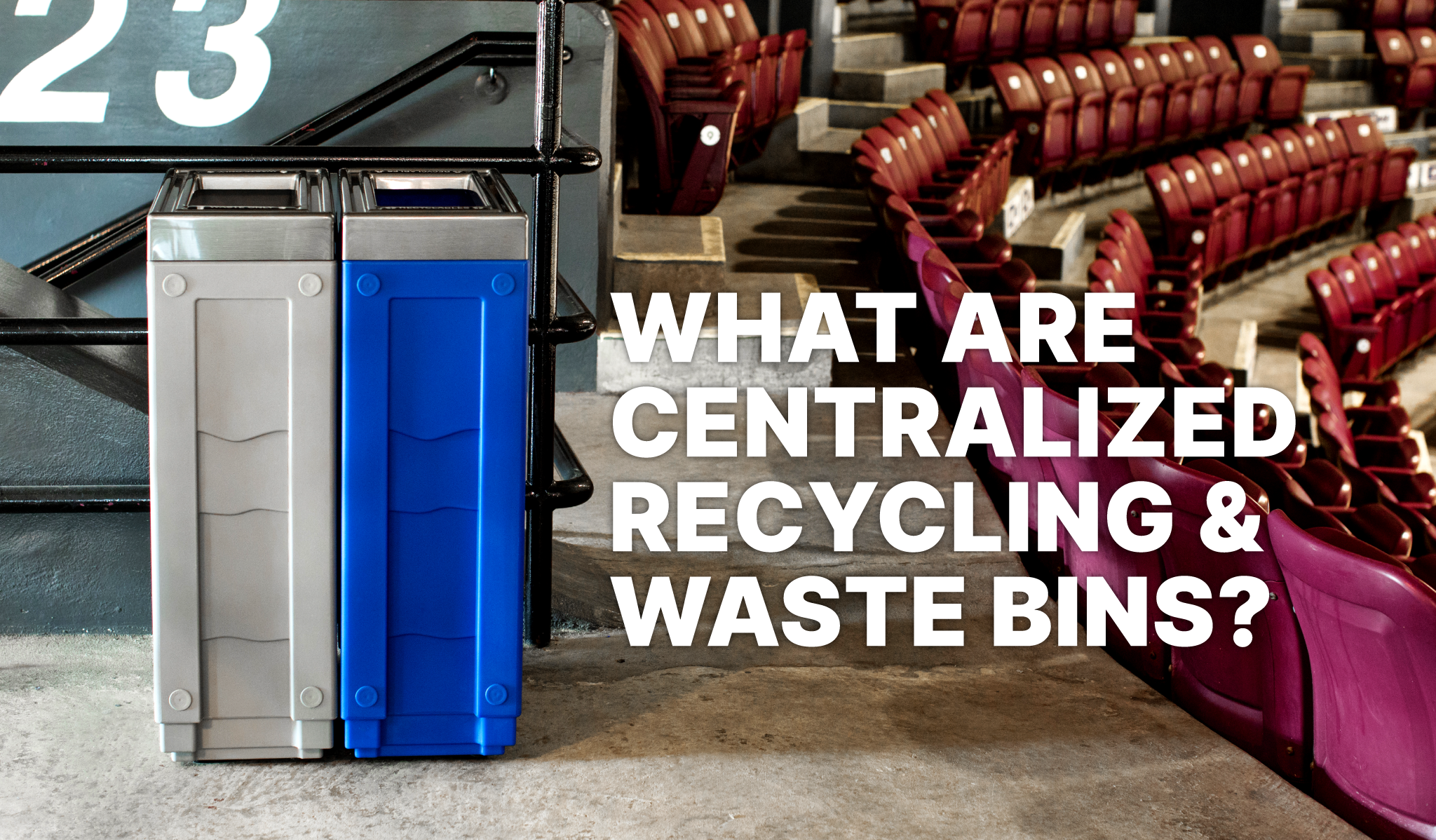
Centralized recycling and waste bins are collection containers placed in shared, high-traffic areas for multiple people to use. Unlike deskside bins, which are intended for individual workstations, centralized stations are designed to serve an entire workplace, facility, campus, or public space.
Rather than providing every individual with a separate place to dispose of materials, centralized collection brings waste and recycling infrastructure into common areas where people naturally pass through. This approach can encourage better waste-sorting habits while reducing the number of individual containers that need to be serviced throughout a facility.
Centralized stations can play an important role in a successful waste diversion program. They provide people with a clear, convenient place to sort recyclables, organics, and waste while giving facility and custodial teams a more efficient way to manage collection. When stations are thoughtfully designed and strategically placed, they can make the correct disposal decision feel like a natural part of moving through a space.
They can be used in a wide range of locations, including:
- Lobbies and hallways
- Offices and boardrooms
- Schools and university campuses
- Theatres and event venues
- Restaurants and food service areas
- Parks and outdoor spaces
- Transit facilities and concourses
- Beaches and other public spaces
- Shopping centers and retail environments
- Healthcare and institutional facilities
Because every location has different needs, there is no one-size-fits-all centralized station. The right station depends on factors such as traffic levels, available space, material streams, collection frequency, and the way people move through the space.
A successful station considers more than just the containers themselves. Placement, capacity, accessibility, signage, opening design, and the number of waste streams all influence how people interact with the station. A station that looks good but is difficult to understand or inconvenient to access may not perform as intended.
For example, a station in a busy transit hub may require high-capacity containers, highly visible signage, and strategically positioned openings that allow users to make a quick disposal decision. A boardroom, on the other hand, may require a smaller, more discreet station with fewer streams. An outdoor venue may need durable, weather-resistant containers that can withstand changing conditions and periods of exceptionally high traffic.
Designing an Effective Centralized Station
The placement and design of centralized stations can have a significant impact on participation, contamination, and the overall effectiveness of a waste diversion program. The goal is to make the right disposal decision as easy and intuitive as possible.
Stations should be positioned where people naturally need them rather than tucked away in areas that are difficult to find or access. Consider the flow of people through the space: where do they enter and exit? Where do they eat, work, gather, or wait? Where are materials most likely to be generated? Placing collection infrastructure at these natural decision points can help increase participation and reduce the likelihood that recyclable or organic materials end up in the garbage.
Consistent colors, labels, graphics, and container configurations can also help create a familiar disposal experience across a facility or organization. When people encounter the same visual cues and sorting logic throughout a building or campus, they spend less time figuring out where materials belong.
Capacity is another important consideration. A station that is too small for the volume of material it receives can quickly become overflowing and difficult to use. On the other hand, unnecessarily large containers can take up valuable floor space and may be inefficient to service. The ideal configuration balances capacity, available space, expected traffic, and collection frequency.
Accessibility should also be considered during the planning process. Collection stations should be easy for people to approach, clearly visible, and designed so that disposal openings and signage can be easily understood and accessed by a broad range of users.
Centralized collection can also work alongside deskside programs. Depending on the workplace, employees may bring materials from their workstations to a centralized station themselves, or custodial staff may transfer collected materials as part of their regular service routine. In some facilities, reducing or eliminating deskside garbage collection can also encourage employees to take greater ownership of where and how they dispose of materials.
What Happens When the Bins Are Full?
A centralized station is only one part of the collection system. Once containers are full, materials need to be safely and efficiently transported to the appropriate storage area, collection point, or processing facility.
That’s where transportation recycling and waste bins come into play. These containers are designed to move collected materials from centralized stations to their next destination while keeping different waste streams organized.
This connection between collection and transportation is an important part of waste program design. If centralized bins are easy for users to access but difficult for staff to empty, move, or service, the program can quickly become inefficient. Transportation containers should therefore be considered alongside centralized stations rather than treated as a separate part of the system.
The same principle applies to storage and collection. Materials need a clear path from the point of generation to their final destination. This may include temporary storage, internal transportation, outdoor collection areas, hauling services, and ultimately a recycling, composting, recovery, or disposal facility.
An effective waste management program considers the entire material journey, not just the moment when someone throws something into a bin.
Ultimately, successful waste management connects every stage of the process, from where materials are generated, to where they are sorted, collected, transported, and ultimately recovered or disposed of. Centralized stations play an important role in that system by creating clear, convenient collection points where people interact with the waste program every day.
When thoughtfully designed, they can do more than simply hold waste. They can help shape behavior, improve sorting, streamline collection, and create a more consistent waste diversion experience across an entire facility.