Across college and university campuses, waste diversion depends on more than the materials accepted by a recycling or organics program. It also depends on how clearly waste stations communicate where materials belong and how consistently those stations are designed and maintained.
When bin colors, labels, openings and sorting instructions vary between buildings, students, staff and visitors may be left guessing. Standardizing waste stations can help create a more consistent sorting experience, support campus-wide diversion goals, and make waste programs easier to manage.
Research and campus examples offer valuable insight into how institutions can approach standardization and where it can make a difference.
Why Consistency Matters
University campuses present a unique waste management challenge. Students, employees, visitors and event attendees move between classrooms, residence buildings, dining areas, offices and athletic facilities, often encountering different waste stations throughout the day.
A recycling bin in one building may look completely different from a recycling bin in another. Labels may use different terminology, and the materials accepted in each stream may not be communicated consistently. Even when the right infrastructure is in place, these differences can make sorting less intuitive.
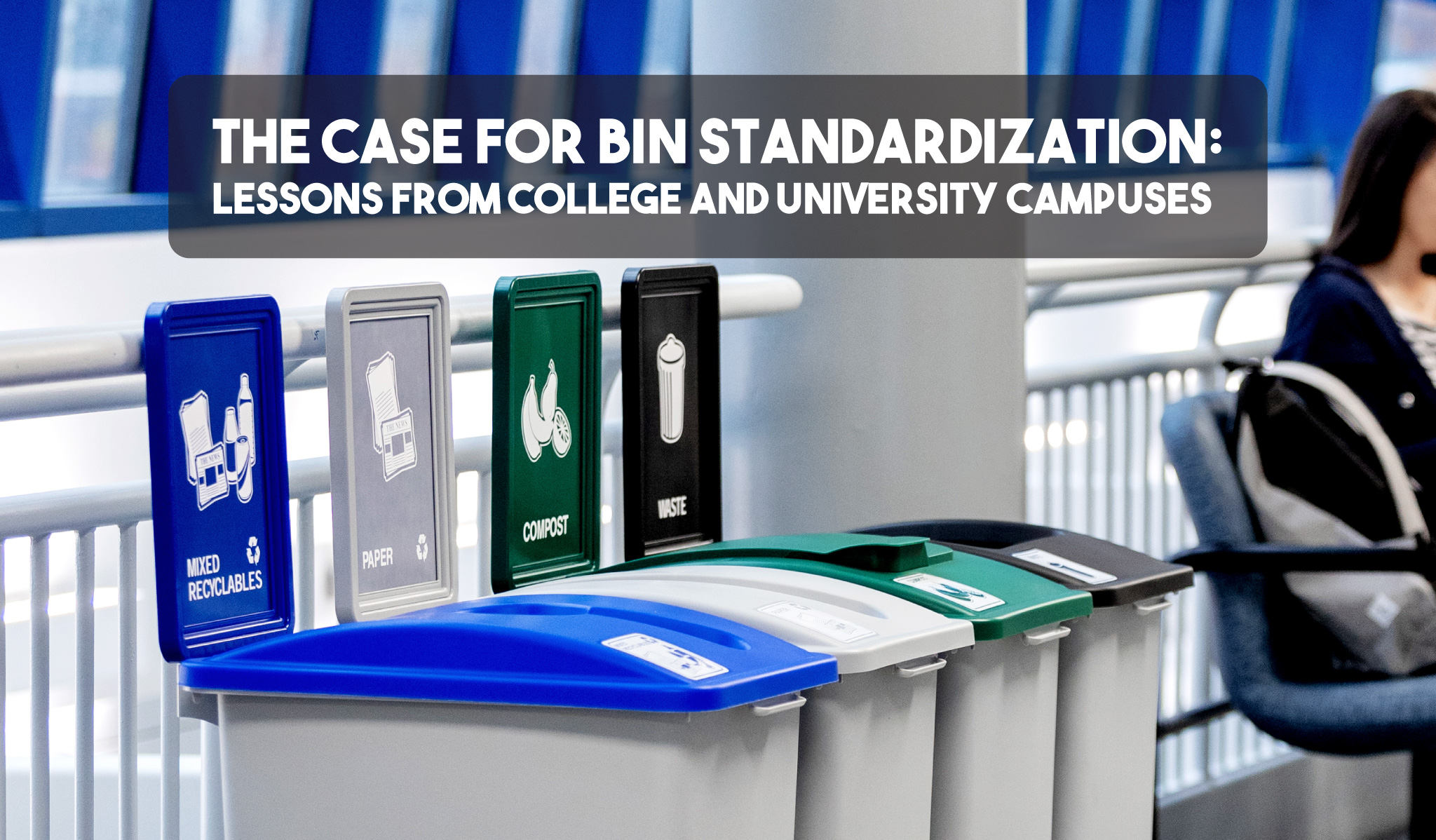
Standardization helps establish a familiar system across campus. Consistent colors, labels, graphics, and stream definitions make it easier for people to recognize waste stations and understand how to use them.
Importantly, standardization does not mean every location needs an identical setup. A dining hall may require organics collection, while an office may need fewer streams. The goal is to maintain a consistent visual language and sorting approach while adapting station configurations to the needs of each space.
What Higher Education Research Tells Us
In 2024, Busch Systems collaborated with AASHE, the National Wildlife Federation, CURC, Zero Waste Campus Council and Campus Race to Zero Waste to examine indoor waste and diversion practices at colleges and universities across the United States and Canada.
The resulting report, Indoor Waste and Diversion Practices of Colleges and Universities, gathered responses from 170 institutions and explored bin standardization, centralized collection and other waste management practices.
Among the large U.S. four-year institutions included in the survey analysis:
- 66% had formally adopted indoor bin design guidelines.
- 72% reported using uniform labels and signage.
- 85% used blue for recycling.
- 81% used green for compost.
These findings demonstrate how common design standards have become among many higher education institutions, particularly when it comes to color coding and consistent signage. They also highlight the opportunity for campuses to formalize their guidelines and apply them more consistently across buildings.
Standardization is most effective when it forms part of a broader program. Collection locations, station configurations, signage and education all influence how people interact with waste infrastructure. Aligning these elements can help make sorting more intuitive for campus occupants and easier to manage for facilities teams.
Campus Examples: Putting Standardization into Practice
Universities are already putting these principles into practice, demonstrating how consistent waste station design can support clearer sorting and improved diversion outcomes across campus environments.
University of Michigan: Building a Consistent Sorting Experience
The University of Michigan demonstrates how standardized waste stations can support a more consistent campus-wide sorting experience.
Its approach includes replacing non-standard containers with stations that follow established bin standards, using color-coded lids and signage to distinguish waste streams, and incorporating restrictive openings and clear sorting instructions.
At the North Campus Administrative Complex, aligning with the university’s bin standards resulted in a 70% increase in waste diversion. This example illustrates the potential impact of establishing consistent expectations for how waste stations look and communicate sorting instructions.
The university’s broader waste reduction efforts also include expanding compost collection and implementing centralized waste stations. These initiatives reflect a coordinated approach to collection infrastructure, material recovery, and user engagement.
For other institutions, the key lesson is to establish clear standards that can be applied consistently, rather than allowing individual buildings or departments to develop separate approaches over time.
University of Alberta: Consistency Across Campus
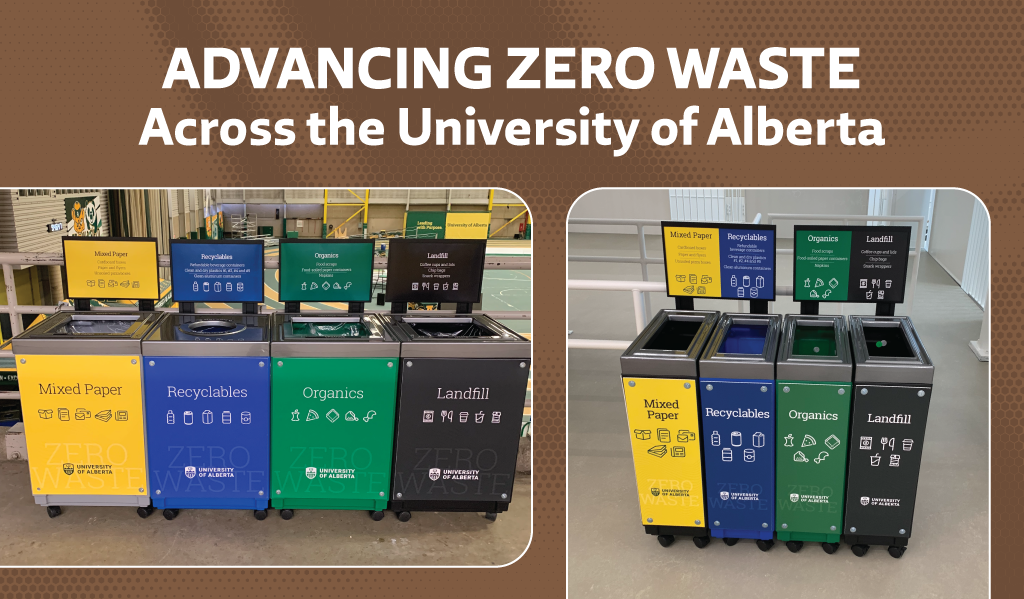
The University of Alberta is rolling out its Zero Waste Program across its buildings and campuses, with a goal of achieving a 90% waste diversion rate.
A central part of the program is a consistent four-stream sorting system:
- Mixed Paper
- Recyclables
- Organics
- Landfill
By establishing common streams across campus, the university is working to make waste sorting more accessible and easier to understand for students, staff and visitors.
The university uses Busch Systems Waste Watcher and Evolve Series stations to support the program in different environments. Customized decals and signage help communicate sorting instructions, while station functionality and configuration are adapted to suit the needs of individual spaces.
The program is already making progress. In 2025, the University of Alberta diverted more than 400 tonnes of organics from landfill and reported being more than halfway toward its 90% diversion goal.
Its approach demonstrates how consistent stream definitions, clear communication, and appropriate infrastructure can support a broader institutional waste diversion strategy. As the program continues to expand, maintaining a recognizable sorting system across campus remains an important part of encouraging participation.
What Should a Standardized Waste Program Include?
While each campus has different operational requirements, several core elements can help institutions establish effective waste station standards.
1. Consistent Waste Streams and Bin Configurations
Start by defining the materials collected across campus and establishing standard station configurations for common environments. High-traffic public areas may require multiple streams, while locations that generate specific materials may need a more targeted setup.
Wherever possible, maintain consistent stream arrangements so people can recognize familiar sorting options as they move between buildings.
2. Standardized Colors and Clear Signage
Use consistent colors, labels, and graphics to distinguish waste streams. Combining words with recognizable images can help people quickly identify the correct bin and understand what belongs in each stream.
Signage should use clear, direct language and reflect the materials accepted by the institution’s collection program. Consistency is particularly important when people use multiple buildings or are unfamiliar with a specific location.
3. Restrictive Openings That Support Sorting
Bin openings can reinforce the instructions provided by signage. Restrictive lids designed around the intended material stream help guide users toward the appropriate opening and make each station easier to interpret.
These features should be selected alongside the station’s intended use, accessibility needs, and operational requirements.
4. Infrastructure That Fits the Space
A consistent program still needs flexibility. Dining areas, classrooms, offices, and large event spaces generate different materials and volumes of waste.
Consider foot traffic, available floor space, collection frequency, accessibility and the needs of custodial teams when determining station placement and configuration. Standardization should make the system more recognizable without creating unnecessary collection points or unsuitable setups.
5. Alignment with Collection Operations
Waste stations need to work as part of the full collection system. Front-of-house bins should align with back-of-house sorting, storage and hauling practices so materials can be collected and managed as intended.
Involving facilities managers and custodial staff in the planning process helps ensure that standards are practical to maintain and support day-to-day operations.
6. Ongoing Evaluation and Education
Once standards are established, institutions should monitor how well the system is working. Waste audits, contamination checks, and feedback from campus staff can help identify opportunities to improve station placement, signage, and collection practices.
Education also plays an important role. Clear communication during implementation, supported by ongoing reminders, helps campus occupants understand the system and develop consistent sorting habits.
Turning Standards into a Campus-Wide Strategy
Implementing bin standardization starts with understanding the existing system. An audit of current waste stations can identify differences in bin styles, colors, labels, stream configurations and placement across buildings.
From there, institutions can develop formal guidelines that establish expectations for new installations and future replacements. These guidelines should account for the needs of different spaces while maintaining consistency in the core elements of the program.
Engaging sustainability teams, facilities managers, custodial staff, campus planners and other stakeholders early can help build support and identify operational considerations before standards are finalized.
Institutions can also introduce the standards through pilot installations in selected buildings, gather feedback, and refine the approach before expanding it across campus. Over time, applying the same guidelines to new projects and replacement stations can help maintain consistency as the institution grows and its needs change.
Building a More Consistent Waste Diversion Experience
Bin standardization is an opportunity for colleges and universities to make waste sorting easier to understand and build a more coordinated approach to diversion.
The University of Michigan’s reported 70% increase in diversion at the North Campus Administrative Complex highlights the potential value of aligning waste stations with established standards. The University of Alberta’s four-stream Zero Waste Program demonstrates how consistent sorting infrastructure can support a larger campus-wide strategy, with more than 400 tonnes of organics diverted in 2025 and progress toward a 90% diversion goal.
Both examples reinforce the importance of designing waste systems around the people who use them and the teams who maintain them.
By establishing clear standards for waste streams, colors, signage and station configurations, institutions can create a more recognizable sorting experience across campus. Combined with thoughtful placement, coordinated collection, and ongoing education, these standards can help build a stronger foundation for effective waste diversion.