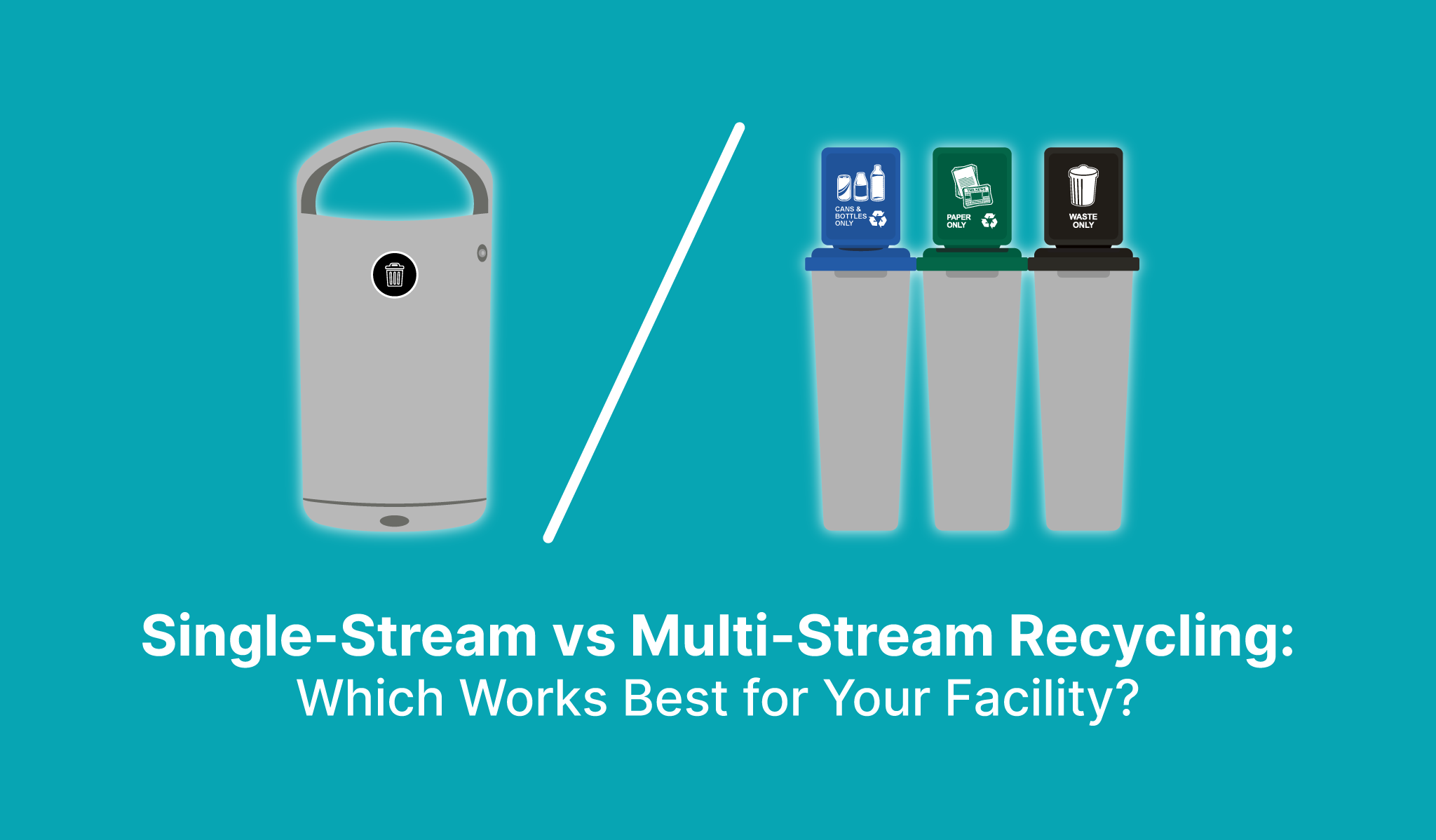
When comparing single-stream vs. multi-stream recycling, the best system isn’t defined by how many streams a facility collects—it’s defined by how effectively it works for the people using it. The right system can improve participation, increase diversion rates, reduce contamination, and help facilities achieve their sustainability goals. A poorly designed recycling system can lead to overflowing bins, higher processing costs, increased contamination, and valuable materials being lost.
Whether you’re managing a corporate office, university campus, healthcare facility, manufacturing plant, or public venue, understanding the differences between single-stream recycling and multi-stream recycling is essential for creating successful recycling systems for facilities.
This guide explores the advantages and disadvantages of each approach, helping facility managers determine which option best supports long-term recycling efficiency in facilities.
What Is Single-Stream Recycling?
Single-stream recycling allows users to place all recyclable materials, including paper, cardboard, plastics, glass, and metal, into one recycling container.
Materials are later separated at a Materials Recovery Facility (MRF) using automated sorting equipment and manual quality checks.
Commonly Accepted Materials
- Paper
- Cardboard
- Plastic bottles and containers
- Aluminum cans
- Steel cans
- Glass containers (depending on municipality)
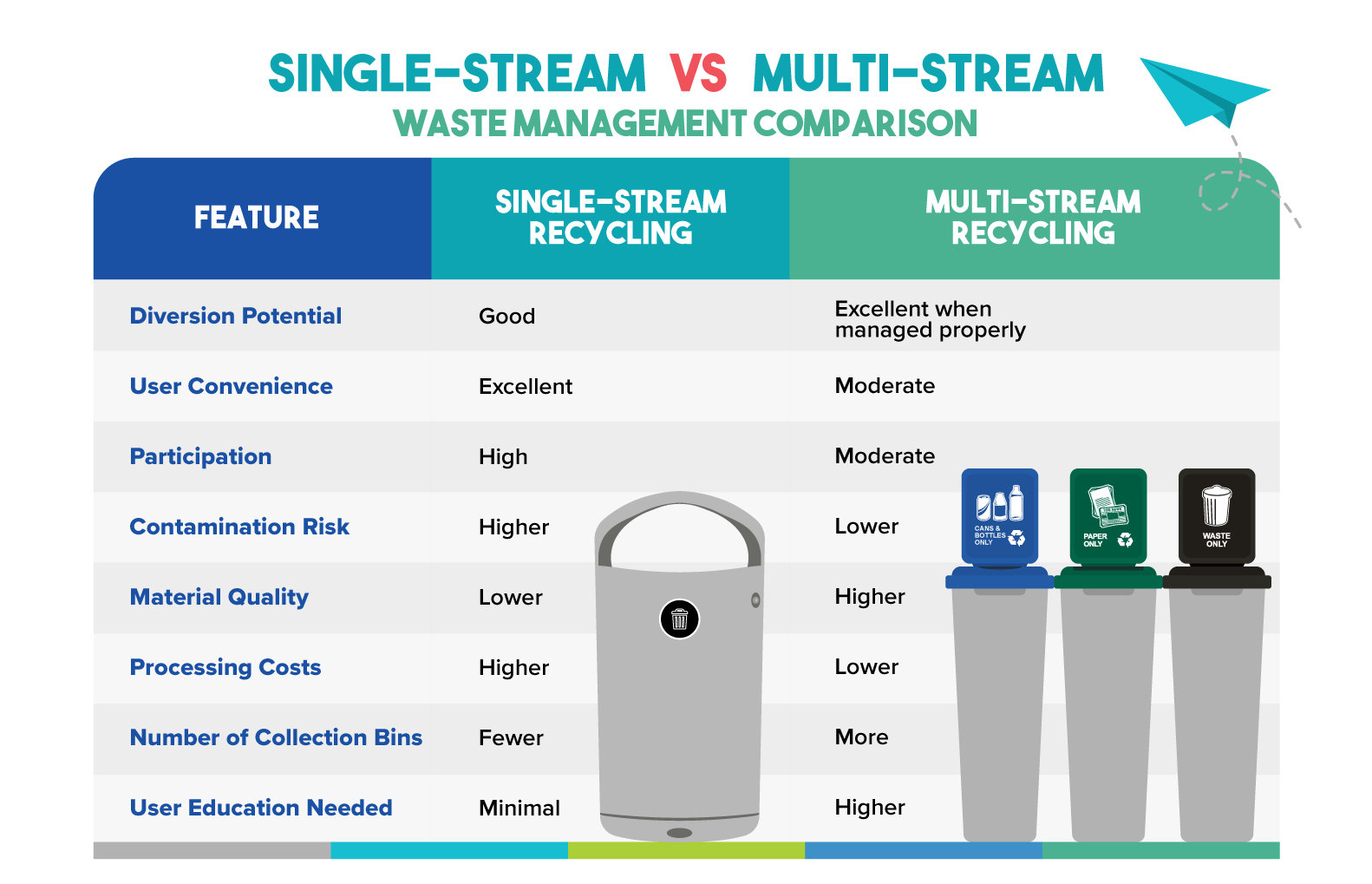
Pros of Single-Stream Recycling
- Easier for Users
- Employees, students, customers, and visitors don’t need to decide which material belongs in which bin. This convenience encourages greater participation and reduces hesitation when disposing of recyclable items.
- Higher Participation Rates
- Studies consistently show that making recycling easier increases overall participation. However, increased participation must be paired with contamination prevention strategies to ensure more collected material is actually recovered.
- With only one recycling bin available, people are more likely to recycle instead of throwing recyclable materials into the trash.
- Fewer Collection Containers
- Facilities typically need one recycling container and one wate container
- This simplifies collection stations and can reduce the amount of floor space required.
- Faster Waste Disposal
- Because users don’t need to sort materials themselves, disposal takes only seconds, an important advantage in busy environments like airports, stadiums, schools, and office buildings.
Cons of Single-Stream Recycling
Higher Contamination Rates
Convenience comes with a trade-off.
Food waste, liquids, plastic bags, and non-recyclable materials often enter the recycling stream, contaminating otherwise recyclable materials.
- Reduce recycling value
- Increase processing costs
- Cause recyclable materials to be discarded
Greater Processing Costs
Since materials arrive mixed together, recycling facilities must invest in sophisticated sorting equipment and additional labor.
These costs may eventually be reflected in municipal or commercial collection fees.
Increased Material Damage
Paper fibers can become contaminated by broken glass or food residue, reducing the quality of recovered materials and limiting their ability to be recycled into new products.
Regardless of collection method, users still need confidence they’re making the right choice. Clear signage, intuitive lid openings, and consistent colours often have a greater impact on contamination than the number of streams alone.
What Is Multi-Stream Recycling?
Multi-stream recycling requires users to separate recyclables into different containers before collection.
Common collection streams include:
- Paper & cardboard
- Containers (plastic, glass, metal)
- Organics
- Waste
Some facilities may also separate:
- Electronics
- Batteries
- Compostables
- Beverage containers
Pros of Multi-Stream Recycling
Lower Contamination
Cleaner recyclables often result in:
- Higher recovery rates
- Better material quality
- Greater resale value
- Lower rejection rates
Better Diversion Performance
Multi-stream systems have the potential to achieve higher-quality material recovery and lower contamination, but only when collection stations are intuitive, properly located, and supported by ongoing education.
Easier Material Recovery
Recycling processors spend less time separating mixed materials, reducing wear on sorting equipment and improving overall recovery efficiency.
Supports Organics Collection
Adding dedicated compost or organics bins becomes much easier in a multi-stream system, helping facilities divert food waste from landfill.
Cons of Multi-Stream Recycling
More Complex for Users
The biggest challenge is asking people to correctly sort their waste.
Without clear signage and education, users may:
- Place recyclables in the wrong bin
- Throw everything into waste
- Become confused by too many options
Requires More Collection Stations
Facilities usually need additional containers, including separate bins for:
- Paper
- Containers
- Organics
- Waste
This increases upfront equipment costs and requires more space.
More Staff Training
Employees and custodial staff often require training to maintain proper collection procedures and prevent streams from becoming mixed during servicing.
Key Factors to Consider Before Choosing a Recycling System
Waste Stream: Select a system that aligns with the materials being collected and the needs of your recycling program.
User Behavior: Consider how easily users can identify, sort, and participate in the recycling process.
Local Infrastructure: Ensure your recycling approach matches available collection and processing capabilities within your local community
Contamination Risk: Use intuitive designs and clear communication to help reduce incorrect sorting.
Custodial Operations: Evaluate capacity, servicing needs, and collection efficiency to support maintenance teams.
Which Recycling System Is Best for Your Facility?
The answer depends on your facility’s goals, users, and available resources.
Choose Single-Stream Recycling If:
- You prioritize convenience
- Your facility has heavy public traffic
- Users are unfamiliar with recycling rules
- Simplicity is the primary objective
Examples include:
- Shopping centers
- Stadiums
- Airports
- Public parks
- Event venues
Choose Multi-Stream Recycling If:
- Reducing contamination is a top priority
- Your organization tracks diversion metrics
- Staff can support user education
- Sustainability goals require high-quality recyclables
Examples include:
- Corporate offices
- Universities
- Healthcare facilities
- Manufacturing plants
- Government buildings
Best Bins for Single-Stream Recycling
For single-stream recycling, the goal is to make recycling as simple and convenient as possible. High-traffic single-stream environments benefit from large-capacity containers with highly visible signage that minimizes hesitation and encourages participation.
- Fusion Series – A versatile indoor/outdoor container with large signage panels, durable recycled materials, and single- or double-stream configurations, making it ideal for high-traffic recycling stations.
- Vista Bin Series – Featuring a large collection capacity, durable mesh construction, and budget-friendly design, the Vista Bin Series is a dependable choice for single-stream recycling in busy public spaces where convenient, high-capacity collection is essential.
- Euro Series – A sleek, modern recycling bin that’s ideal for single-stream recycling in outdoor spaces such as parks, streetscapes, campuses, and commercial properties. It’s durable design and integrated signage make it easy for users to identify the recycling stream while enhancing the appearance of the surrounding environment.
Best Bins for Multi-Stream Recycling
Multi-stream recycling programs require containers that make it easy for users to separate materials correctly and reduce contamination.
- Mosaic Series – A modular recycling station with customizable signage and lid openings, designed to create flexible multi-stream collection systems.
- Waste Watcher Series – One of the most popular multi-stream recycling stations, featuring restrictive lid openings and interchangeable signage to help users sort materials correctly, reduce contamination, and improve diversion rates.
- Venture Series – Available in multiple stream configurations, the Venture Series combines premium aesthetics with customizable signage and durable construction for organized recycling stations.
Improving Recycling Efficiency in Facilities
Regardless of which system you choose, success depends on thoughtful implementation.
Here are several best practices that improve recycling efficiency in facilities:
Standardize Bin Colors
Consistent color coding helps users identify the correct stream quickly and reduces sorting errors.
Use Clear Signage
Place Bins Together
Always pair recycling containers with waste bins. If recycling bins are placed alone, users are more likely to dispose of garbage in the recycling stream.
Match Bin Placement to Waste Generation
Locate collection stations where waste is actually produced, such as:
- Break rooms
- Cafeterias
- Printer stations
- Entrances and exits
- Outdoor gathering areas
Conduct Waste Audits
Regular waste audits identify contamination trends and reveal opportunities to optimize collection stations, signage, or employee education.
Can Facilities Use Both Systems?
Absolutely. Many organizations adopt a hybrid approach by using different collection methods for different areas.
The question isn’t whether single-stream or multi-stream recycling is better. The question is which system will produce the highest-quality material in your facility.
For example:
- Single-stream recycling in public areas for ease of use
- Multi-stream recycling in employee-only spaces where staff receive recycling training
- Dedicated organics collection in cafeterias
- Specialized collection for batteries or electronics
This approach balances convenience with higher-quality material recovery.
Final Thoughts
The debate over single-stream vs multi-stream recycling isn’t about determining which system is universally better, it’s about selecting the one that best fits your facility’s needs.
Single-stream recycling excels in convenience and participation, making it an excellent choice for high-traffic environments where simplicity encourages recycling. Multi-stream recycling, on the other hand, offers cleaner materials, lower contamination, and stronger long-term diversion performance when supported by effective education and signage.
The highest-performing recycling programs aren’t defined by the number of collection streams. They’re defined by how well the system matches user behavior, local recycling infrastructure, and operational realities. The right bins, paired with intuitive signage and thoughtful placement, help turn good intentions into consistent recycling habits.