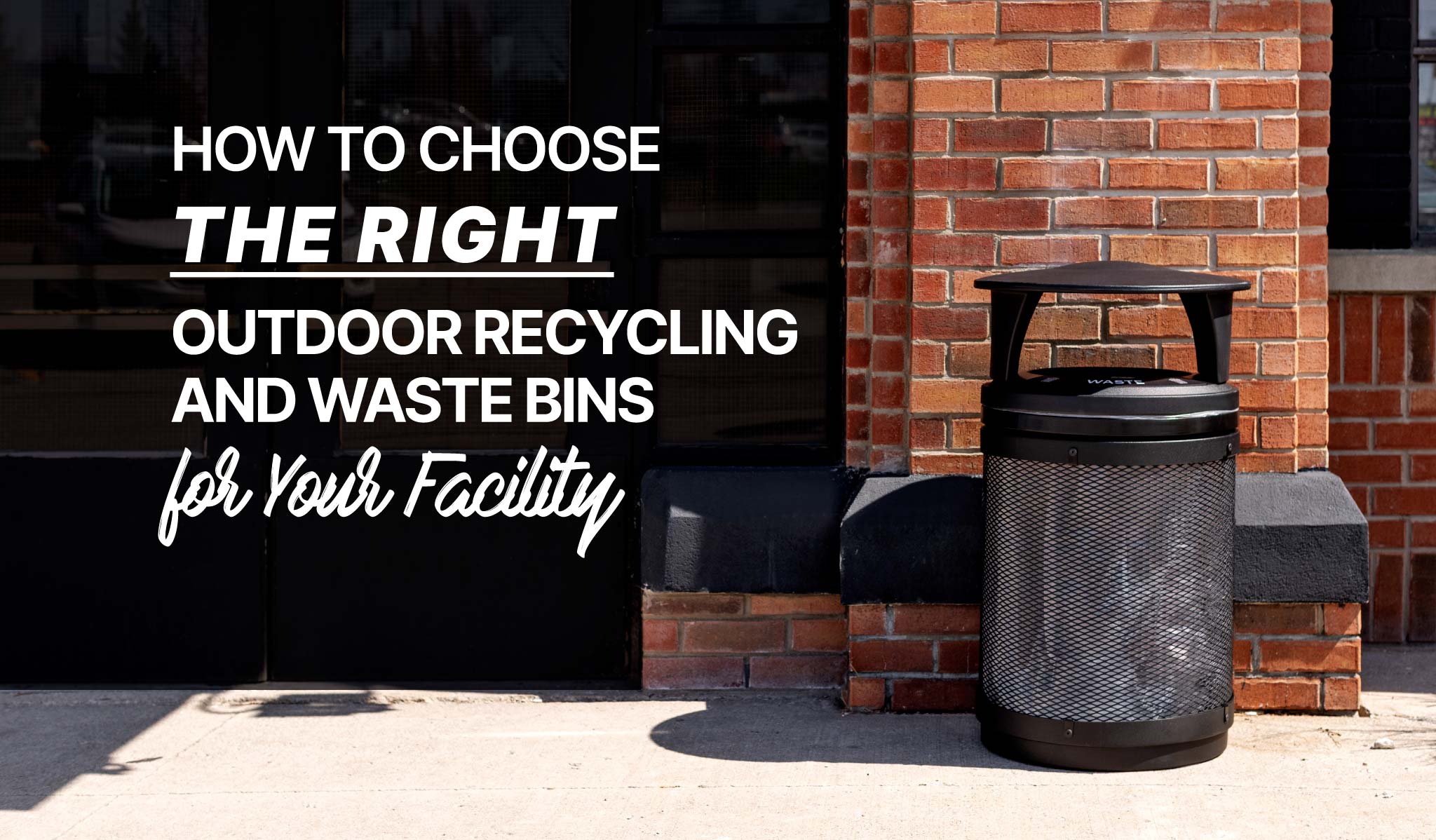
Choosing the right outdoor recycling and waste bins is about more than finding a container that can withstand the elements. The right bin system can influence how people interact with waste and recycling, how easily materials are collected, and ultimately, how successful a waste diversion program becomes.
From parks and campuses to corporate properties, public spaces, and commercial facilities, outdoor waste and recycling containers play an important role in making sustainable behavior easier. When bins are thoughtfully designed, strategically placed, and clearly labelled, they can help guide users toward better disposal decisions while supporting the operational needs of facility and waste management teams.
At Busch Systems, we believe effective waste diversion starts with understanding the environment in which a bin will be used. The right outdoor container should balance durability, capacity, accessibility, aesthetics, and user behavior to create a waste station that works for both people and the teams responsible for maintaining it.
So, how do you choose the right outdoor recycling and waste bins for your facility?
1. Start With Your Waste Streams
Before selecting a bin, determine what materials your facility actually needs to collect.
A location with a simple waste profile may only need waste and recycling, while locations that generate food waste can benefit from an organics stream where collection is available. The most effective waste systems are tailored to the materials generated and the local recovery infrastructure.
Adding too many waste streams can create confusion and increase the chance of contamination. On the other hand, too few streams may result in recyclable or compostable materials ending up in the garbage.
The best approach is to look at your current waste data, understand what materials are being generated, and design your outdoor waste stations around those needs.
For facilities looking to create a straightforward outdoor recycling and waste station, the Fusion Series offers a flexible approach to waste collection, with configurations designed to support different waste streams and environments. Its lumber-look design can also help outdoor waste infrastructure feel more integrated into its surroundings.
2. Consider Your Environment
Outdoor containers face challenges that indoor bins don’t. Rain, snow, wind, UV exposure, temperature fluctuations, and heavy use can all affect the performance and appearance of a container over time.
When evaluating outdoor bins, consider the conditions they will be exposed to. A container used in a busy downtown environment may have different requirements than one installed in a university courtyard, sports complex, or municipal park.
Durability should be a key consideration, but so should maintenance. Containers that are easy to service, clean, and access can help reduce the time and effort required by custodial and collection teams.
The Euro Series is one example of an outdoor container designed to provide a practical waste collection solution while complementing a range of outdoor environments. Its versatile design makes it well suited for locations where organizations want functional waste infrastructure without compromising the appearance of the surrounding space.
The best outdoor bin is one that is designed for the environment it will actually be used in, not simply one that looks good on day one.
3. Choose the Right Capacity
Capacity is another important factor that is often overlooked.
A bin that is too small may overflow quickly, creating litter and making the surrounding area look poorly maintained. A container that is unnecessarily large, however, may take up valuable space and require more material and resources than necessary.
Consider:
- How much waste and recycling is generated?
- How frequently are containers emptied?
- What are the busiest times of day?
- Are there seasonal changes in waste volume?
- How much space is available for the container?
High-traffic areas may require larger-capacity containers or more frequent collection schedules. Understanding these operational factors before choosing a bin can help create a cleaner, more efficient waste management system.
The VistaBin Series is a strong option for facilities that need larger-capacity outdoor waste and recycling collection. Its popular mesh styling provides a practical solution for high-traffic environments while maintaining an open, recognizable appearance.
The key is to match capacity to actual waste generation and collection schedules. A thoughtful approach can help prevent overflowing bins without unnecessarily increasing the footprint of your waste stations.
4. Think About User Behavior
A waste diversion program is only as effective as the people using it.
Outdoor recycling and waste bins should make the correct disposal decision as intuitive as possible. This means thinking about what users see, how quickly they need to make a decision, and whether the containers clearly communicate where each material belongs.
Consistency plays a major role. If recycling is represented by one color or visual cue in one area and something completely different in another, users may become confused. A consistent system across a facility or property can help build recognition and reduce decision-making at the bin.
At Busch Systems, we believe effective waste diversion starts with understanding the user. The goal isn’t simply to provide more bins, it’s to design a system that makes the right choice easy.
5. Don’t Underestimate Signage
Even the best-designed outdoor recycling station can struggle if users don’t know what goes where.
Clear, highly visible signage can help communicate accepted materials and reduce contamination. Rather than relying solely on text, consider using simple graphics, recognizable symbols, and images of actual materials, alongside text to maximize diversion and give users greater confidence that they are making the right disposal decision.
Signage should also be specific to the local waste program. What belongs in a recycling bin can vary significantly by municipality, region, or facility. Generic messaging may unintentionally encourage users to place materials in a recycling stream that cannot actually accept them.
Think of the bin and its signage as one system. The container provides the physical infrastructure, while the signage provides the instructions.
Outdoor containers such as the Fusion, Euro, and VistaBin Series can be incorporated into waste stations with clear, purpose-built visual communication that helps users quickly identify the appropriate stream.
The objective is simple: reduce the amount of thinking required at the bin.
6. Consider Placement and Traffic Flow
Where you put your outdoor bins can be just as important as the bins you choose.
Containers should be located where people naturally make disposal decisions. High-traffic entrances, gathering areas, food service locations, walkways, and outdoor seating areas can all be strategic locations.
It’s also important to consider the relationship between waste and recycling bins. If users encounter a garbage bin without a recycling option nearby, recyclable materials may end up in the garbage simply because it is the most convenient choice.
A well-designed waste station brings the appropriate streams together, making the desired behavior the easiest behavior.
It’s also important to think about waste and recycling infrastructure as part of the broader streetscape. Streetscape products are urban design elements that help enhance the functionality, safety, and aesthetic appeal of public spaces, including sidewalks, plazas, parks, and streets. Outdoor waste and recycling bins can play an important role within this larger ecosystem, helping ensure that waste infrastructure feels like an intentional part of the public environment rather than an afterthought.
Ultimately, the best placement strategy is one that puts the right bin in the right location, before users have to think about where to dispose of their waste.
7. Make Accessibility a Priority
Outdoor waste and recycling stations should be easy for everyone to use.
Consider the height and placement of openings, the space around the container, and whether users can comfortably access the correct stream. Containers should be positioned in a way that supports accessibility while also allowing collection and maintenance teams to do their jobs efficiently. Accessibility Standards Canada recommends providing clear floor space adjacent to waste receptacles and recycling bins, helping ensure that users have sufficient room to approach and use them.
Accessibility should be considered from the beginning of the design process, not added as an afterthought.
When planning a waste station, consider the full user experience. Can someone easily identify the correct opening? Is the station accessible from the surrounding walkway? Is there enough room to approach and use the container comfortably?
These considerations can help create outdoor waste and recycling systems that serve a wider range of users.
8. Don’t Overlook Aesthetics
Outdoor waste and recycling containers are highly visible pieces of infrastructure. They can influence how people perceive a space.
A well-designed waste station can complement the surrounding environment and reinforce the idea that sustainability is an important part of the facility. Conversely, outdated, damaged, or mismatched containers can confuse users, detract from the appearance of the space, and potentially contribute to increased litter.
This is particularly important for organizations that invest heavily in their buildings, campuses, parks, and public spaces. The waste and recycling infrastructure should feel like an intentional part of the overall environment.
The Fusion Series demonstrates how outdoor waste collection can combine functionality with a more refined, integrated aesthetic. Its lumber-look appearance can help it blend into a variety of outdoor settings, from landscaped spaces to campuses and public areas.
Meanwhile, the Euro Series offers a versatile design that can work across a range of outdoor applications, while the VistaBin Series brings a recognizable mesh styling to high-traffic environments.
Premium design isn’t simply about appearance. When sustainability infrastructure is thoughtfully designed and integrated into a space, it can help communicate organizational values and encourage people to take the program seriously.
9. Think About the Entire Lifecycle
The purchase price of an outdoor container is only one part of the equation.
Consider the container’s expected lifespan, maintenance requirements, replacement parts, collection process, and overall durability. A lower-cost option may not always be the most cost-effective choice if it needs to be replaced frequently or requires significant maintenance.
It is also worth considering what happens at the end of the container’s useful life. Choosing products made with recycled or post-consumer recycled materials, where appropriate, can help organizations think about sustainability beyond the moment of purchase.
When selecting outdoor bins, consider the full lifecycle of the product and how it fits into your organization’s broader sustainability goals.
Choosing the Right Outdoor Bin for Your Facility
There is no one-size-fits-all solution for outdoor recycling and waste management. The right system depends on the facility, the materials being generated, the people using the space, and the operational realities of collection and maintenance.
The most successful programs bring these elements together.
Start by understanding your waste streams. Consider the environment, capacity, accessibility, and collection requirements. Make the system intuitive through consistent colors and clear signage. Place containers where people naturally need them. And choose products that are durable enough to perform in the environments where they are installed.
At Busch Systems, we believe that successful waste diversion is about more than the container itself. It’s about creating an environment where the right choice is visible, accessible, and easy to make.
When outdoor recycling and waste infrastructure is designed with both people and operations in mind, the result is more than a cleaner space. It is a waste diversion system built to support better behavior, stronger participation, and a more sustainable future.