At first glance, a recycling bin might seem like a straightforward piece of waste management infrastructure. However, the demands placed on recycling containers can vary significantly depending on where they are used. A bin in a household kitchen serves a very different purpose than one in a busy office building, university, airport or commercial facility.
As businesses and institutions work toward improving their waste diversion efforts, choosing the right recycling infrastructure becomes an important part of the process. Commercial recycling bins are designed to accommodate higher waste volumes, frequent use, and diverse waste streams, while supporting the operational and sustainability goals of an organization.
Understanding the differences between residential and commercial recycling bins can help businesses make more informed decisions, improve waste collection practices, and create recycling programs that work for the people who use them.
1. Capacity and Waste Volume
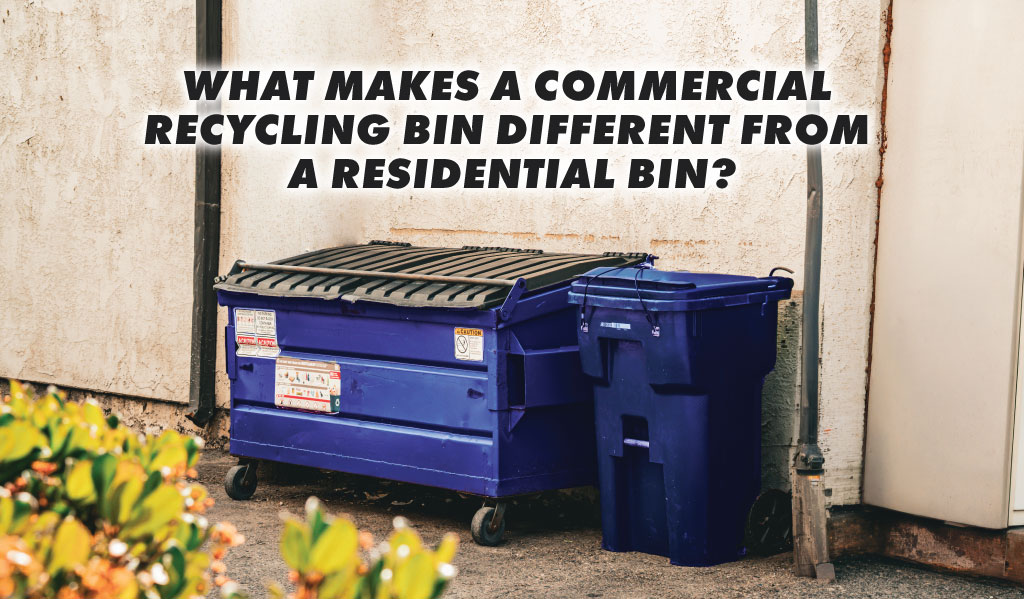
One of the most noticeable differences between residential and commercial recycling bins is their capacity.
Residential recycling containers are generally designed to accommodate the waste generated by a household. While the required capacity varies depending on household size and recycling habits, the volume of material is typically more predictable and manageable.
Commercial environments, on the other hand, can generate significantly larger quantities of recyclable materials. Offices, educational institutions, healthcare facilities, hospitality businesses and public spaces may produce substantial amounts of cardboard, paper, plastic containers and other recyclable materials throughout the day.
As a result, commercial recycling bins are available in a wider range of capacities and configurations to accommodate different operational needs.
When determining the appropriate capacity for a commercial recycling program, businesses should consider:
- Daily waste generation: How much recyclable material does the facility generate during a typical day?
- Occupancy and foot traffic: How many employees, customers, visitors, or students use the space?
- Collection frequency: How often are containers emptied by custodial teams or waste collection providers?
- Available space: Can larger containers or centralized recycling stations be accommodated without obstructing walkways or creating accessibility challenges?
Commercial recycling bins come in different capacities and configurations to accommodate varying waste volumes. For example, the Waste Watcher Series offers versatile recycling solutions for businesses looking to establish organized, multi-stream waste collection stations.
2. Durability and Construction
Unlike residential bins, which typically experience use from a relatively small number of people, commercial recycling containers must withstand frequent handling and consistent use in shared environments.
A recycling station in a busy airport terminal, for example, may be used hundreds or thousands of times throughout the day. In these environments, durability is an important consideration when selecting waste management infrastructure.
Commercial recycling bins are designed with different materials and construction features to accommodate demanding environments. Depending on the application, options may include durable plastics, metal construction and products made with post-consumer recycled content.
When evaluating commercial recycling containers, businesses should consider:
- Material construction: Is the container suited to the environment and expected level of use?
- Structural durability: Can it withstand frequent use, handling and routine maintenance?
- Maintenance requirements: Are the containers easy to clean, service and maintain?
- Product longevity: Is the container designed to support long-term use and reduce the need for frequent replacement?
Material selection can also play a role in an organization’s sustainability strategy. The Renegade Series, manufactured using 100% post-consumer recycled plastic, demonstrates how commercial waste containers can incorporate recycled materials into their construction.
Durability is also connected to sustainability. Choosing long-lasting containers can help organizations reduce replacement frequency, limit material consumption and make more strategic investments in their waste management infrastructure.
3. Waste Stream Separation and Recycling Station Design
A well-designed commercial recycling station can bring together containers for landfill waste, mixed recycling, organics and other materials accepted through a facility’s waste management program.
The configuration of these stations should reflect the materials generated within the space and the recycling requirements of the local waste collection system.
For example:
- Office buildings: Paper, cardboard, beverage containers and landfill waste.
- Schools and universities: Mixed recycling, organics, paper and landfill waste across classrooms, cafeterias and common areas.
- Airports and transportation hubs: Beverage containers, food packaging, organics and general waste in high-traffic public areas.
- Retail and hospitality: Cardboard, packaging, food waste and mixed recycling across customer-facing and back-of-house spaces.
Standardizing recycling stations throughout a facility can also make waste separation more intuitive. Consistent container colors, openings, labels and signage help users identify where materials belong, reducing confusion and supporting better recycling habits.
Commercial recycling containers can also complement the visual identity of a space. The Aristata Series demonstrates how waste management infrastructure can combine practical functionality with contemporary design, making it suitable for a variety of commercial environments
4. Placement, Accessibility and User Behavior
Where a recycling bin is placed can be just as important as the container itself.
In residential settings, recycling containers are typically positioned in convenient areas such as kitchens, garages, or outdoor collection spaces. Commercial facilities must consider a much broader range of users, activities, and physical environments.
Employees, visitors, customers, and students may all interact with the same recycling stations. If containers are difficult to locate, inconvenient to access or poorly labelled, users may choose the nearest available option rather than taking the time to separate their waste correctly.
Strategic placement can help make recycling more accessible and encourage participation.
Businesses should consider:
- High-traffic areas: Position recycling stations near entrances, break rooms, cafeterias, lobbies, and other areas where waste is frequently generated.
- Convenience: Place recycling and landfill containers together to make proper waste separation easier.
- Accessibility: Ensure containers are positioned to accommodate different users and do not obstruct pathways or accessible routes.
- Visibility: Use clear signage and consistent labeling to help users identify the correct disposal stream.
- Consistency: Maintain similar recycling station configurations throughout the facility wherever practical.
Designing around user behavior helps transform recycling from an occasional action into a more consistent part of everyday operations.
5. Aesthetics and Integration into Commercial Spaces
Another important consideration is how recycling infrastructure fits into the overall design of a commercial environment.
Residential recycling containers are often selected primarily for convenience and functionality. In commercial spaces, however, containers may be highly visible elements of the built environment.
Modern commercial recycling bins are available in different finishes, colors, configurations, and designs to accommodate a variety of environments. Whether installed in a corporate office, university campus, hotel lobby or airport terminal, recycling infrastructure can support both the visual identity and operational needs of a facility.
Thoughtful design also creates opportunities to make sustainability more visible. Well-integrated recycling stations communicate an organization’s commitment to waste diversion while providing users with convenient opportunities to participate.
How to Determine the Right Commercial Recycling Bin for Your Business
Selecting commercial recycling bins requires more than choosing a container based on appearance or capacity. The right solution should reflect how a facility operates, the materials it generates, and the people who use its waste management infrastructure.
Before investing in new recycling containers, consider the following factors.
1. Conduct a Waste Audit
Start by understanding what your facility throws away. A waste audit can help identify the most common materials generated, estimate waste volumes, and highlight opportunities to improve diversion. This information provides a foundation for determining which recycling streams your facility needs.
2. Evaluate Your Facility’s Traffic and Usage
Consider how many people use your space and where waste is generated most frequently. A small professional office will have different requirements than a busy food court, university or transportation hub. Understanding these differences will help determine the appropriate container capacity and number of recycling stations.
3. Identify Your Required Waste Streams
Determine which materials your facility can realistically divert based on local collection and processing requirements. From mixed recycling and organics to landfill waste, your container configurations should reflect the materials your organization actually generates and can collect.
4. Consider the Operating Environment
Think about where containers will be installed and how frequently they will be used. Indoor and outdoor applications may require different materials, construction features and maintenance considerations. High-traffic environments may also benefit from more durable containers designed for frequent use.
5. Prioritize Functionality and User Experience
Consider how employees, visitors and customers will interact with your recycling stations. Clear signage, intuitive openings, consistent colors and convenient placement can all help reduce confusion and encourage proper waste separation.
6. Plan for Long-Term Growth
Your organization’s waste management needs may change as your facility grows, occupancy increases or sustainability goals evolve. Selecting adaptable recycling stations and scalable configurations can make it easier to expand or adjust your program over time.
Building Better Commercial Recycling Programs Starts with the Right Infrastructure
While residential and commercial recycling bins share the same fundamental purpose, their applications and requirements are considerably different. Commercial environments must account for higher waste volumes, frequent use, multiple waste streams and the diverse needs of the people interacting with their recycling infrastructure.
However, choosing the right containers is only one part of building an effective recycling program. Successful waste diversion also depends on understanding material flows, establishing consistent collection practices, educating users and regularly evaluating program performance.
At Busch Systems, we believe effective waste management starts with thoughtful infrastructure. By selecting recycling solutions that align with a facility’s operational requirements and sustainability objectives, organizations can create more accessible, consistent and effective recycling programs.
The right recycling bin does more than collect waste. It helps create the foundation for better waste management.