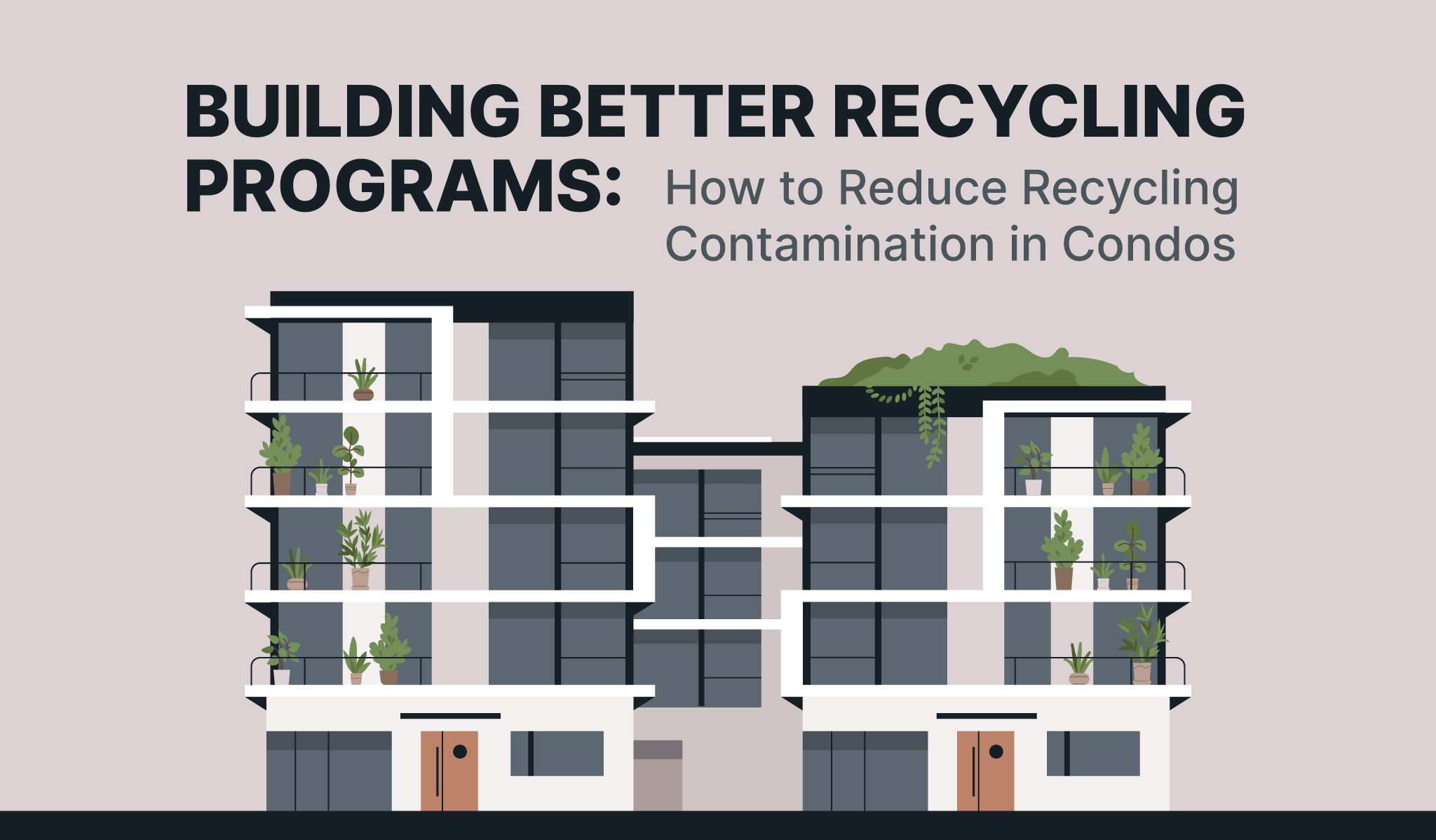
Condo buildings are home to hundreds, and sometimes thousands, of people sharing the same spaces and waste infrastructure. From individual units and recycling rooms to lobbies, lounges, fitness centers, and outdoor spaces, there are countless opportunities for waste to be generated, and just as many opportunities to improve recycling.
But creating an effective recycling program in a condo building can come with its challenges. Confusing recycling guidelines, inconvenient bin placement, overflowing containers, and unclear signage can all contribute to recycling contamination and make it harder for recyclable materials to stay in the recycling stream.
Whether you’re a property manager, condo board member, building staff member, or resident looking to improve recycling in your community, small changes can make a meaningful difference.
Here are seven ways to reduce recycling contamination in condo buildings.
1. Understand Your Building’s Waste Streams
Common sources can include:
- Individual residential units
- Recycling and garbage rooms
- Lobbies and common areas
- Party rooms and amenity spaces
- Fitness centers
- Outdoor areas
- Mailrooms and package areas
- Maintenance and janitorial operations
Take a look at where waste is accumulating throughout the building and which materials are most commonly thrown away or recycled.
For example, a building with frequently used party rooms may generate more food and beverage packaging, while a busy mailroom may see a large amount of cardboard and paper waste.
Understanding these waste streams can help determine where recycling stations are most needed and what types of containers and signage will work best.
2. Make Recycling Convenient
One of the simplest ways to encourage better recycling habits is to make recycling convenient.
When recycling bins are difficult to find or located far away from where waste is being generated, people may be more likely to use the nearest available container instead.
Consider placing recycling stations in areas where residents and visitors regularly generate waste, such as:
- Lobbies
- Party rooms
- Lounges
- Fitness centers
- Mailrooms
- Common kitchens
- Outdoor gathering areas
The design of the recycling station can also play a role in making sorting easier. For example, the Mezzo Series is available in double- and triple-stream configurations, allowing recycling and waste containers to be combined into a centralized station. Color-coded lids, optional restrictive openings, and clear labeling can further help residents identify the appropriate stream.
It is also important to consider the size and capacity of recycling containers. A bin that regularly overflows can discourage proper sorting and may cause recyclable materials to end up in the garbage, or garbage to end up in the recycling.
The easier recycling is to access, the easier it becomes to make it part of everyday habits.
3. Use Clear, Consistent Signage
Even people who want to recycle correctly may not always know where an item belongs.
Recycling guidelines can vary between municipalities, and packaging can be particularly confusing. Clear signage can help make the correct choice easier at the moment someone is throwing something away.
Effective recycling signs should:
- Clearly identify each waste stream
- Use simple, easy-to-understand language
- Include recognizable images where helpful
- Highlight commonly accepted materials
- Identify common items that do not belong in the recycling stream
- Use consistent colors and messaging throughout the building
Try to avoid overwhelming people with too much information. Recycling stations should allow someone to quickly understand where an item belongs without having to read a long list of instructions.
Container design can reinforce this messaging, too. The Spectrum Series, for example, combines color options, customizable labels, and restrictive openings to help distinguish between waste streams and guide users toward the appropriate container. Its modular design also allows stations to be adapted as a building’s recycling needs change.
Using the same signage and visual cues throughout a building can also help residents become familiar with the recycling system.
4. Think About Bin Placement
Where recycling bins are placed can influence how they are used.
Rather than placing containers wherever there happens to be available space, think about where people are most likely to generate waste and how they move through shared spaces.
Pairing garbage and recycling containers together can make sorting easier. Instead of throwing everything into the nearest bin, people can make their disposal decision at the same location.
For larger lobbies, amenity spaces, or other high-traffic areas, a centralized multi-stream station can help bring the different waste streams together. The Venture Series is available in single-, double-, triple-, and quad-stream configurations, with optional signage and stream labeling to help clearly communicate where different materials belong. Its sloped lid and lead-in openings are also designed to discourage litter from being left on top of the container.
It can also help to consider:
- Visibility
- Accessibility
- Traffic patterns
- Container capacity
- Proximity to garbage bins
- The types of waste generated in each area
A well-designed waste station can help guide people toward the right disposal choice without requiring constant reminders.
5. Reduce Recycling Contamination
Recycling contamination occurs when materials that don’t belong in a recycling stream are placed in the recycling container.
Reducing contamination starts with understanding why it is happening.
Are people unsure about what belongs in the recycling?
Clearer signage and simple educational materials may help.
Are recycling containers regularly overflowing?
Additional capacity or more frequent collection may be needed.
Are recycling stations difficult to find?
Adding or relocating containers could make recycling more convenient.
Do garbage and recycling bins look too similar?
Clear labels, colors, and visual cues can help distinguish between waste streams. Products such as the Mezzo, Venture, and Spectrum Series are available in multiple configurations and can incorporate color coding, labeling, and stream-specific openings to make the intended use of each container more apparent.
Instead of simply telling people to “recycle properly,” consider the barriers that may be making proper recycling difficult in the first place.
6. Encourage Recycling Education
A successful recycling program isn’t just about having the right containers. People also need to understand how the system works.
Recycling information can be shared through:
- New resident welcome materials
- Building newsletters
- Community emails
- Resident portals
- Bulletin boards
- Social media groups
- Sustainability campaigns
Education can be especially helpful when local recycling guidelines change or when a building introduces a new waste diversion program.
Keep the messaging simple and practical. Focus on the materials people are most likely to encounter in their homes and shared spaces rather than overwhelming them with a long list of recycling rules.
It can also be helpful to explain why proper sorting matters. Understanding how contamination can affect the recycling process can encourage people to take an extra moment to sort their waste correctly.
7. Track What’s Working
Depending on the building, you may be able to monitor:
- Recycling volume
- Garbage volume
- Contamination levels
- Overflow frequency
- Collection frequency
- Resident feedback
- Participation in recycling initiatives
For example, if new signage is installed, has contamination decreased? If additional recycling stations are added to a common area, are people using them?
These observations can help show which strategies are making a difference and where further changes may be needed.
Creating a Better Recycling Experience
Improving recycling in a condo building doesn’t necessarily require a complete overhaul of the existing waste program. Often, small changes to convenience, signage, bin placement, education, and waste-station design can make it easier for everyone to participate.
The goal isn’t simply to tell people to recycle more. It’s to create an environment where the right choice is clear, convenient, and accessible.
By understanding how waste moves through a building and designing recycling systems around the people who use them, condo communities can reduce recycling contamination, improve waste diversion, and create a more effective recycling experience for everyone.