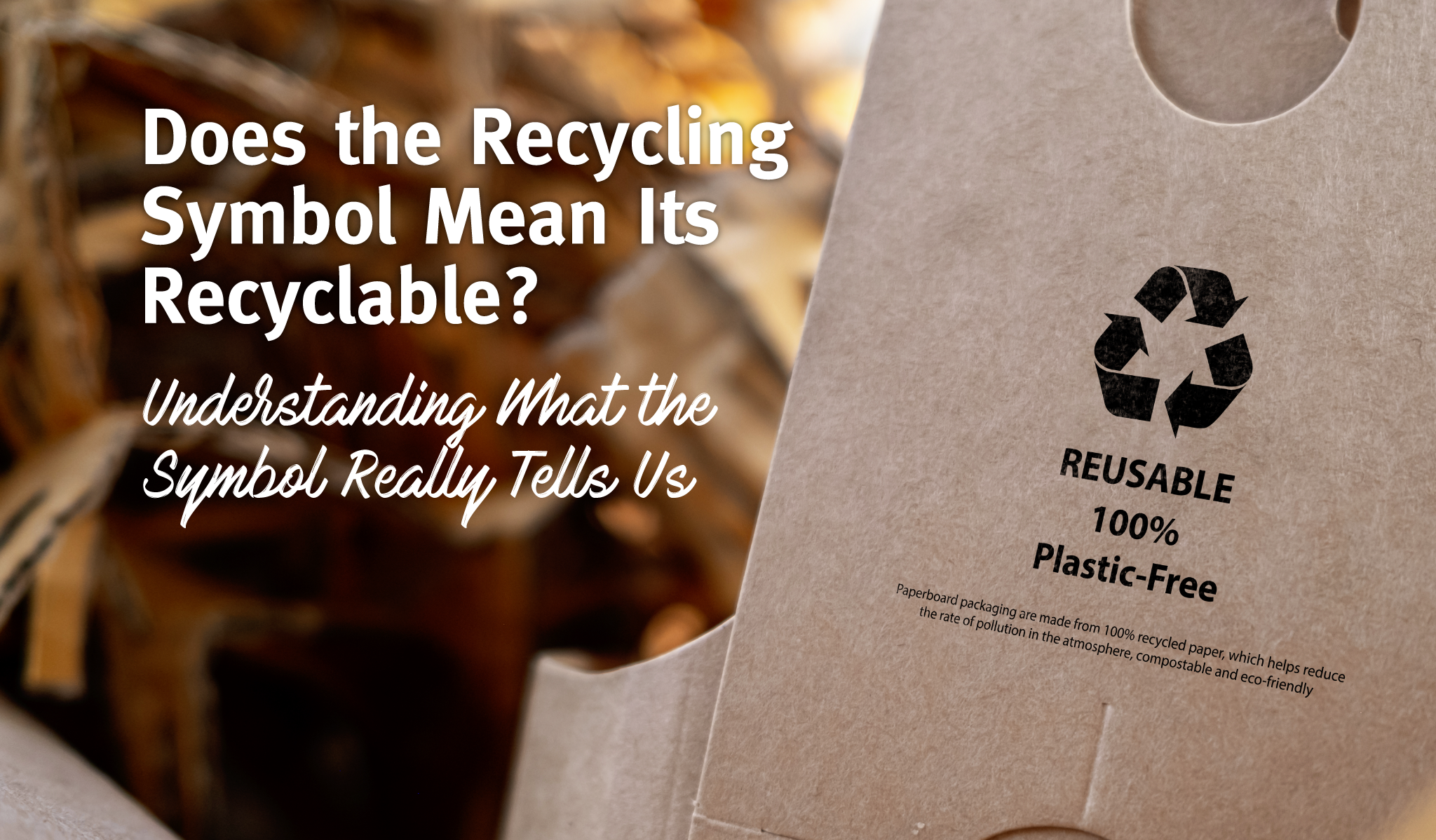
Recycling symbols are everywhere. From plastic containers and food packaging to paper products and household goods, the familiar three-arrow symbol has become synonymous with recycling. But does seeing that symbol automatically mean an item belongs in your recycling bin?
Not necessarily.
One of the most common misconceptions about recycling is that anything displaying a recycling symbol can be placed in a curbside or public recycling bin. In reality, the symbol does not always indicate that an item is accepted by your local recycling program. Understanding the difference between recyclability and local acceptance is essential for reducing contamination and improving waste diversion.
What Does the Recycling Symbol Actually Mean?
The familiar three-arrow symbol, often called the Mobius loop, generally indicates that a product or its packaging may be recyclable or is made from a material that can potentially be recycled.
However, the presence of the symbol does not guarantee that the item can be recycled through your local program.
Whether an item is accepted depends on several factors, including:
- The type of material it is made from.
- The availability of recycling facilities that can process it.
- Local collection and sorting infrastructure.
- The requirements of your municipality or waste management provider.
- Whether there is a market for the recovered material.
For example, a plastic container may be technically recyclable, but if the local recycling facility does not have the equipment needed to process that particular type of plastic, it may not be accepted in the recycling stream.
This distinction is important because an item can be recyclable in theory without being recyclable through your local program.
Why Do Recycling Symbols Cause Confusion?
The recycling symbol is intended to communicate information about a product or its packaging. However, consumers may interpret it as a simple instruction: “Put this item in the recycling bin.”
This assumption can lead to confusion, especially when different municipalities accept different materials.
Packaging can also include additional symbols or numbers that provide information about the material. Plastic resin identification codes, for example, can help identify the type of plastic used. However, a plastic identification number does not automatically mean the item is accepted in your local recycling program.
Without clear guidance, well-intentioned recycling efforts can result in incorrect materials entering the recycling stream.
The Difference Between “Recyclable” and “Accepted”
Understanding the difference between these two terms can help individuals and organizations make more informed waste-sorting decisions.
Recyclable
This does not necessarily mean that recycling facilities exist everywhere to process it.
Accepted
A material is accepted when it is specifically permitted by a local recycling program or collection provider.
For example: A certain plastic may be recyclable at specialized facilities but not accepted in your municipality’s curbside recycling program.
The key takeaway is that recyclability is a broader concept, while acceptance is specific to the collection system available in your area.
How Recycling Misconceptions Contribute to Contamination
When people assume that every item with a recycling symbol belongs in the recycling bin, they may accidentally place non-accepted materials into the recycling stream.
This is known as recycling contamination.
- Reduce the quality of recovered recyclables.
- Make sorting and processing more difficult.
- Increase operational costs for recycling facilities.
- Cause otherwise recyclable materials to be rejected.
- Create confusion for other people using the recycling system.
For businesses, schools, offices, and public spaces, unclear recycling guidance can make these challenges even more significant. High-traffic areas often serve people with different levels of recycling knowledge, making intuitive and accessible waste-sorting systems especially important.
How Can We Improve Recycling Education?
Clear communication is one of the most effective ways to help people understand what belongs in a recycling bin.
Rather than relying solely on the recycling symbol, organizations and facilities can provide specific, easy-to-understand instructions that reflect the materials accepted by their local recycling program
1. Check Local Recycling Guidelines
Before placing an item in a recycling bin, consult your municipality or waste collection provider to confirm whether it is accepted.
2. Use Clear and Specific Signage
Recycling signage should identify the materials that belong in each collection stream. Instead of relying on symbols alone, consider using:
- Simple descriptions of accepted materials.
- Clear images of common items.
- Examples of materials that should not be placed in the bin.
- Language that is easy for a broad audience to understand.
Effective signage can help reduce guesswork and encourage more consistent sorting.
3. Make Waste-Sorting Instructions Accessible
Recycling information should be easy to find and understand. In workplaces, schools, public facilities, and commercial spaces, signage should be placed where people make disposal decisions.
Consistent messaging across collection stations can help reinforce proper sorting habits and reduce confusion.
4. Review and Update Recycling Information
Recycling programs and accepted materials can change over time. Organizations should periodically review their signage and educational materials to ensure the information remains accurate.
Outdated instructions can lead to unnecessary contamination, even when people are making an effort to recycle correctly.
Building a More Effective Recycling System
Recycling is an important part of waste diversion, but successful recycling programs require more than placing a recycling symbol on packaging or adding a recycling bin to a facility.
People need to know what materials are accepted, where to place them, and why proper sorting matters.
By understanding the limitations of recycling symbols and providing clear, locally relevant education, communities and organizations can help reduce contamination, improve material recovery, and support more effective recycling systems.
At Busch Systems, we recognize the importance of combining thoughtful recycling station design with clear, accessible signage and waste-sorting education. When collection systems are designed around the needs of users and the materials accepted by local programs, they can help make proper waste diversion easier and more intuitive.
Final Takeaway
The recycling symbol is not a guarantee that an item belongs in your recycling bin. Always check local recycling guidelines, follow collection instructions, and remember that effective recycling starts with understanding what your community or facility can actually process.