When architects think about waste and recycling infrastructure, the conversation often centers on aesthetics, materials, capacity, and placement. But one of the most overlooked design details can have a significant impact on what happens after a bin is installed: the shape and size of the opening, or aperture.
An aperture is more than an access point for waste. It can influence how people interpret a bin, what materials they believe belong inside it, and whether they take an extra moment to make the right disposal decision.
For architects and designers working on offices, universities, healthcare facilities, airports, stadiums, and other high-traffic environments, thoughtful aperture design can become an important part of a broader waste-diversion strategy.
National recycling strategies increasingly emphasize the importance of improving the design and effectiveness of recycling systems, making the way materials are collected an important consideration alongside broader waste-diversion efforts
The right opening can help guide the right behavior.
What Is an Aperture?
A bin aperture is the opening through which users deposit materials into a waste or recycling container. Apertures can vary considerably in shape, size, orientation, and configuration, depending on the intended material stream.
Common configurations include:
- Full openings or circular openings for general waste
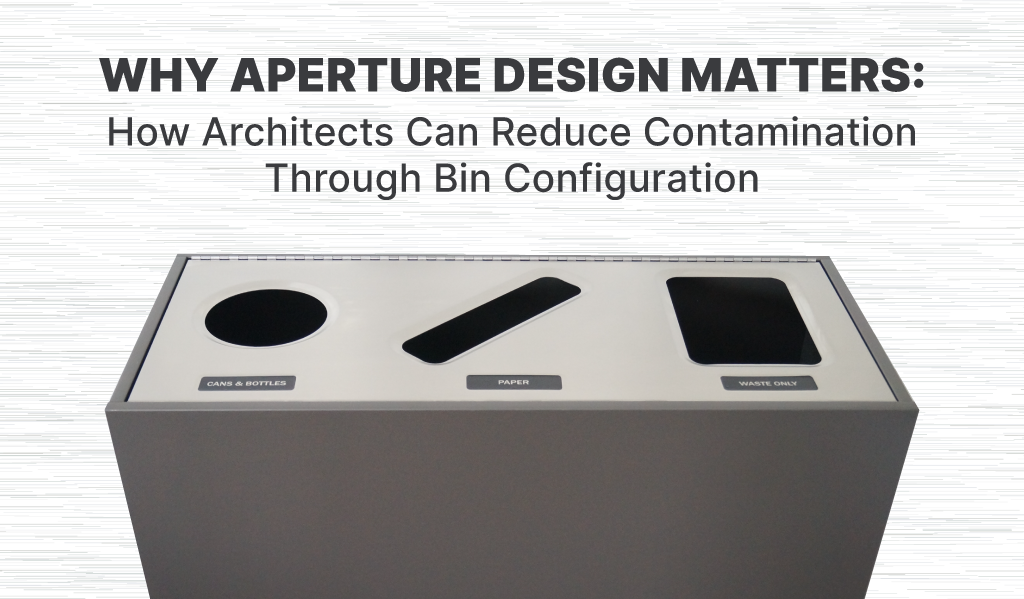
- Narrow slots designed for paper
- Round openings for bottles and cans
- Lift lids for food scraps and other organics
- Hinged or flapped openings designed to control access
- Specialized openings that correspond to a particular material or container type
While these differences may seem subtle, they can provide users with an immediate visual cue about what belongs in each stream.
That matters because waste disposal is often a quick decision. In a busy public or workplace environment, people may not stop to carefully read signage before throwing something away. Instead, they rely on visual cues, familiarity, convenience, and the physical design of the container. Research examining waste-bin design suggests that features such as bin shape, lid configuration, and openings can influence how people interact with waste systems and guide disposal behavior.
The Connection Between Aperture Design and Contamination
Recycling contamination occurs when unwanted materials enter a recycling stream. A recyclable container might end up in landfill waste, while food scraps, liquids, plastic bags, or other non-recyclable materials can end up in recycling.
Signage and education are important tools for addressing contamination, but they aren’t the only tools available.
Bin configuration can act as a form of behavioral guidance.
A large, unrestricted opening essentially communicates that a wide variety of materials can be deposited. A more deliberately designed aperture can create a subtle physical distinction between waste streams.
For example, consider a recycling bin designed to collect beverage containers. A round or appropriately sized opening can visually and physically reinforce the idea that bottles and cans belong there. Meanwhile, a narrow slot can signal that the container is intended for flat paper rather than general waste.
The goal isn’t to make disposal difficult. It’s to make the correct choice intuitive.
Designing for the Decision Users Actually Make
Architects frequently design spaces around how people move through them. Waste stations deserve the same consideration.
When someone approaches a waste station, they are making a series of decisions:
What goes where? → Which bin should I use? → Can my item fit? → Is this convenient?
A well-designed aperture can help answer the third question while reinforcing the first two.
This is particularly valuable in environments where users may be unfamiliar with the waste program. A visitor at an airport, student entering a university dining hall, or fan attending a sporting event may not know the facility’s specific recycling rules. The physical configuration of the bin can provide an immediate cue without requiring them to understand the entire waste-management system.
One Size Does Not Fit Every Waste Stream
One of the most important considerations when specifying waste and recycling bins is that different materials have different physical characteristics.
A configuration that works well for paper may not be appropriate for organics. Similarly, an opening designed for beverage containers may not be suitable for mixed recycling.
Architects should therefore consider the intended material stream before selecting a bin configuration.
Paper
Paper recycling often benefits from a narrow, horizontal slot that encourages users to deposit paper flat rather than treating the container like a general-purpose waste bin.
Bottles and Containers
Round or appropriately sized openings can help signal that bottles, cans, and similar containers belong in the recycling stream. This is one reason aperture selection can be particularly valuable for high-traffic environments where users need to make quick disposal decisions.
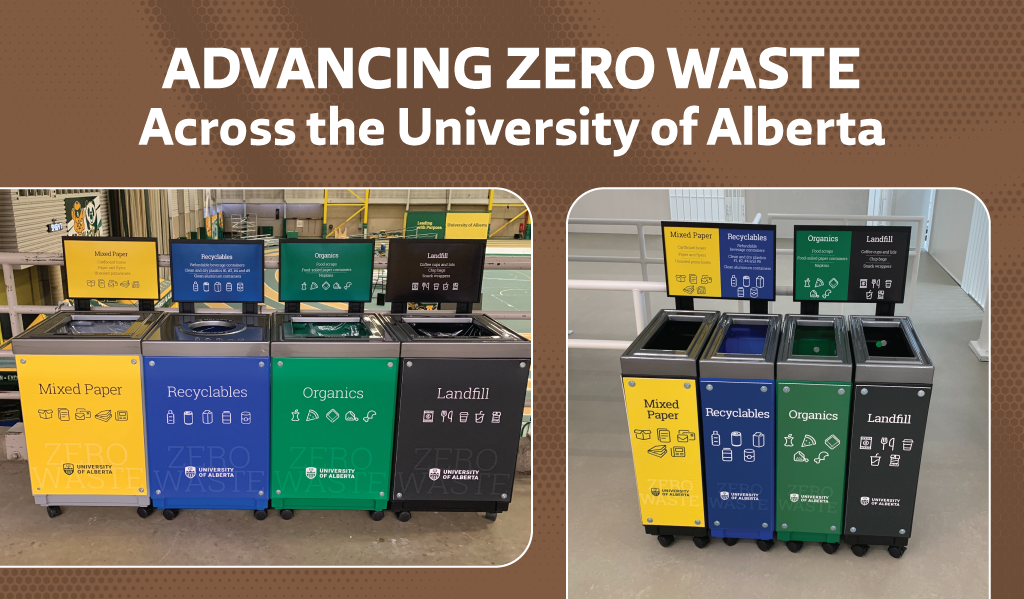
The Spectrum® Series, for example, offers a range of lid configurations, including restrictive openings designed to help guide users toward the appropriate waste stream. Its modular design allows architects and facility managers to combine different openings, colors, labels, and streams within a centralized station.
Organics
Food-waste containers may benefit from smaller openings, lift lids, or other configurations that help distinguish the organics stream and support more intentional disposal. Research examining compost-bin design has found that physical design characteristics can influence how users interact with organics collection systems.
Landfill
A more open configuration may be appropriate for residual waste because the stream typically accepts a broader range of materials.
The important takeaway is that aperture design should reflect the materials the bin is intended to collect rather than being selected solely for appearance.
Restricted Openings Can Create a Physical Filter
One way to think about aperture design is as a physical filter.
A traditional waste station relies heavily on users to interpret labels and make the correct decision. A thoughtfully configured station adds another layer: the physical opening itself.
This doesn’t mean an aperture should prevent every incorrect item from being deposited. That’s rarely realistic. Instead, it can reduce the likelihood of obvious misplacement by creating a physical and visual distinction between streams. Research on waste-bin design has similarly explored how physical features of collection points can influence sorting behavior, suggesting that the design of the disposal interface itself can play a role in guiding users toward the intended stream.
For example, if a recycling aperture is sized and shaped around common recyclable containers, a user holding a large piece of food waste may be less likely to perceive that opening as the appropriate destination.
That small moment of friction can encourage users to reconsider their choice.
Good design doesn’t force people to think harder. It makes the correct decision easier to recognize.
Design the Entire Waste Station, Not Just the Bin
Aperture design is most effective when considered as part of the entire waste station.
Architects should evaluate how the following elements work together:
Aperture + color + signage + labels + placement + consistency = intuitive disposal
If the aperture suggests one material but the signage communicates another, the user receives conflicting information.
This is where product configuration becomes particularly important. The Aristata® Series, for example, combines a high-end architectural aesthetic with customizable openings, labels, finishes, and multi-stream configurations. Its stainless-steel lids are available with restrictive openings, allowing designers to incorporate more deliberate disposal cues without compromising the visual character of the space.
For architects, this demonstrates an important principle: designing for waste diversion doesn’t have to mean compromising the design of the space. The physical cues that help users sort materials can be incorporated directly into the aesthetic and functional language of a project.
This is why waste stations should be treated as part of the navigation system of a building, rather than simply as pieces of furniture.
Consistency Matters Across a Building
Another consideration for architects is consistency.
If every waste station in a building uses a different configuration, users have to relearn the system each time they encounter one.
A consistent approach creates familiarity. When users encounter the same visual and physical cues repeatedly, the disposal process can become more intuitive over time. Research on waste-bin design supports the importance of considering these physical and contextual cues when designing systems intended to influence disposal behavior.
If recycling always has a particular color, opening style, and label, users can begin to recognize the recycling stream almost automatically. This is especially important in large facilities such as universities, corporate campuses, transportation hubs, and entertainment venues where people encounter multiple waste stations throughout a single visit.
Architects can help establish this consistency at the specification stage by creating standardized waste-station guidelines that can be applied throughout a project.
Think About the User’s Perspective
Aperture selection should also account for the people actually using the space.
Consider:
- Traffic volume: How quickly do people move through the space?
- User familiarity: Are users employees, students, residents, visitors, or a combination?
- Material streams: What materials are actually generated?
- Accessibility: Can people with different mobility and physical abilities comfortably use the opening?
- Container size: Are users likely to be disposing of cups, bottles, food containers, paper, or larger items?
- Location: Is the station in a high-speed corridor, dining area, office, classroom, or public gathering space?
- Maintenance: Can staff easily service the container and keep the opening clean and functional?
Aperture design shouldn’t be considered in isolation from these factors.
Aesthetic Design and Waste Diversion Can Work Together
Architectural projects often have strict aesthetic requirements. Waste and recycling stations need to complement the surrounding environment rather than becoming visual distractions.
Fortunately, designing for better waste sorting doesn’t mean sacrificing aesthetics.
The Spectrum Series provides a more visibly color-coded approach, with powder-coated steel bodies and multiple lid and opening configurations that can help distinguish material streams. In contrast, the Aristata Series is designed to integrate more subtly into sophisticated interiors, offering multiple finishes and customizable openings while maintaining a refined appearance.
Both approaches demonstrate the same underlying idea: the best waste station is one that considers both how a space should look and how people will interact with it.
For architects, that means aperture design can be considered alongside finishes, materials, colors, signage, and overall spatial planning, not as an afterthought once the architectural design is complete.
The most effective waste infrastructure is often the infrastructure users barely have to think about.
What Architects Should Consider When Specifying Bin Apertures
When selecting waste and recycling containers for a project, architects can use the following checklist:
1. Start with the material stream
Determine exactly what each container is intended to collect. Don’t select an aperture before understanding the waste stream.
2. Match the opening to the material
Consider whether the material is flat, cylindrical, loose, wet, bulky, or likely to be disposed of in a container.
3. Use physical cues alongside visual cues
Apertures should complement color coding, graphics, labels, and signage rather than working independently.
4. Minimize unnecessary complexity
The goal isn’t to create complicated disposal systems. It is to make the correct choice intuitive.
5. Prioritize accessibility
Opening height, size, reach requirements, and ease of use should be considered alongside contamination reduction.
6. Standardize wherever possible
Consistent configurations across a facility can reduce confusion and make waste sorting more intuitive over time.
7. Design for the real environment
A waste station in a stadium concourse will face very different challenges from one in a corporate office. Consider traffic patterns, users, waste volumes, and operational requirements before specifying the system.
The Bigger Picture: Designing for Behavior
Waste diversion doesn’t begin when a material reaches a recycling facility. It begins much earlier, at the moment someone decides where to throw something away.
Architects have an opportunity to influence that decision through the environments they create.
When the shape and size of an opening reinforce the intended material stream, users receive another cue that can help them make the right disposal decision. When that cue is combined with intuitive signage, consistent colors, strategic placement, and a well-designed waste program, the result can be a more effective and user-friendly diversion system.
At Busch Systems, we believe waste and recycling infrastructure should do more than collect material. It should help people understand what to do with it.
By considering aperture design early in the architectural and specification process, designers can create waste stations that integrate seamlessly into their spaces while supporting cleaner recycling streams and stronger waste-diversion programs.
Because sometimes, better recycling starts with a better opening.