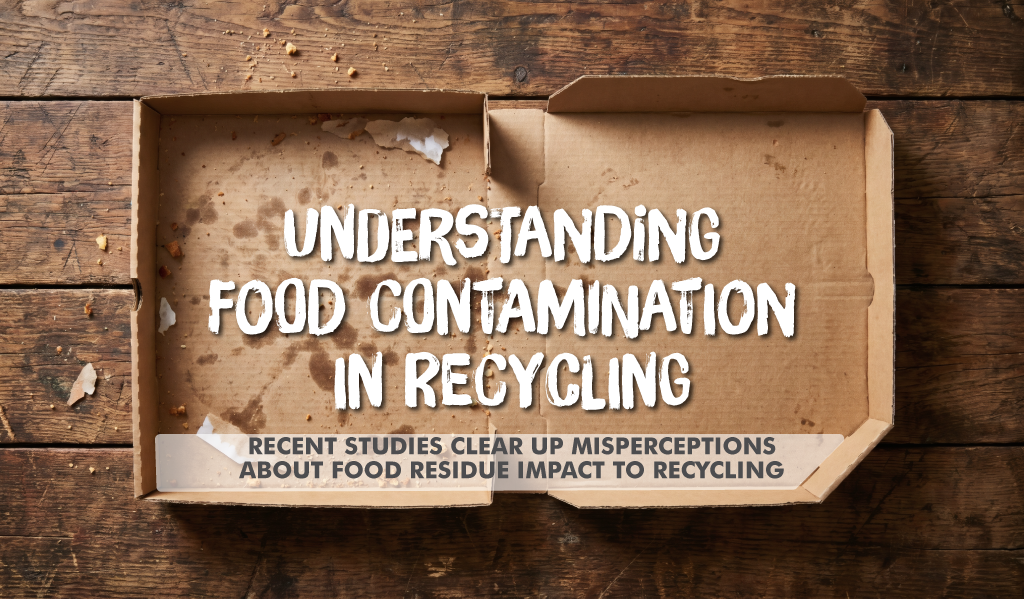
Recent studies clear up misperceptions about food residue impact to recycling
Some discarded items like aluminum cans or high-grade paper are inherently valuable and universally welcomed into the recycling system. Others are an unquestionable ‘no’ (non-packaging plastics), some may flip from ‘no’ to ‘yes’ over time (cartons, paper cups) and others will always remain dependent on the straightforward economics and infrastructure of a location (glass, polystyrene).
And then there are items like pizza boxes that have existed in a timeless ambiguity. For decades local recycling managers have amplified the guidelines provided them by downstream processors, flagging pizza boxes as a greasy menace to the recycling process in one community while, confusingly, the next town over says it’s a non-issue. Ask the respective outreach coordinators to reconcile the conflicting messages, and both are likely to confess the same lack of clarity of what actually happens when a pizza box with some caked-on cheese enters the recycling system.
This ambiguity about food residue and how to educate the public applies to other food and beverage packaging as well. Just how vigilant do we need to be against trace amounts of peanut butter in a jar? Does a little juice sloshing around an empty carton degrade the material itself or is there a separate issue? Is a dried-out filmy layer of mayonnaise simply an odor issue or something that directly impacts MRF (material recovery facility, aka sorting facility) operations?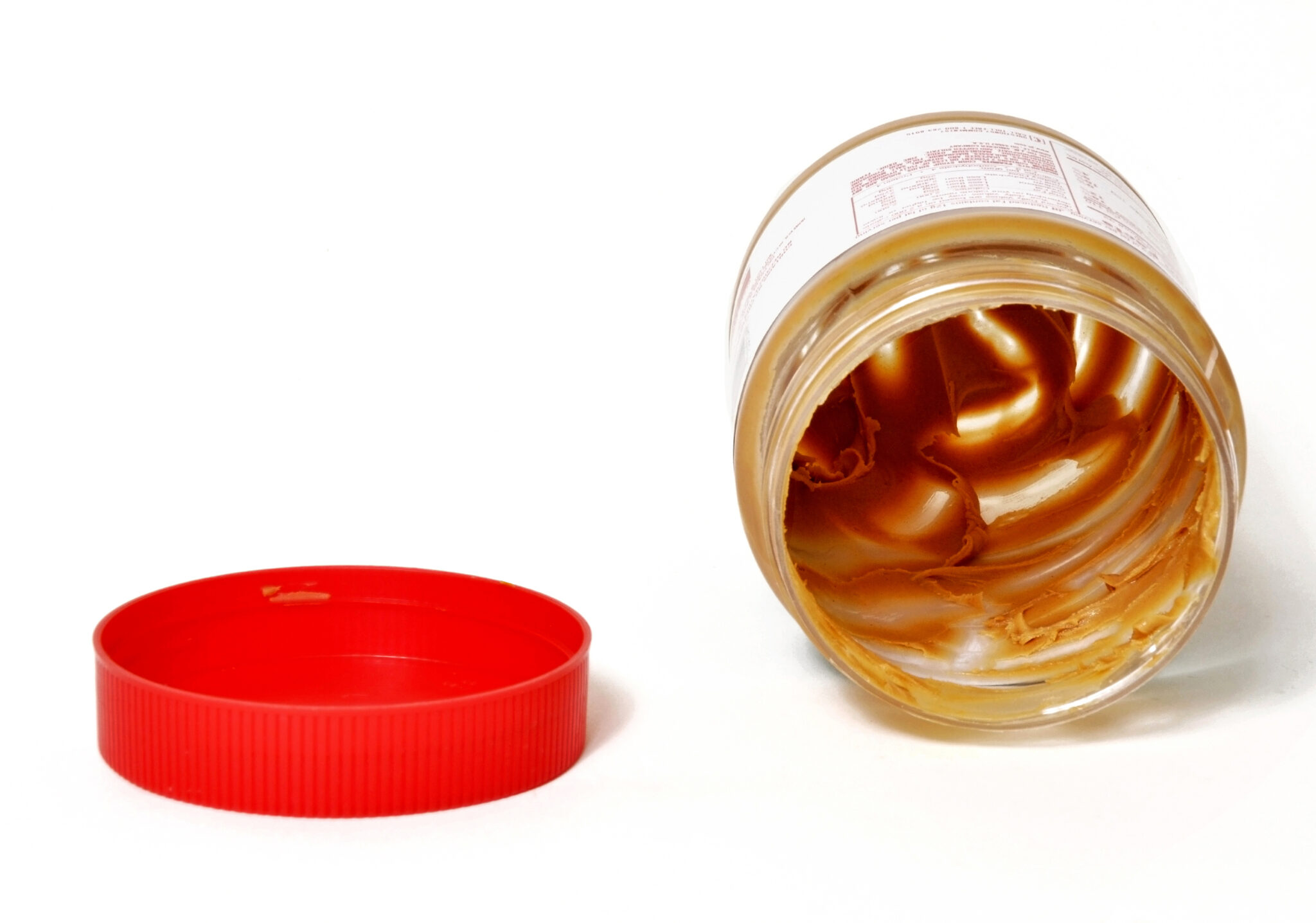
Fortunately, we’ve started to get some meaningful clarity to these questions in recent years. The Foodservice Packaging Institute (FPI) and Resource Recycling Systems (RRS) hosted a recent webinar panel discussing takeaway insights from a pair of studies about food residue in the recycling process. Representatives of both paper and plastics recycling manufacturers echoed a similar line that food residue may not be a non-issue, but neither is it the existential threat to recycling some perceive it to be. The webinar cited two reports, a 2022 Food Residue Study published by FPI and the Sustainable Packaging Coalition’s (SPC) 2026 Impact of Food Residue on Paper Packaging Recyclability that engaged downstream MRF’s, processors and recycling mills about the specific issues they face. The SPC report also includes focus group insights about consumer awareness of food contamination and how participants responded to different packaging and guideline scenarios.
This blog will summarize some of the key take-aways from the webinar and reports. Then stick around for the part 2 blog where I’ll put these into context with lessons learned about recycling behavior and public engagement, and offer thoughts on a path forward for recycling industry stakeholders.
How Big an Issue is Food Contamination to the Recycling Process?
The webinar addressed a basic point up front. The panelists, Stephanie Baker from KW Plastics, Ed Tucciarone with Graphic Packaging International and Brad Kurzynowski, one of the lead authors of the SPC report, all emphasized that neither food or liquid contamination significantly impacts the quality or inherent recyclability of paper or plastic packaging formats. They don’t degrade the material itself, nor do they directly interfere with the recycling process that breaks down, cleans and transforms scrap material into feedstock for new manufacturing. Moisture doesn’t affect old cardboard or scrap paper, which after all get processed into a liquid slurry of pulp before being reconstituted into new products. Neither does grease meaningfully degrade the quality of material, an observation consistent with a separate 2020 study commissioned by the paper and cardboard manufacturer WestRock. While acknowledging the long-standing confusion about pizza boxes, the study went down the science rabbit hole, documenting how the hydrophobic properties of fats and proteins do not hinder the hydrogen inter-fiber bonding of fibers. So yes, the folks who actually turn those old boxes into new cardboard have given their blessing to old pizza boxes.
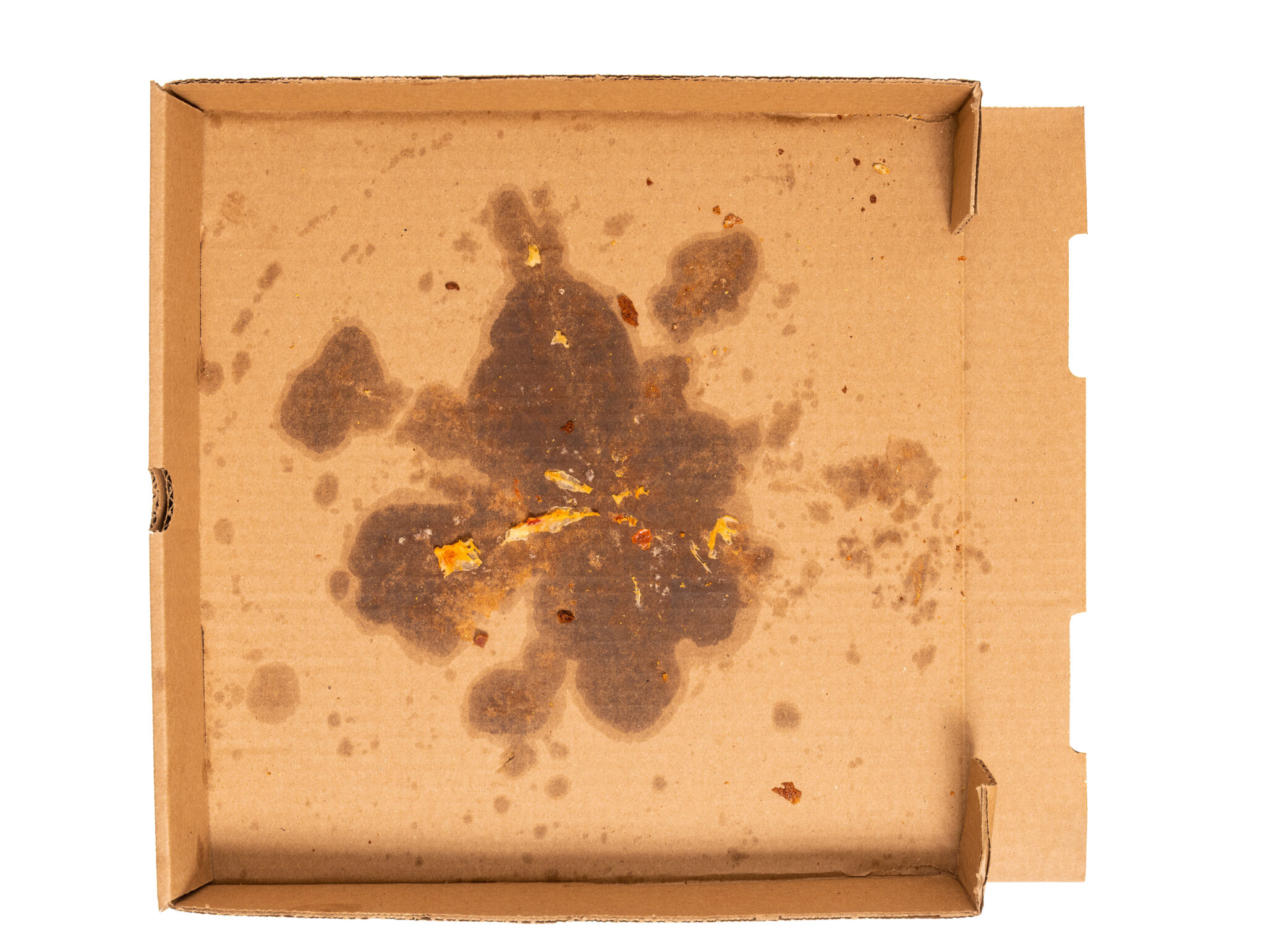
The chief concerns are operational and economic, not technical. And for the most part, the issue appears to be less about the filmy residue that might coat a package and more the actual quantities of uneaten food remaining in packaging. In other words, the partially filled yogurt tub or to-go carton with a few uneaten bites of a burrito. Much of this organic material gets separated from containers by the compacting and jostling of the collection and sorting process, but it leaves a mess along the way that attracts pests and adds to operational costs. And as anyone who’s worked in a MRF knows, spoiled dairy is really unpleasant for the folks working the sorting line. The other issue is the quantity of food that manages to pass all the way through a MRF and into sorted bales, and by extension, into the supply chain for new manufacturing. Like other contaminants that slip through, the weight of that food can get factored into the per-ton cost that processors and mills pay for ostensibly clean commodity materials.
How serious is the issue? The 2022 FPI fact sheet summarized results from a series of composition studies done at a Michigan MRF, with a specific focus on food contamination rates of foodservice packaging (take-out containers, pizza boxes, etc.) relative to food contact packaging (store-bought jars, containers, trays, etc.). Using a scale of 1 to 5, with 5 being heavily contaminated, they found the vast majority of packaging from both categories fell in the 1 or 2 range, and the percentage flagged as a 4 or 5 was extremely low. In other words, minimal contamination. Granted, this is a single area but it was consistent with similar audits done in 2013 and 2014 in Massachusetts and Delaware.
The more recent SPC study approached the question from a qualitative angle, surveying MRF’s, and downstream paper recyclers (commodity brokers, paper mills) about their experience. The general consensus was that food contamination is a minor issue given the technology and processes in place to manage what currently arrives on MRF tipping floors. Speaking on behalf of the largest plastics recycling company in the world, the webinar panelist from KW Plastics reinforced this observation that food contamination is a minor concern.
The SPC report flagged a couple noteworthy things. There is no objective industry standard to judge how much contamination is too much, rather MRFs and recycled fiber mills tend to operate on a “we know it when we see it” basis. (Herein lies the answer to why some programs welcomed pizza boxes while others haven’t). Second, even as they called the status quo manageable, respondents to the SPC study were unanimous rejecting any industry steps that could lead to more food contamination, even as a tradeoff for higher material recovery. Rather, the priority for recycling stakeholders should be further consumer education and on-packaging guidance to reduce contamination. We’ll come back to this one.
Consumer Awareness about Food Contamination
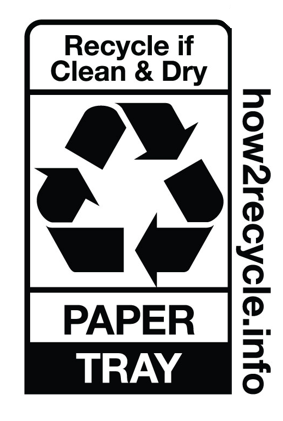
The second part of the SPC report looks at consumer awareness of food contamination in relation to different types of packaging. Conducted by Clemson University, the research divided roughly 100 participants into separate focus groups and presented each with 19 different types of paper and plastic food packaging. Besides the control group, a second group was shown How2Recycle on-package labels instructing them to “Recycle if Clean & Dry”, and a third was additionally shown a brief educational video about recycling and the labels. Participants were prompted to identify which packaging items they believed to be recyclable and indicate the level of effort they’d likely make to avoid food contamination in recycling (e.g. scrape out remaining food, actively rinse package, toss item in the trash, etc.). in a follow up survey they were additionally asked which forms of communication were most helpful to educate about food contamination (e.g. message on packaging, labels on collection bins, social media, etc.).
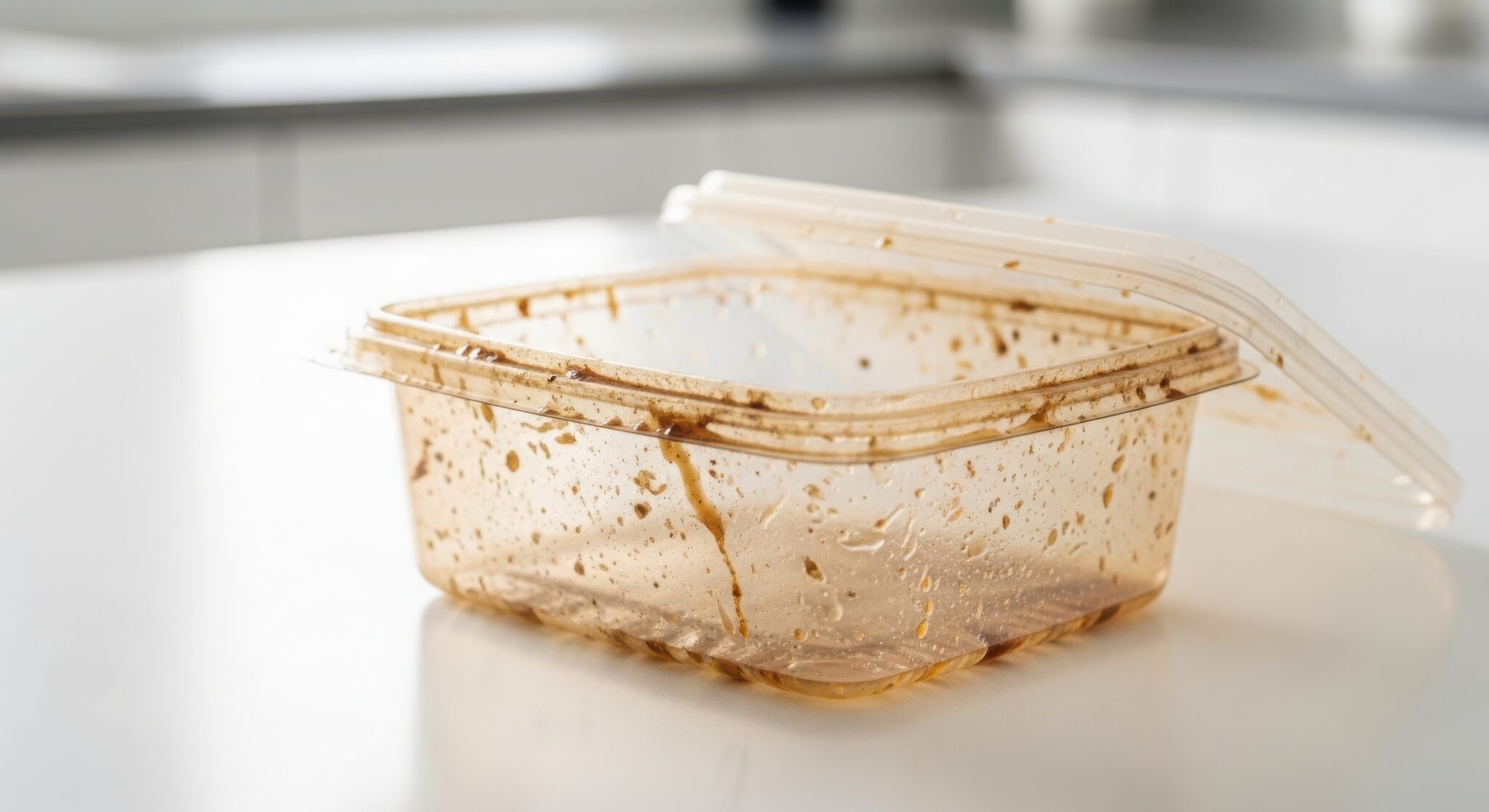
The full results are worth a read if you work directly with packaging or public messaging, but I’m just going to flag a couple key takeaways. In general, the group receiving the labels was modestly more likely to clean and recycle items (32% vs 27%), but it was the group watching the video that was almost twice as likely to do so (62%). While a few said they’d go to the extreme of scrubbing containers with soap to get them clean, the more relevant insight was that particularly-dirty packaging would push 40% of participants beyond a level-of-effort threshold (call it the “goopyness factor”) to where they’d simply toss items despite knowing them to otherwise be recyclable. That basic impulse drives not only people’s actions but perceptions about the packaging itself. Participants were more likely to assume that packaging types they associate as being harder to clean where also non-recyclable even if clean.
These reactions add more data points confirming the inverse relationship fundamental to recycling. Call it the first law of recycling behavior: As the complexity and level of effort required to correctly handle a waste item increases, a proportionally greater number of people will simply trash it and move on.
Call to Action
The report identifies a number of sensible takeaways and recommendations. The essential one for me is the need for industry stakeholders to better define standards for acceptable levels of contamination, and then refine the language used to communicate these to the public. What actually impacts the recycling process, and what is simply a manageable nuisance? Are staining, filmy residue or odors significant issues, or are we just talking about the measurable quantities of remaining food? Is a “rinse & dry” message what it takes to prompt the necessary level of effort? The publication of the SPC report was timed to the launch of a collaborative working group of industry stakeholders that is now working to answer these and other questions.
These are straightforward and, frankly, long overdue steps. They’re also a welcome, if indirect acknowledgement that consumer behavior is fundamental to the recycling system, requiring the same careful planning given to operational and economic considerations. As I’ll discuss in the part 2 blog, the recycling industry has long operated from a one-dimensional understanding of consumer behavior that’s too-often treated it as an afterthought. Consistent standards and revised messaging are critical steps, but whether they lead to better recycling outcomes will depend on whether they reflect the full complexity of what drives a person to choose the right or wrong bin.