Stadiums have no shortage of recyclable materials. From beverage containers and cardboard to food scraps and packaging, high-volume events can generate significant opportunities for waste diversion. The challenge is not necessarily identifying what can be recycled, it is building a system that captures those materials efficiently, keeps them free from contamination, and works at the speed and scale of a live event.
Unlike a typical commercial facility, stadiums experience dramatic fluctuations in waste generation. Thousands of people can enter within a matter of hours, consume food and beverages throughout the event, and leave behind a concentrated volume of waste in a relatively short period of time. At the same time, stadium operations must coordinate concessions, custodial teams, vendors, contractors, event staff, and fans.
The result is a waste stream that is both high-volume and highly variable, changing significantly based on how, where, and when visitors use the venue.
For stadiums looking to improve diversion, the key question is not simply, “How do we get people to recycle?” It is:
How do we design a waste management system that makes the right behavior easy, from the concession stand to the loading dock?
Here are some of the biggest challenges stadiums face and practical ways to address them.
1. Contamination Can Undermine Otherwise Successful Programs
A recycling program can have plenty of collection capacity and still struggle if recyclable materials are mixed with food waste, liquids, plastic bags, or other unacceptable items.
Contamination is particularly challenging in stadium environments because fans are often making disposal decisions quickly. They may be carrying multiple items, navigating crowded concourses, or simply unsure which materials belong in which bin.
The EPA’s guidance for sports venues emphasizes that recycling stations should clearly identify accepted materials and place trash and recycling receptacles together. Clear communication is especially important because vague labels can encourage people to interpret a recycling bin as a place for broadly recyclable “plastic” rather than specific accepted materials.
How to fix it: Design waste stations around the decision fans are actually making
Instead of relying on a recycling symbol alone, use clear, material-specific messaging and visual cues.
For example:
- Use large, recognizable graphics alongside text.
- Clearly identify what belongs in each stream.
- Keep recycling and landfill receptacles together.
- Use consistent colors and messaging throughout the venue.
- Position signage where fans can see it before reaching the bin opening.
- Monitor high-traffic stations throughout an event.
The goal is to eliminate uncertainty.
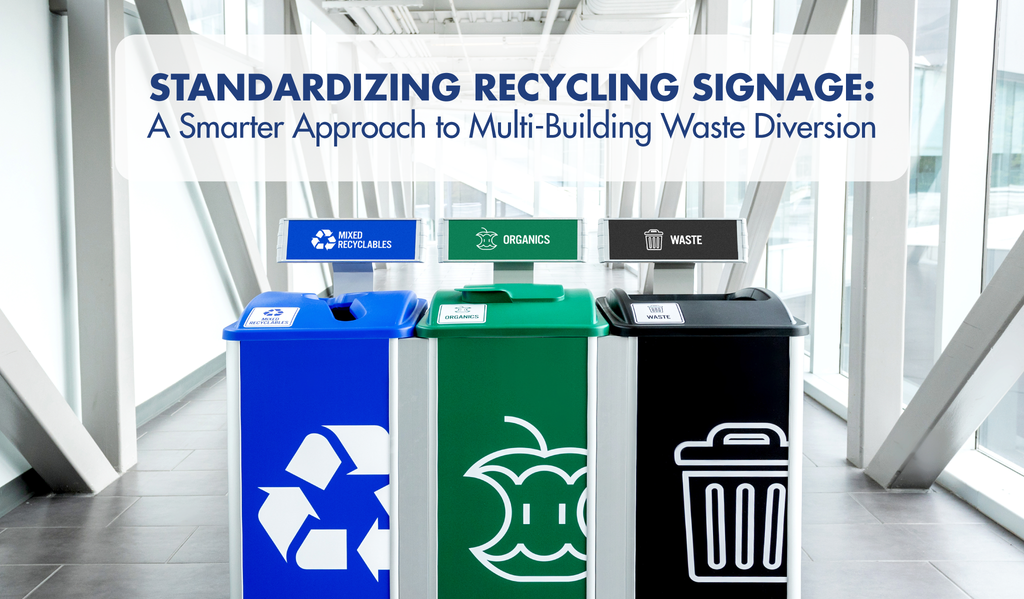
The right receptacle design can also help reinforce proper sorting. Products such as the Evolve Series can be configured for different waste streams and paired with clear, prominent graphics to make disposal decisions more intuitive for fans. By creating a consistent visual system across high-traffic areas, stadiums can reduce confusion and help keep recyclable materials out of the landfill stream.
A well-designed waste station should allow a fan to answer “Where does this go?” in a matter of seconds.
2. Bin Placement Can Determine Whether Materials Are Captured
Even the most clearly labeled recycling bin is ineffective if fans cannot find it.
Stadiums have an unusual combination of high foot traffic and large physical footprints. Fans move between parking lots, entrances, concourses, seating areas, concessions, restrooms, and exits. Waste is generated throughout that journey.
This is where convenience becomes a waste-diversion strategy.
How to fix it: Map waste generation, not just the building
Rather than placing bins based solely on available floor space, stadium operators should identify where waste is actually generated and where people naturally stop.
Consider:
High-priority locations:
- Concession areas
- Food courts
- Restrooms
- Main concourses
- Entrances and exits
- Seating areas
- Parking lots
- Tailgating areas
- Premium suites
- Vendor and back-of-house areas
For high-traffic areas, Evolve Series receptacles can provide a durable, professional-looking collection solution that integrates into the venue while supporting clearly defined waste streams. Strategic placement of these stations near concessions, concourses, entrances, and exits can make recycling more convenient without disrupting the flow of the facility.
Waste audits can help identify gaps between where materials are generated and where collection infrastructure is available.
A useful rule of thumb is simple: the easier it is to find the right bin, the more likely it is that the right material will end up there.
3. Stadiums Generate Multiple Waste Streams at Once
A stadium’s waste stream is rarely as simple as “recycling versus garbage.”
A single event can generate cardboard from deliveries, aluminum cans and plastic bottles from beverages, food scraps from concessions, packaging from food service, and a range of materials from back-of-house operations.
How to fix it: Build the program around the materials actually being generated
A successful stadium recycling program starts with a waste assessment.
Ask:
- What materials are generated?
- Where are they generated?
- In what quantities?
- Which materials are accepted by the local recycling or organics processor?
- Which materials are creating contamination?
- What happens to materials after collection?
- Are vendors and concessionaires following the same system?
- Does the infrastructure support the volume generated during peak events?
This is particularly important for food-service packaging.
A stadium may introduce a recyclable or compostable product with good intentions, but if the local processing infrastructure cannot accept it, the material may still end up in the landfill.
Recyclability is not determined by the product alone, it depends on the entire system.
4. Back-of-House Operations Are Just as Important as Fan Behavior
It is easy to focus on what happens in the stands and overlook what happens behind the scenes.
But concessionaires, cleaning contractors, vendors, event staff, and waste haulers all influence the final destination of materials.
The EPA has documented stadium programs where staff education and contractor turnover created ongoing challenges. At the University of Tennessee’s Neyland Stadium, for example, maintaining proper separation required continued oversight because of turnover among cleaning contractors.
How to fix it: Make every employee part of the recycling system
Training should not be limited to the sustainability team.
Everyone who handles waste should understand:
- What materials belong in each stream
- Where streams should be taken
- How contamination should be handled
- How bins should be serviced
- What to do when a collection container is full
- Who to contact when a problem occurs
This also means incorporating waste-management expectations into vendor and contractor agreements.
When sustainability responsibilities are treated as part of standard operating procedures—not as an optional initiative, they are much easier to maintain over an entire season.
5. Tailgating Creates a Waste-Management Challenge Outside the Stadium
For many venues, recycling doesn’t begin at the entrance.
Tailgating areas can generate significant quantities of bottles, cans, food packaging, and other materials before fans ever enter the stadium. These areas are also often spread across large parking lots, making traditional collection systems more difficult to manage.
Penn State’s Beaver Stadium provides a notable example. After recycling carts alone proved insufficient across its large tailgating area, student volunteers distributed translucent blue recycling bags to fans. The initiative nearly doubled the amount of material captured in the tailgating area.
How to fix it: Bring recycling directly to the fan
Tailgating programs should prioritize convenience.
Consider:
- Providing dedicated recycling bags
- Pairing recycling and landfill containers
- Placing collection points along common pedestrian routes
- Using volunteers or staff to educate fans
- Increasing collection immediately after peak tailgating periods
- Providing clear instructions before fans enter the venue
The lesson is broader than tailgating: when collection infrastructure moves closer to the point of disposal, participation becomes easier.
6. Peak Event Volumes Put Pressure on Collection Infrastructure
A stadium’s waste system must be designed for more than an average day.
That creates operational challenges including:
- Overflowing containers
- Insufficient storage space
- Limited access for collection equipment
- Delays between collection and hauling
- Increased labor requirements
- Bottlenecks around loading docks
- Limited space for separating materials
How to fix it: Design for the busiest day, not the average day
Waste infrastructure should account for peak-event conditions.
That may mean:
- Increasing collection capacity during major events
- Establishing temporary collection points
- Creating dedicated back-of-house staging areas
- Scheduling additional collection rounds
- Using compactors or balers where appropriate
- Reviewing loading-dock logistics
- Establishing contingency plans for unusually large events
During peak events, durability and capacity become especially important. The Outlaw Series is designed for demanding environments where receptacles need to withstand heavy use while maintaining a clean, professional appearance. Incorporating durable, high-capacity receptacles into areas experiencing the greatest waste volumes can help stadiums manage event-day demands while maintaining consistent collection infrastructure.
The question should not be, “Can our system handle a normal event?”
It should be, “What happens when the venue is completely full?”
7. Different Events Require Different Waste Strategies
A stadium may host a football game on Saturday, a concert on Wednesday, and a community event the following weekend.
The audience changes. The concessions change. The vendors change. The waste composition changes.
That means a single static waste-management strategy may not work equally well across every event.
How to fix it: Build a flexible program
For example:
Football game
- High beverage-container volume
- Significant tailgating waste
- Large post-game cleanup
Concert
- Increased single-use food and beverage packaging
- Different crowd movement patterns
- Potentially higher merchandise and promotional waste
Corporate or community event
- Greater emphasis on food service, paper, and packaging
- Different attendance patterns
- Potentially smaller but more variable waste volumes
The infrastructure can remain consistent while staffing, collection frequency, signage, and targeted education are adjusted based on the event.
8. Measurement Is Often the Missing Piece
It is difficult to improve a program without knowing what is actually happening.
A stadium may know how many tons of material were hauled away but have little visibility into where contamination occurred, which materials were successfully captured, or which areas produced the most waste.
How to fix it: Measure more than diversion rate
A strong measurement program can track:
- Total waste generated
- Total material recycled
- Organics diverted
- Landfill waste
- Contamination rates
- Material-specific recovery
- Waste generated per attendee
- Diversion rate by event
- Vendor participation
- Collection costs
Waste audits can add another layer of insight by identifying what is actually inside landfill and recycling streams.
This turns waste management from a reactive cleanup process into a measurable operational program.
The Bigger Opportunity: Designing the System Around People
Stadium recycling is sometimes framed as a question of consumer behavior.
But asking fans to “recycle more” only addresses one part of the problem.
If bins are difficult to find, signage is confusing, acceptable materials are unclear, collection capacity is inadequate, or staff have not been trained, even well-intentioned fans may struggle to participate correctly.
The most successful programs recognize that behavior follows infrastructure.
This is demonstrated in stadium programs across the country. At the University of Michigan’s football stadium, sustainability teams have continued refining their Zero Waste Stadium Program by specifically troubleshooting contamination and identifying materials that do not belong in recycling or compost streams.
Similarly, UC Davis combined changes to concession packaging with student monitors who helped fans sort materials correctly. During one EPA Game Day Challenge, participating schools collectively diverted more than 500,000 pounds of waste from landfills.
These examples point toward a larger lesson:
Successful stadium recycling programs do not rely on a single solution. They connect infrastructure, education, operations, and measurement into one system.
Building a Better Stadium Recycling Program
For stadium operators looking to improve diversion, the starting point does not have to be a complete overhaul.
Begin by evaluating the existing system.
1. Conduct a waste audit
Understand what materials are being generated, where they come from, and where they are currently going.
2. Identify contamination hotspots
Look beyond the overall contamination rate and determine which locations, materials, or events create the biggest problems.
3. Evaluate bin placement
Walk the fan journey from parking lot to exit and identify where collection opportunities are missing.
4. Standardize signage
Create a consistent visual language across the entire venue so fans do not have to relearn the system from one waste station to the next.
5. Engage vendors and contractors
Make recycling expectations part of operational procedures and contracts.
6. Plan for peak capacity
Ensure the program can accommodate sold-out events and unusual waste volumes.
7. Track performance
Use data to identify what is working, where improvements are needed, and which changes produce measurable results.
As part of this evaluation, stadium operators should also consider whether their existing receptacles are designed for the environment they are operating in. Durable solutions such as the Evolve Series and Outlaw Series can help support consistent waste collection in both high-traffic public areas and demanding event environments.
From Waste Management to Waste Strategy
Stadiums have an opportunity to do more than simply manage the waste generated during an event. They can use their size, visibility, and influence to demonstrate what effective waste diversion looks like at scale.
But that requires moving beyond the idea that recycling is simply a matter of providing more bins.
The strongest stadium programs are designed as systems.
They consider where materials are generated, how people move through a venue, what infrastructure is available, how employees and vendors interact with waste, what local processors can accept, and how performance will be measured.
When those pieces work together, recycling becomes less dependent on perfect fan behavior and more resilient as an operational process.
For stadiums, the path to higher diversion is not necessarily about doing more.
It is about designing smarter systems that make the right choice easier, for fans, staff, vendors, and everyone responsible for moving materials from the stadium to their next destination.