When it comes to improving recycling rates, a common instinct is to add more bins.
More bins = more opportunity to recycle… right?
Not necessarily.
Insights highlight a different reality: it’s not how many bins you have, it’s where and how they’re placed that really drives behavior.
Recycling Happens in Seconds
One of the most important ideas is that waste disposal is often an automatic habit rather than a conscious decision.
In most cases, people:
- Are distracted
- Are in a rush
- Aren’t thinking about sustainability in that moment
They’re operating on autopilot.
That means recycling decisions aren’t based on careful thought; they’re based on what’s easiest and most obvious in that exact moment.
Access Beats Intention Every Time
You can have the best recycling program in the world, but if the bin isn’t easy to reach, people won’t use it.
If recycling is farther away than trash, most people will choose trash
- If people have to go out of their way, participation drops
This is a classic behavioral principle:
- People default to the path of least resistance.
So instead of asking, “Do we have enough bins?”
The better question is:
“Are our bins placed where decisions are actually happening?”
Placement Creates (or Removes) Friction
Think of bin placement like a system of small decision points.
Good placement:
- Makes the correct choice feel effortless
- Reduces hesitation
- Guides behavior subconsciously
Poor placement:
- Forces people to think (or guess)
- Creates confusion
- Increases contamination
For example:
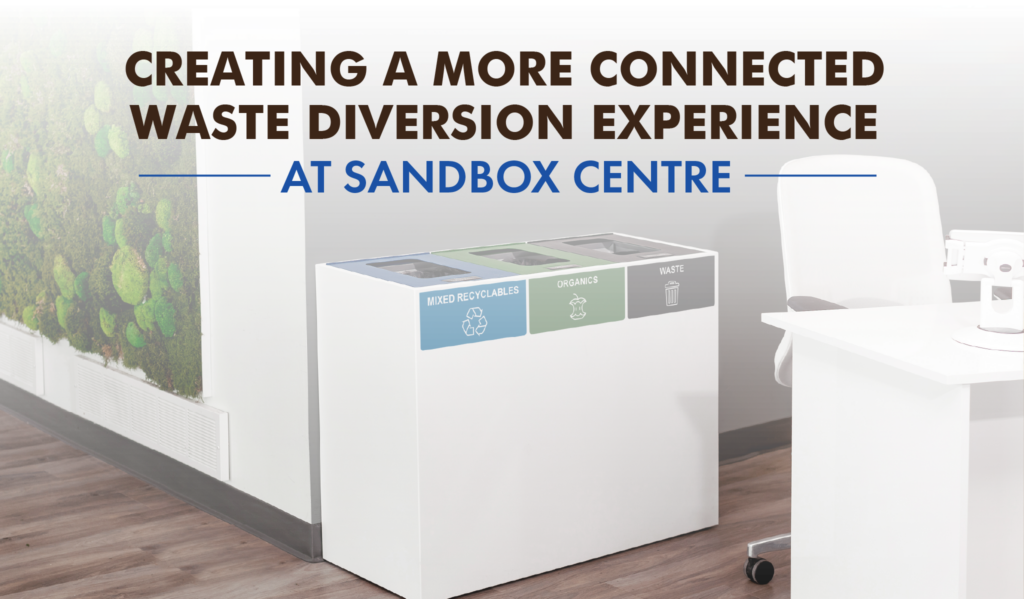
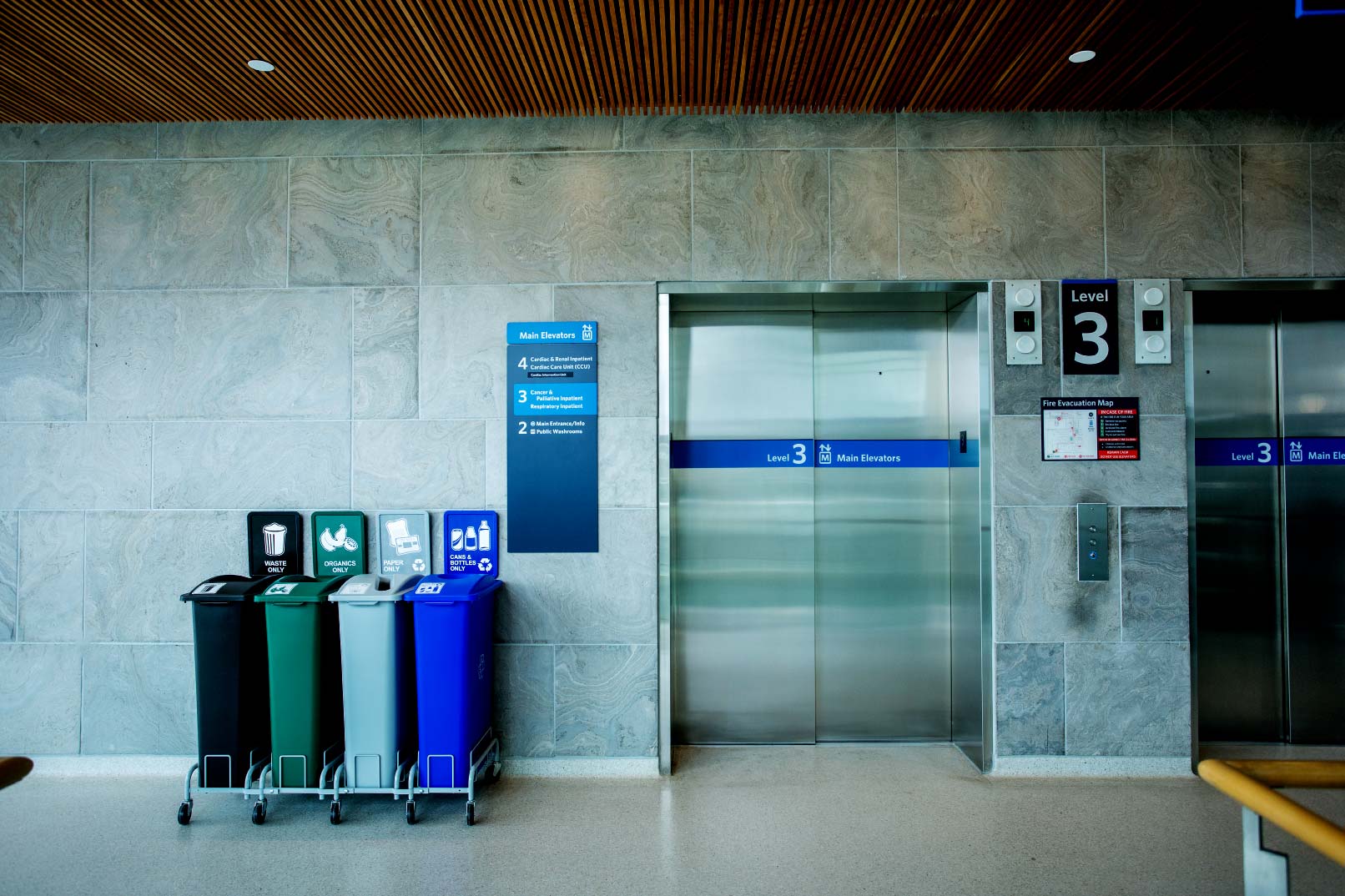
- A recycling bin directly beside a trash bin → easy comparison, better sorting
- A standalone trash bin → becomes an “everything goes here” default
Even a small amount of extra friction, like taking a few extra steps, can shift behavior.
Visibility Is Part of Placement
Placement isn’t just about location; it’s also about what people see and when they see it.
How people process information in stages:
- At a distance (10–20 feet):
They need to see that there are multiple bin options - As they approach:
They identify which bins are available (recycling, trash, compost) - At the bin:
They confirm what goes where
If bins aren’t visible early enough, the decision is already made before someone even gets there.
That’s why bin stations need to:
- Be in the natural line of sight
- Be positioned along common walking paths
- Use height and signage to stand out
Designing for Mental Shortcuts
Another key insight is how much recycling relies on mental shortcuts (heuristics).
People don’t analyze every item; they recognize patterns.
That’s why placement works best when combined with:
- Consistent color coding (e.g., blue for recycling)
- Familiar layouts
- Clear grouping of bins
When bins are placed together in a predictable way, people don’t have to think; they just follow the pattern.
Fewer, Better Stations Can Outperform More Bins
It might sound counterintuitive, but adding more bins can actually make things worse if they’re poorly placed.
Too many scattered bins can:
- Reduce consistency
- Create confusion
- Increase contamination
In contrast, fewer well-designed, well-placed stations:
- Encourage intentional decisions
- Improve visibility
- Create habit loops
This is why many organizations are moving toward centralized waste stations instead of deskside bins.
A Small Design Change with Big Impact
One of the most interesting examples is deskside bins.
When people have large trash bins at their desks, they default to using them without thinking. But when organizations:
- Reduce trash bin size
- Pair it with a larger recycling option
It subtly shifts behavior.
Not because people were told to change, but because the system nudged them in the right direction.
The Goal: Make It Obvious
At the end of the day, placement is about one thing:
Making the right decision obvious, before someone even has to think.
That means:
- Putting bins where people naturally go
- Pairing recycling bins with landfill and compost bins to encourage the right choice at the point of disposal
- Making them visible from a distance
- Designing them to be intuitive
Because if someone has to stop and figure it out, you’ve already lost the moment.
What to Remember
Better recycling doesn’t come just from more infrastructure; it comes from smarter design.
When bins are placed strategically:
- Participation increases
- Contamination decreases
- Habits form more easily
So before adding more bins, take a step back and look at your space.
Where do decisions actually happen?
That’s where your bins need to be.