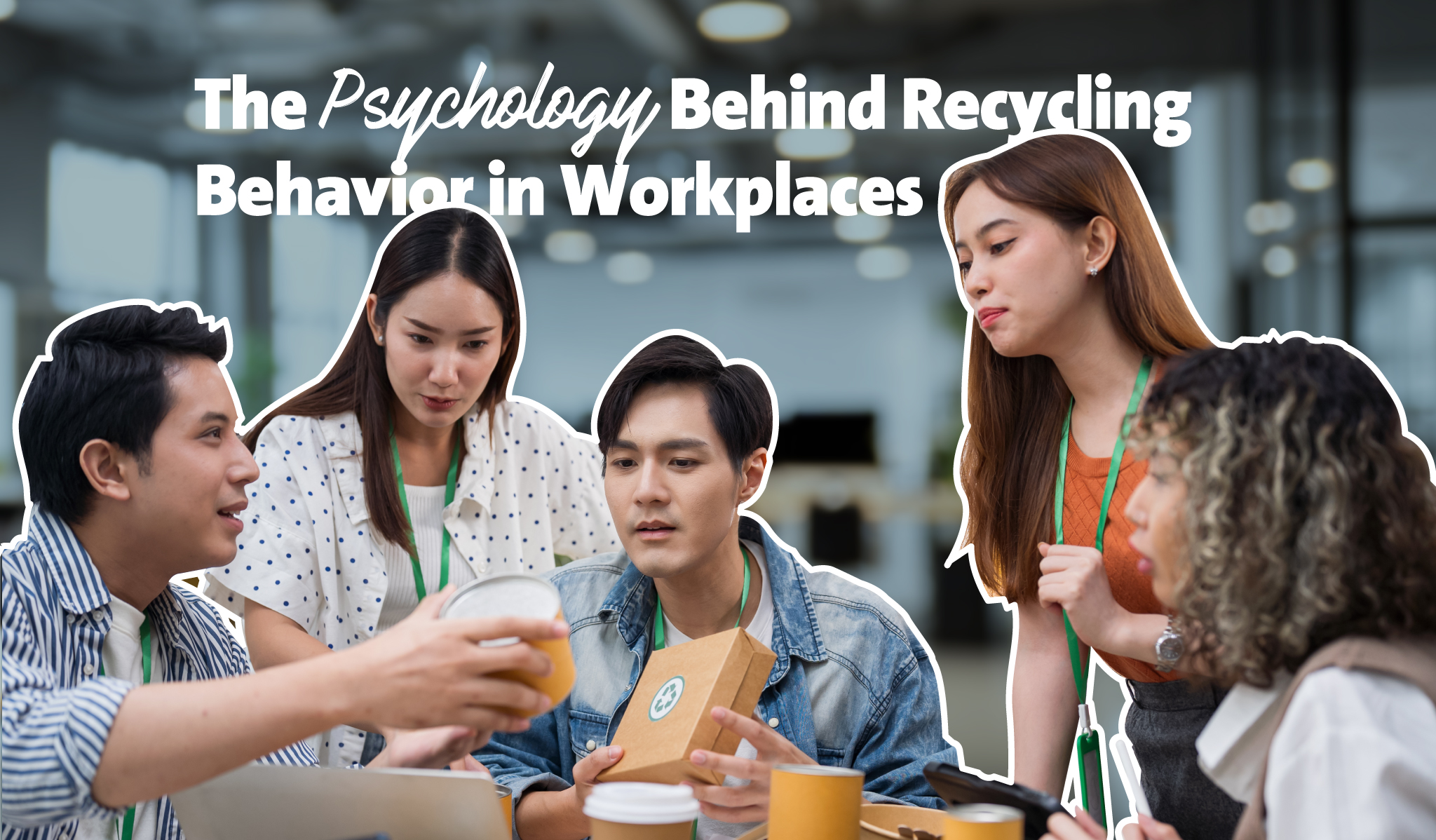
Recycling at work should be simple. Bins are labeled, systems are in place, and most employees genuinely want to do the right thing.
So why does it still go wrong?
The answer isn’t a lack of awareness; it’s psychology.
A recent conversation highlights something many sustainability professionals already suspect: recycling behavior isn’t just about knowledge. It’s about habits, environment, and how people feel in the moment.
Here’s a closer look at the key psychological factors that shape how employees interact with recycling systems, and what that means for improving results.
When Confusion Takes Over, People Opt Out
One of the biggest barriers to proper recycling is confusion.
Rules change. Programs vary by location. What’s accepted in one building, or even one city, might not be accepted somewhere else. Over time, this creates uncertainty.
And when people aren’t sure what to do, they default to the easiest option: Throwing it in the trash.
This isn’t laziness, it’s a natural human response. When a decision feels unclear or mentally taxing, people simplify it.
What this means for workplaces:
Clarity is everything. The more consistent and easy to understand your system is, the more likely people are to engage with it correctly.
Recycling Is a Habit, Not a Decision
Most people don’t stop and think about waste sorting every time they approach a bin. They rely on routine.
As highlighted in the podcast, building a recycling habit starts small, getting comfortable with the basics, then improving over time.
Once a habit is formed:
- It requires less effort
- It becomes automatic
- Mistakes decrease
But without that routine, every disposal becomes a decision, and that leads to inconsistency.
What this means for workplaces:
Focus less on one-time education and more on repetition and consistency. The goal is to make recycling part of the daily workflow, not a separate task.
The Environment Does Most of the Work
One of the most important insights is this: people don’t change behavior; the environment does.
Simple environmental cues can drastically influence behavior, including:
- Clearly labeled bins
- Color coding
- Standardized bin placement
- Easy access to waste stations
When systems are intuitive, people don’t need to think; they just follow the design.
What this means for workplaces:
Design your system so that the right choice feels obvious. Good design reduces mistakes without needing extra effort from employees.
Social Pressure Is Real (Even at the Bin)
A surprisingly relatable moment: feeling unsure where to throw something in a new workplace.
That small moment of hesitation can feel bigger than it should:
- “What if I get this wrong?”
- “Is someone watching?”
- “I don’t want to look confused.”
This social discomfort can lead to quick, incorrect decisions or avoidance altogether.
When systems are unclear, people don’t just get confused; they feel self-conscious.
What this means for workplaces:
Create systems that feel intuitive and judgment-free. When people feel confident, they’re more likely to participate correctly.
People Need to Feel Capable
Another important theme is the need to build confidence, not overwhelm.
Recycling systems can sometimes feel complicated, especially with changing rules or less common materials. If people feel like they’re constantly getting it wrong, they disengage.
On the other hand, starting with simple, widely accepted items (like bottles and paper) helps build momentum.
This taps into a key psychological concept: self-efficacy—the belief that “I can do this.”
What this means for workplaces:
Keep it simple. Build confidence first, then expand knowledge over time.
Trust and Change Go Hand in Hand
Recycling systems are constantly evolving. New materials get added, rules shift, and programs change.
Even experts sometimes feel unsure when this happens.
That creates a need for trust:
- Trust that the system works
- Trust that efforts matter
- Trust that changes are meaningful
Without that trust, participation drops.
What this means for workplaces:
When changes happen, communicate clearly. Explain what’s different, and why.
People Are Motivated by Meaning
At its core, recycling behavior is strengthened when people understand the impact.
The podcast highlights a few key motivators:
- Reducing environmental impact
- Extending landfill life
- Lowering costs
- Supporting broader sustainability goals
When people can connect their small action, like sorting a container, to a larger outcome, it becomes more meaningful.
And meaningful actions are more likely to stick.
What this means for workplaces:
Don’t just explain how to recycle, explain why it matters.
Bringing It All Together
Improving recycling behavior in the workplace isn’t about telling people more; it’s about making the process easier, clearer, and more intuitive.
The psychology behind it is straightforward:
- People choose what’s easiest
- Habits drive consistency
- Confusion leads to mistakes
- Confidence improves participation
- Environment shapes behavior
- Meaning reinforces action
When you design your program around these principles, better diversion rates follow naturally. Because in the end, the goal isn’t to make people think harder about recycling; it’s to make the right choice feel automatic.