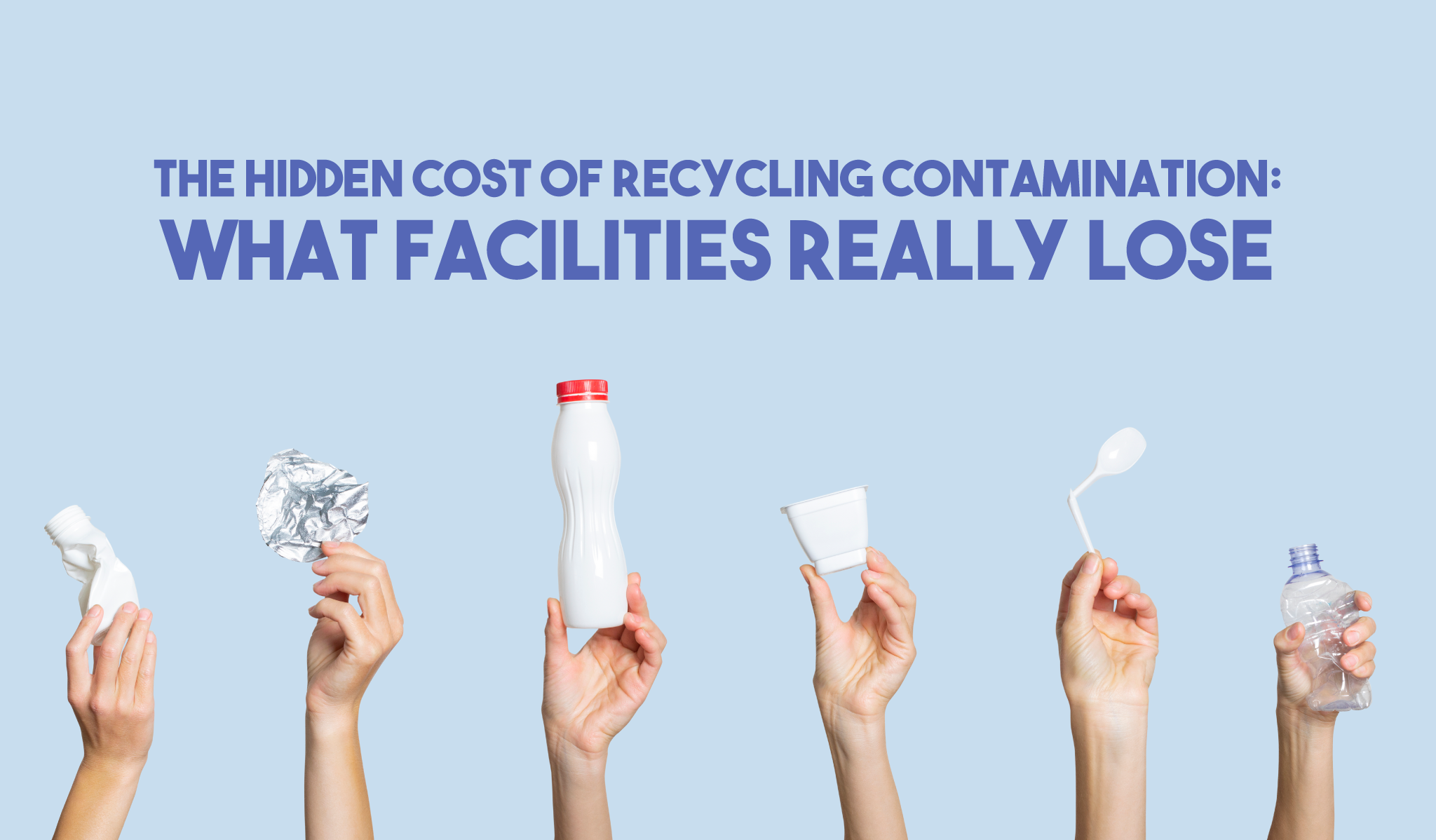
When a recycling load is contaminated, the impact extends far beyond a few misplaced items in the bin. For facilities, recycling contamination can quietly drive up costs, reduce operational efficiency, and undermine sustainability goals.
Whether it’s food-soiled packaging or well-intentioned “wishcycling”, contamination affects every stage of the recycling process. Contamination in recycling streams has historically averaged around 17–25%, depending on the region and collection system, demonstrating how even small disposal mistakes can significantly affect recycling quality. While many organizations focus on increasing recycling rates, reducing contamination is often the more impactful way to improve diversion and maximize the value of recyclable materials.
Understanding the true cost of contamination and how to prevent it can help facilities build more effective recycling programs that deliver measurable environmental and financial benefits.
What Is Recycling Contamination?
Recycling contamination occurs when non-recyclable materials are placed in recycling bins or when recyclable materials are disposed of incorrectly. Common examples include:
- Food waste and liquids left in recyclable containers
- Coffee cups that aren’t accepted by local recycling programs
- Paper towels or other landfill waste
- Hazardous materials placed in standard recycling bins
Another common contributor is wishcycling, when people recycle items they hope are recyclable rather than knowing they are accepted. Although well-intentioned, wishcycling increases contamination and can create significant challenges for recycling facilities.
The Financial Cost of Recycling Contamination
Contamination directly affects an organization’s bottom line in several ways.
Higher Processing Costs
Contaminated recycling requires additional sorting, handling, and transportation. In many cases, recycling facilities must spend more time separating usable materials from non-recyclables, increasing operational costs throughout the recycling chain.
Increased Disposal Fees
If contamination levels become too high, entire loads of recycling may be rejected and sent to landfill. Instead of paying recycling collection rates, organizations may end up paying landfill tipping fees for materials they intended to recycle.
Lost Commodity Value
Clean recyclables have market value. Contaminated materials are worth significantly less because processors must invest additional labor and equipment to recover usable resources or may be unable to recover them at all.
Damaged Equipment
Items such as plastic bags, hoses, textiles, and cords frequently wrap around sorting equipment, leading to equipment downtime, maintenance costs, and reduced productivity at material recovery facilities (MRFs).
The Operational Impact
Facilities experiencing high contamination may encounter:
- More frequent waste audits
- Additional custodial labor to correct sorting errors
- Overflowing bins caused by improper disposal
- Increased staff training requirements
- Reduced confidence in sustainability initiatives
When recycling systems are difficult to understand, both employees and visitors are more likely to make disposal mistakes.
The Environmental Cost
Every contaminated load represents a lost environmental opportunity.
Materials that could have been recycled into new products may instead be landfilled or incinerated. This means additional raw materials must be extracted to manufacture new products, increasing energy consumption and greenhouse gas emissions.
Contamination also reduces the efficiency of recycling systems by decreasing the quality of recovered materials. Cleaner recycling streams produce higher-quality commodities that are more likely to be successfully remanufactured into new products, supporting a stronger circular economy.
Why Contamination Happens
Most contamination is not intentional.
In many facilities, users simply don’t know which materials belong in each stream. Confusing signage, inconsistent recycling rules between municipalities, and poorly designed waste stations all contribute to disposal errors.
- Inconsistent or unclear signage
- Too many disposal options in one location
- Poorly labelled waste stations
- Lack of employee or visitor education
- Recycling systems that don’t match local collection requirements
Improving recycling performance often begins by making the correct choice the easiest choice.
How Better Bin Design Reduces Contamination
The design of a recycling station plays a much larger role in user behavior than many organizations realize.
A well-designed waste station helps people make quick, confident disposal decisions without stopping to guess.
Effective recycling stations typically include:
- Clear, highly visible signage
- Color-coded streams for faster recognition
- Restrictive openings that match accepted materials
- Consistent labels throughout the facility
- Logical placement based on the waste generated in each area
For example, a bottle-shaped opening naturally encourages beverage container recycling while discouraging larger landfill waste. Pairing intuitive openings with standardized signage can significantly reduce contamination before it starts.
Customized Signage and Restrictive Openings Matter
One of the most effective ways to reduce recycling contamination is by making it easier for users to dispose of materials correctly. Clear, consistent signage paired with restrictive openings helps eliminate guesswork by guiding users to the appropriate waste stream. Color coding, images of accepted materials, and stream-specific openings, such as bottle-shaped or paper slots, work together to prevent common disposal mistakes before they happen.
Recycling and waste containers like the Mosaic Series, features customizable signage and interchangeable restrictive openings that can be tailored to a facility’s recycling streams, helping reduce contamination and improve recycling quality. For outdoor environments, the Fusion Series offers the same flexibility, creating intuitive collection stations that encourage proper sorting and support cleaner, more valuable recycling streams
Education Is Just as Important
Even the best recycling infrastructure requires ongoing education.
Facilities should regularly communicate:
- What can and cannot be recycled
- Why contamination matters
- Any updates to local recycling guidelines
- Results from waste audits and diversion efforts
Sharing contamination data with employees can also encourage better participation by showing the real-world impact of their disposal decisions.
Simple reminders through posters, digital signage, onboarding materials, and internal communications help reinforce proper recycling habits over time.
Building a Cleaner Recycling Program
Reducing contamination isn’t about asking people to work harder; it’s about making recycling easier.
Organizations that combine thoughtful waste station design with clear signage and consistent education often experience:
- Lower contamination rates
- Higher-quality recyclable materials
- Improved diversion rates
- Reduced waste management costs
- Greater confidence in sustainability reporting
Small improvements made at the point of disposal can create meaningful operational and environmental benefits across an entire facility.
All Things Considered
The hidden cost of recycling contamination isn’t limited to rejected loads or additional hauling fees. It affects operational efficiency, recycling quality, sustainability performance, and the overall success of a facility’s waste diversion program.
By investing in intuitive recycling stations, standardized signage, and ongoing education, organizations can reduce contamination at the source and create recycling programs that are easier for people to use and more effective for the environment.
Ultimately, the most successful recycling programs aren’t defined by how much they collect, but by how much clean, recyclable material they keep in the circular economy.