Schools, colleges, and universities have a unique opportunity to make sustainability part of everyday life. With thousands of students, teachers, faculty, and staff moving through classrooms, cafeterias, residence halls, offices, and common areas every day, educational facilities can generate significant amounts of waste.
But creating an effective recycling program isn’t as simple as placing recycling bins around campus. Schools face a range of challenges, from recycling contamination and confusing signage to inconsistent participation and poorly positioned waste stations.
The good news? Many of these challenges can be addressed through thoughtful waste management strategies, clear communication, and recycling infrastructure designed around the people using it.
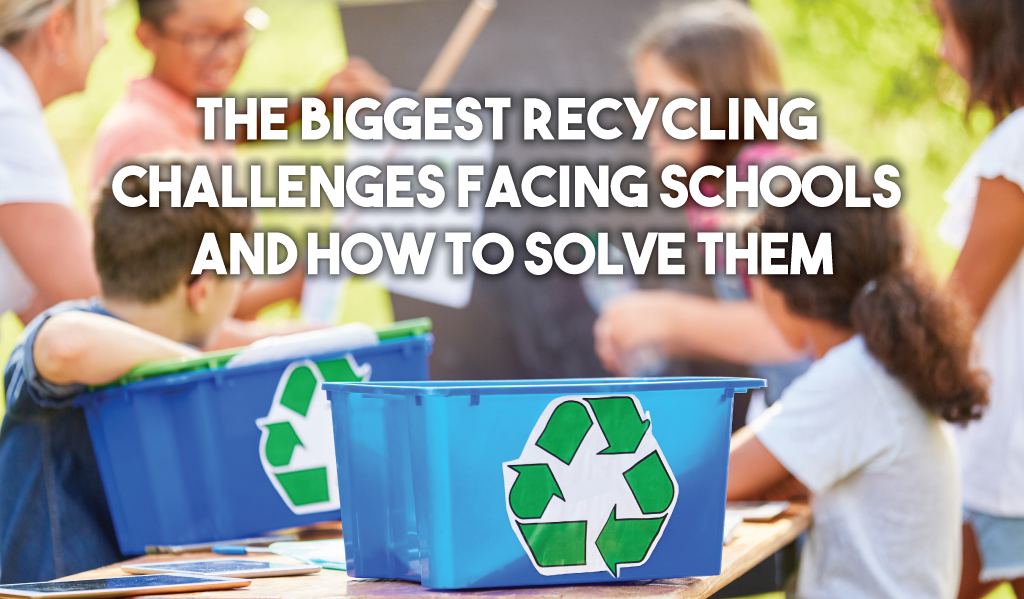
Here are some of the biggest recycling challenges schools face, and practical ways to solve them.
1. Recycling Contamination
One of the biggest challenges for any recycling program is contamination. When garbage, food waste, liquids, or non-recyclable materials are placed in recycling bins, they can make otherwise recyclable materials difficult or impossible to process.
Schools are particularly vulnerable to contamination because waste is generated in a wide variety of environments. A cafeteria may produce food and beverage waste, while classrooms may generate paper and packaging. Outdoor areas and athletic facilities can introduce an entirely different mix of materials.
How to solve it
Start by identifying where contamination is occurring. A waste audit can help schools determine which materials are being thrown away incorrectly and where problem areas are located.
- Clearly label recycling, garbage, and organics bins
- Use simple, easy-to-understand recycling signage
- Place the appropriate waste streams together
- Provide examples of common recyclable and non-recyclable items
- Educate students and staff about local recycling requirements
- Monitor contamination and adjust the program as needed
The physical design of a recycling station can also help make proper sorting easier. For example, the Waste Watcher® Series can be configured as single, double, triple, or quad stations, allowing schools to create centralized stations around their specific waste streams. The series also offers customizable signage and multiple lid configurations to help communicate what belongs in each container.
For schools that need flexible, centralized stations, the Waste Watcher® Series can help bring recycling, waste, and other collection streams together in one recognizable location.
2. Confusing Recycling Rules
Recycling rules can vary between municipalities, campuses, and regions. An item that is accepted in one community may not be accepted in another.
This can make recycling confusing for students and staff, particularly when they’re trying to make a quick decision about where to dispose of an item.
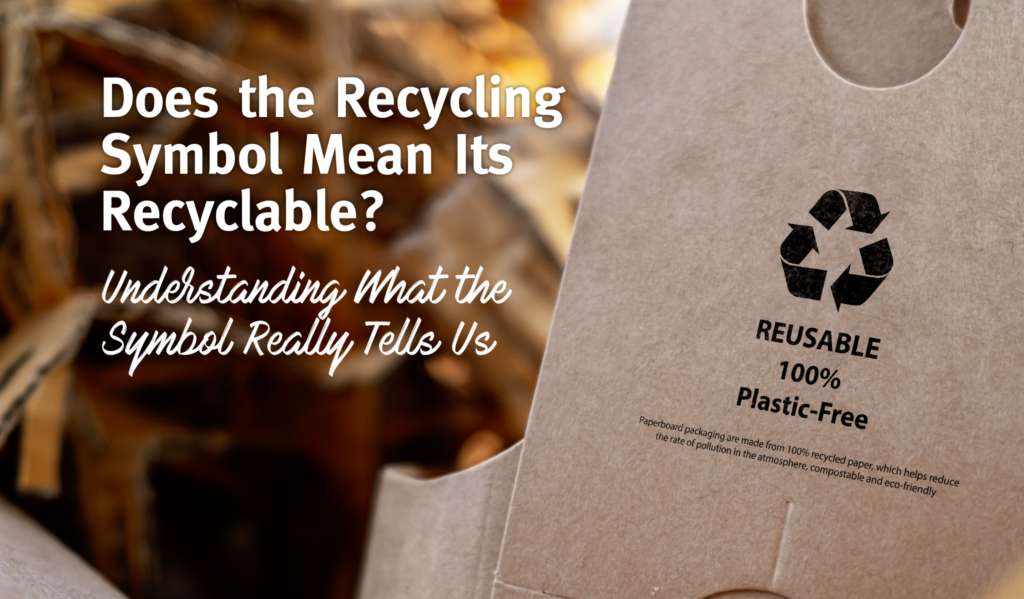
For example, seeing the familiar recycling symbol on a package doesn’t necessarily mean that the item belongs in a recycling bin.
How to solve it
Schools should communicate their recycling requirements in simple, straightforward language.
Instead of relying solely on text, recycling stations can use:
- Images of commonly disposed items
- Clear labels for each waste stream
- Simple “Yes” and “No” examples
- Consistent terminology throughout the facility
- Signage that reflects the school’s actual local recycling program
Consistency is especially important on large campuses. Students shouldn’t have to relearn the recycling system every time they move from a classroom to a cafeteria or residence hall.
3. Poorly Designed or Placed Recycling Stations
Even when people understand what belongs in a recycling bin, the physical design and placement of recycling stations can influence whether they actually use them correctly.
A recycling bin hidden around a corner, positioned far away from a garbage bin, or lacking clear identification may be overlooked entirely.
This is particularly important in high-traffic areas where people are making quick disposal decisions.
How to solve it
Think about recycling infrastructure from the user’s perspective.
Consider:
Where is waste being generated?
Place recycling stations where students, staff, and visitors are most likely to need them.
What waste streams are being generated?
A cafeteria may require recycling, garbage, and organics, while an office may primarily need recycling and garbage.
Are the bins easy to identify?
Consistent colors, labels, shapes, and signage can help users quickly recognize the correct waste stream.
Are the bins placed together?
Pairing or grouping waste streams can make disposal decisions easier and reduce the chance that users simply choose the closest bin.
For high-traffic areas where schools want a more contemporary look, the Spectrum® Series provides another option. Its modular design allows schools to add or change collection streams as their programs evolve, while its relatively small footprint makes it suitable for a range of locations. The series also offers multiple colors, lid configurations, capacities, and optional sign frames.
This flexibility can be particularly useful on larger campuses, where recycling stations may need to fit into hallways, student commons, cafeterias, libraries, and other spaces with different design and space requirements.
4. Low Student and Staff Participation
Students may be unfamiliar with the school’s recycling system, while teachers, faculty, and staff may have different levels of knowledge or engagement. On college and university campuses, frequent student turnover can make this challenge even greater.
How to solve it
Schools can reinforce recycling habits through:
- Student orientation programs
- Classroom activities
- Sustainability clubs
- Posters and digital communications
- Campus events
- Recycling challenges
- Social media campaigns
- Signage at waste stations
Schools can also give students opportunities to participate directly in sustainability initiatives. Student-led campaigns, waste audits, and environmental clubs can help turn recycling from a rule into a shared responsibility.
5. High Turnover Among Students
Educational facilities experience something that many other organizations don’t: people are constantly coming and going.
Every year, new students arrive who may have different recycling habits, different levels of environmental awareness, or experience with different recycling systems.
Universities and colleges may face an additional challenge in residence halls, where students can move between buildings or campuses throughout their academic careers.
How to solve it
Build recycling education into the student experience.
Rather than treating recycling information as something students receive once, schools can provide reminders throughout the year.
For example:
- Include recycling information in orientation materials
- Provide clear signage in residence halls
- Use consistent recycling stations throughout campus
- Include recycling information in student handbooks
- Refresh campaigns throughout the academic year
- Use events and challenges to reinforce proper sorting
The more consistent the system is, the easier it becomes for students to develop lasting habits.
6. Recycling in Cafeterias and Dining Areas
Food service areas can be some of the most challenging environments for recycling programs.
Students may be disposing of food scraps, beverage containers, takeout packaging, napkins, utensils, and other materials at the same time. When multiple waste streams are placed together, confusion and contamination can quickly follow.
How to solve it
Start by looking at the entire disposal process.
A successful dining-area recycling station should make it easy for users to identify where each item belongs. Depending on the school’s waste program, this could include separate streams for recycling, organics, and garbage.
Clear signage should use recognizable examples of items commonly found in the cafeteria rather than relying on generic recycling symbols.
7. Inconsistent Recycling Systems Across Campus
Large schools and universities often have many different buildings, departments, and facilities. If every location uses different bins, labels, or recycling instructions, the result can be confusion.
A student shouldn’t have to figure out a completely different recycling system every time they enter a new building.
How to solve it
Create a consistent campus-wide recycling system.
This doesn’t necessarily mean every area needs identical bins. Instead, schools can establish consistent principles for:
- Waste-stream identification
- Signage
- Bin labelling
- Color systems
- Recycling instructions
- Placement
- Communication
Consistency creates familiarity. When students recognize the same system across campus, they can make disposal decisions more quickly and confidently.
8. Lack of Data and Measurement
Schools may know that they’re recycling, but do they know whether their program is actually working?
Without data, it can be difficult to identify problem areas, measure improvements, or determine whether a new recycling initiative is making a difference.
How to solve it
A waste audit can help answer questions such as:
- What materials are being thrown away?
- How much recyclable material is ending up in garbage?
- Which locations have the highest contamination?
- Which waste streams are most heavily used?
- Are certain buildings or areas producing more waste than others?
Once schools have this information, they can make targeted changes rather than relying on assumptions.
9. Recycling Programs That Rely Too Heavily on Education
Education is important, but information alone doesn’t always change behavior.
If students are told to recycle but the nearest recycling bin is difficult to find, poorly labelled, or located away from the garbage bin, the system is working against them.
How to solve it
Combine education with infrastructure.
The most effective recycling programs make the desired behavior easy to understand and easy to complete.
That means considering the entire user experience:
Understand → Identify → Sort → Dispose
Students need to understand what is expected, quickly identify the appropriate waste stream, and have a convenient place to dispose of the material correctly.
When education, signage, bin placement, and waste-stream infrastructure work together, recycling becomes much easier.
Building a Better Recycling Program
There isn’t a single solution that will solve every recycling challenge in an educational facility. The needs of an elementary school will be different from those of a university campus, and a cafeteria will have different requirements than a classroom or administrative office.
However, successful programs tend to share several characteristics:
- Clear: Recycling instructions are easy to understand.
- Consistent: The same system is used throughout the facility.
- Convenient: Waste stations are located where people naturally dispose of waste.
- Visible: Recycling stations are easy to find and identify.
- Engaging: Students and staff have opportunities to participate.
- Measurable: Schools track waste and use data to improve their programs.
Most importantly, recycling should be treated as an ongoing program rather than a one-time initiative. As student populations, facilities, waste streams, and recycling requirements change, schools should regularly evaluate their systems and look for opportunities to improve.
Make Recycling Easier for Your School Community
A successful school recycling program starts with understanding how people interact with waste throughout the facility. By combining clear communication, effective signage, strategic bin placement, and ongoing education, schools can make proper waste sorting easier for students, staff, and visitors.
The goal isn’t simply to put more recycling bins around campus. It’s to create a waste-diversion system that people can understand, use, and participate in every day.