In many commercial and institutional facilities, food waste makes up one of the largest portions of the landfill stream. Expanding food diversion programs can significantly reduce disposal costs, support sustainability goals, and improve environmental performance. To scale successfully, organizations need a comprehensive approach that combines organics infrastructure with the right data, processes, operational alignment, and user participation to ensure programs work in real-world conditions.
Start with a Waste Audit
Before expanding any diversion initiative, establish a baseline.
Waste audits help organizations:
- Identify where food waste is generated
- Measure recoverable organics volume
- Pinpoint high-impact areas (cafeterias, kitchens, lounges, etc.)
Audits are the foundation of effective diversion planning because they replace assumptions with reliable data to inform decision-making.
Expand Collection Where Waste Actually Happens
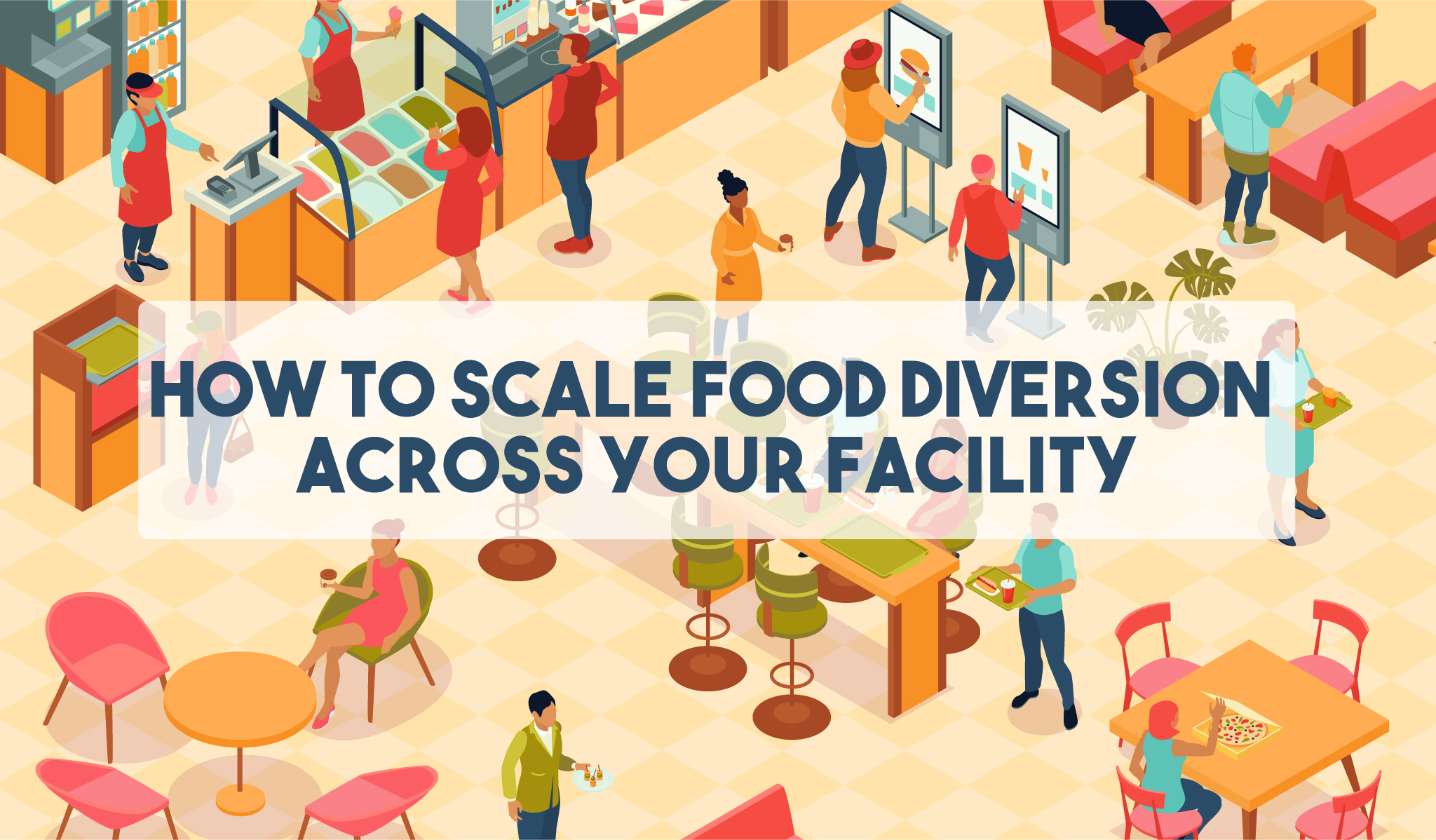
Many programs begin in food courts or cafeterias, but expansion often also requires capturing organics in less obvious places:
- Employee kitchen and coffee stations
- Meeting rooms and training areas
- Catering and events
- Back-of-house prep spaces
- Vending or retail food zones
Placement of organics bins close to the point of waste generation improves participation and reduces contamination risk.
Setting Up Collection Infrastructure for Success
Scaling food diversion for high participation and low contamination requires designing stations that guide behavior automatically.
Co-locate all streams
Organics bins should be placed directly beside waste and recycling bins so users can make one simple decision in one location. Placing all streams together helps ensure organics end up in the correct bin,
instead of the one that’s easiest to reach.
Use consistent visual cues
- Color coding to differentiate streams
- Standardized signage & labels
- Restrictive openings
Clear bin design and standardized signage are repeatedly cited across municipal and industry waste programs as key factors in reducing contamination.
Align Your Back-End Operations Before Expanding
A common reason programs stall: the front-end grows faster than the collection systems can handle.
Before scaling:
- Confirm accepted materials with your organics hauler
- Review pickup frequency, storage capacity, and transport logistics
- Ensure custodial workflows are realistic and plan indoor-to-outdoor routes
- Manage odors with proper liners, lids, or charcoal inserts, and schedule timely pickups
Maximize Food Recovery
Strong diversion programs:
Reduce
Prevent waste before it occurs:
- Smarter procurement quantities
- Improved food inventory rotation
- Portion planning and forecasting
Source reduction is an impactful strategy for minimizing food waste.
Donate Edible Surplus
Where regulations allow:
- Partner with food rescue groups
- Redirect safe, unused food
Donation programs reduce landfill waste while supporting community food security.
Compost Unavoidable Scraps
- Food prep waste
- Spoiled food
- Food-soiled paper
Following this layered approach ensures you capture the highest environmental and financial value from your diversion efforts.
Engage Employees and Facility Teams Early
Successful food diversion programs combine clear infrastructure with active engagement:
- Staff onboarding or refresher training
- Visible signage and reminders
- Internal sustainability campaigns
- Custodial team input on workflow
Participation rises when employees understand the purpose of programs and see leadership support. Custodial teams are key partners, monitoring contamination and ensuring smooth day-to-day operations.
Pilot First, Then Scale Strategically
Instead of rolling out facility-wide immediately:
- Launch in one high-volume zone
- Monitor contamination and participation
- Adjust signage or container placement
- Document results
- Expand gradually
Pilots reduce risk, build internal confidence, and generate real performance data that strengthens executive buy-in.
Track Performance and Share Results
Measure:
- Diversion rate
- Contamination levels
- Hauling costs
- Landfill Reduction
- Participation Trends
Tracking results allows organizations to demonstrate progress toward ESG or sustainability goals and identify areas for improvement.
Public or internal reporting also reinforces employee participation and keeps program visible.
Conclusion: Scaling Food Diversion Requires Systems Thinking
Expanding food diversion in commercial environments means building a connected system:
- Data-driven planning
- Intuitive indoor collection design
- Aligned hauling logistics
- Employee engagement
- Continuous measurement and improvement
When these elements work together, food diversion becomes a reliable operational practice – helping organizations cut costs, reduce environmental impact, and move closer to zero-waste goals.
Key Takeaways
- Start with data: Conduct a waste audit to understand where food waste is generated and how much can be recovered.
- Place bins thoughtfully: Co-locate organics, waste, and recycling bins near points of waste generation to make proper sorting easy.
- Design for behavior: Use consistent signage, color coding, and clear bin design to reduce contamination and guide participation.
- Align operations: Ensure hauling, storage, workflows, and odor management are scaled to match program growth.
- Follow the food recovery hierarchy: Prioritize reducing waste, donating edible surplus, and composting unavoidable scraps.
- Engage employees and custodial teams: Training, campaigns, and workflow input increase participation and program reliability.
- Pilot before scaling: Test new zones, monitor results, and adjust before expanding facility wide.
- Track and report performance: Measure diversion, contamination, and participation to identify improvements and demonstrate impact.
Other Sources
Performing a Waste Audit – Busch Systems Blog
Zero Waste Audits – Busch Systems Webinar