In Part 1 and Part 2 of this blog series, we explored why zero-waste assessments matter and how to measure program effectiveness through audits. Completing a zero-waste assessment and audit gives you an understanding of what is happening in your system, but this data alone does not drive change.
The next step is turning insights into an actionable plan that clearly defines priorities and implementation pathways, transforming data into strategic direction.
An effective zero waste or sustainable materials management plan provides guidance for everyday choices, enabling teams to make informed purchasing decisions, design systems that prevent as well as recover waste, and prioritize actions that deliver the most impact. The shift from analysis to action is where many zero-waste programs either gain momentum or lose traction, and where a structured plan can drive measurable progress.
Set Clear Goals and Performance Metrics
Strategic planning starts with defining what success looks like and how it will be measured. For waste and materials management, this typically includes:
- Reduction goals: Time-bound, measurable targets for decreasing total waste sent to landfill/for incineration
- Diversion targets: Benchmarks for diverting materials through reuse, recycling, and organics programs
- Intensity metrics: Measures such as waste per employee, per visitor, or per square foot can be useful to account for organizational growth
Including both reduction and diversion metrics ensures the focus remains on preventing waste, not just managing it more efficiently.
Connect Waste Goals to Broader Sustainability Initiatives
Zero waste is most effective when it is embedded within broader organizational sustainability goals and initiatives.
You can strengthen alignment by:
- Demonstrating how waste reduction contributes to climate action and circular economy objectives
- Aligning timelines and reporting cycles with existing sustainability frameworks or ESG reporting
- Apply consistent messaging, branding, and visual design across all waste-related communications
When waste initiatives clearly support larger priorities, it becomes easier to secure leadership buy-in, funding, and cross-departmental support.
Organize Actions into Strategic Themes
Once priorities are established, group actions into clear themes to support implementation and accountability.
Purchasing and Procurement
- Integrate waste-reduction criteria into procurement policies
- Prioritize durable, reusable, and repairable products
- Phase out items that consistently end up in landfill
Operations and infrastructure
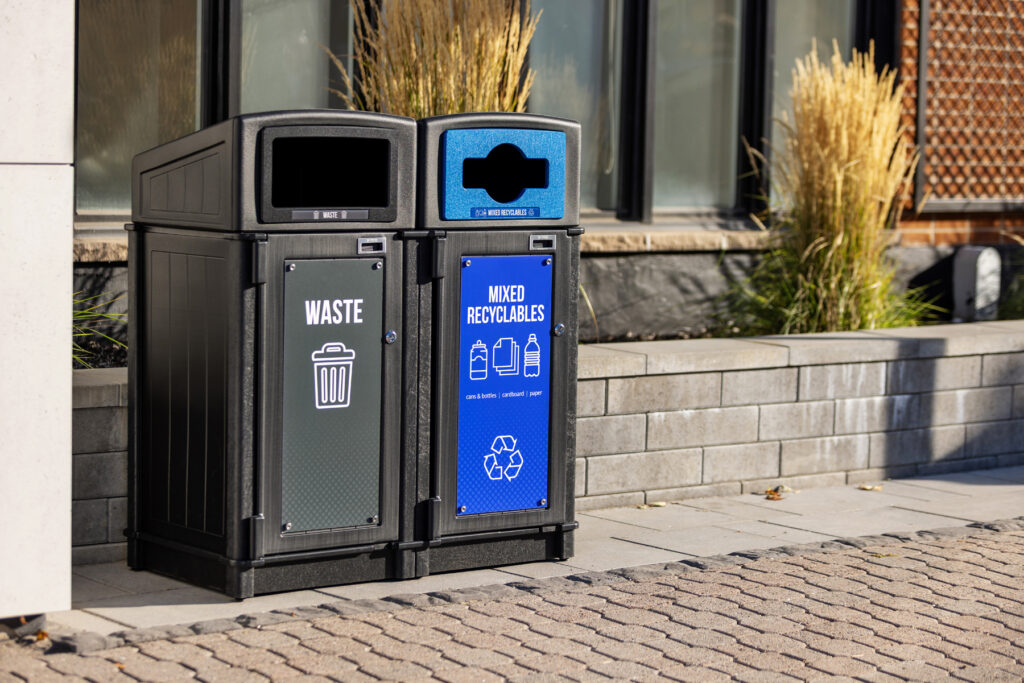
- Standardize signage and bin stations (co-locate streams) & utilize color coding of streams and clear labels for consistent user experience
- Ensure infrastructure supports and can capture target material streams (e.g. organics, specialty recycling) with proper bins and hauler agreements
- Optimize collection and storage logistics
Engagement and behavior change
- Develop clear, consistent messaging on how to sort and dispose of materials correctly
- Tailor communications to different audiences (staff, visitors, tenants)
- Use ongoing reminders, feedback, and nudges to build lasting habits
- Celebrate positive actions & encourage friendly competition to increase participation
Data, monitoring, and reporting
- Define what will be measured (diversion, reduction, waste intensity, etc.)
- Establish routine data collection and review processes
- Share results internally to maintain momentum and accountability
For each theme, document specific actions, timelines, responsible parties, and success indicators.
Engage Stakeholders Across the Organization
Stakeholder engagement is critical for moving from plan to practice. Waste management spans multiple functions, making collaboration across departments essential.
Consider
- Forming a working group with facilities, procurement, operations, communications, and program representatives
- Asking departments to identify actions within their control and define tracking methods
- Creating regular check-ins to share progress, challenges, and opportunities
This approach builds shared ownership and embeds zero waste into everyday operations rather than treating it as a side initiative.
Prioritize Strategies and Develop an Implementation Roadmap
Not every strategy can be implemented at once. Use your assessment and audit findings to identify and prioritize actions based on:
- Impact on waste reduction and diversion
- Feasibility and cost
- Alignment with organizational priorities
- Stakeholder readiness
Then, translate priorities into a phased implementation plan with short -, medium-, and long-term actions.
Build in Iteration, Learning, and Benchmarking
A strategic plan should be a living document. As systems change and data improves, priorities and strategies should evolve.
Plan to:
- Review performance regularly against targets
- Pilot new initiatives before scaling
- Benchmark performance against peers and industry best practices
- Update goals and actions as new opportunities emerge
Continuous improvement is essential for long-term zero-waste success.
Consider Equity, Wellbeing, and Resources
An effective zero-waste strategy goes beyond environmental outcomes. It also considers people and resources.
Ask:
- How will new systems impact frontline staff and service providers
- Are infrastructure and communications accessible and inclusive
- What funding, staffing, and equipment are required – and how will they be secured
Addressing these factors early improves feasibility, resilience, and long-term adoption.
Turning Insight into Impact
Assessments and audits provide clarity. Strategic planning turns that clarity into coordinated action. By setting measurable goals, engaging stakeholders, prioritizing strategies, and building in continuous learning, organizations can move from understanding their waste to actively reducing it.
Key Takeaways
- Build on data from Parts 1 and 2: Waste audits and assessments provide clarity, but action is what drives measurable results.
- Set clear, measurable goals: Define reduction, diversion, and intensity targets to guide decisions and track progress.
- Align with broader sustainability priorities: Embed waste initiatives into climate, circular economy, and ESG objectives to strengthen impact and leadership support.
- Organize actions into strategic themes: Purchasing, operations, engagement, and data management provide a structured way to implement and track progress.
- Engage stakeholders across functions: Cross-department collaboration ensures ownership, accountability, and integration into daily operations.
- Prioritize and phase implementation: Focus on high-impact, feasible actions first, and develop short-, medium-, and long-term plans for sustainable adoption.
- Iterate and benchmark: Continuously review performance, pilot new initiatives, benchmark against peers, and adjust strategies as systems and data evolve.
- Consider people and resources: Evaluate impacts on staff, accessibility, equity, and resourcing to improve feasibility and long-term adoption.
- Turn insight into action: A structured, living zero-waste plan transforms understanding into real environmental and operational impact.
Other Sources
Part 1 Blog: Why Assessments Matter for Zero Waste Programs
Part 2 Blog: How to Audit and Assess Program Effectiveness