
The roar of the crowd, the smell of fresh popcorn, and the thrill of watching your favorite team score makes game days buzz with energy from start to finish. Yet in just a few hours, these events can generate large amounts of waste. From concession stands and merch shops to tailgating, much of the waste produced at stadiums can end up in landfills.
But that waste doesn’t have to be just a cost. With the right approach, high foot traffic can become a significant driver of sustainability. Intentional planning, the right infrastructure, and effective fan engagement can help stadiums boost diversion rates while reducing disposal costs, recovering valuable materials, and optimizing operations – delivering measurable ROI.
Zero-waste game days aren’t reactive—they’re strategic. By designing waste out of stadium operations through reusable materials, composting, standardized packaging, and fan engagement, venues can achieve high diversion rates while saving costs and improving the fan experience.
Why Zero-Waste Programs Matter for Stadiums
Zero-waste programs aren’t just good for the environment – they provide a structured framework for reducing landfill waste, improving operational efficiency, and delivering measurable ROI at stadiums.
- Reduce waste going to landfill and environmental footprint: Keeping recyclables and organics out of landfills lowers disposal fees and greenhouse gas emissions, directly saving money on hauling and tipping fees/costs.
- Compliance and accountability: Successful waste diversion programs can help organizations meet regulations, standards, ESG goals, and sustainability certification requirements.
- Fan experience and impact: Meaningful sustainability actions can increase fan support and reinforce a positive stadium image.
- Cost Savings and Operational Efficiency: Streamlined sorting, reduced contamination, and optimized collection routes deliver measurable returns—lower disposal fees, fewer labor hours, reduced hauling trips, revenue from recovered recyclables, and predictable operations that minimize costs associated with overtime and emergency cleanups.
How Stadiums Can Boost Diversion and ROI
Here are actionable tips to help facilities maximize diversion as part of a broader zero-waste strategy and make the most of zero-waste initiatives:
1. Optimize Bins and Placement
- Strategic Placement: Place bins where fans naturally gather, including concessions, entrances, concourses, and tailgating areas. High-traffic zones often require larger-capacity or multiple bins to keep up with demand and prevent overflow.
- Align bins with collection streams: Matching bin types and quantities to your actual collection streams makes it easier for fans to sort correctly and reduces contamination.
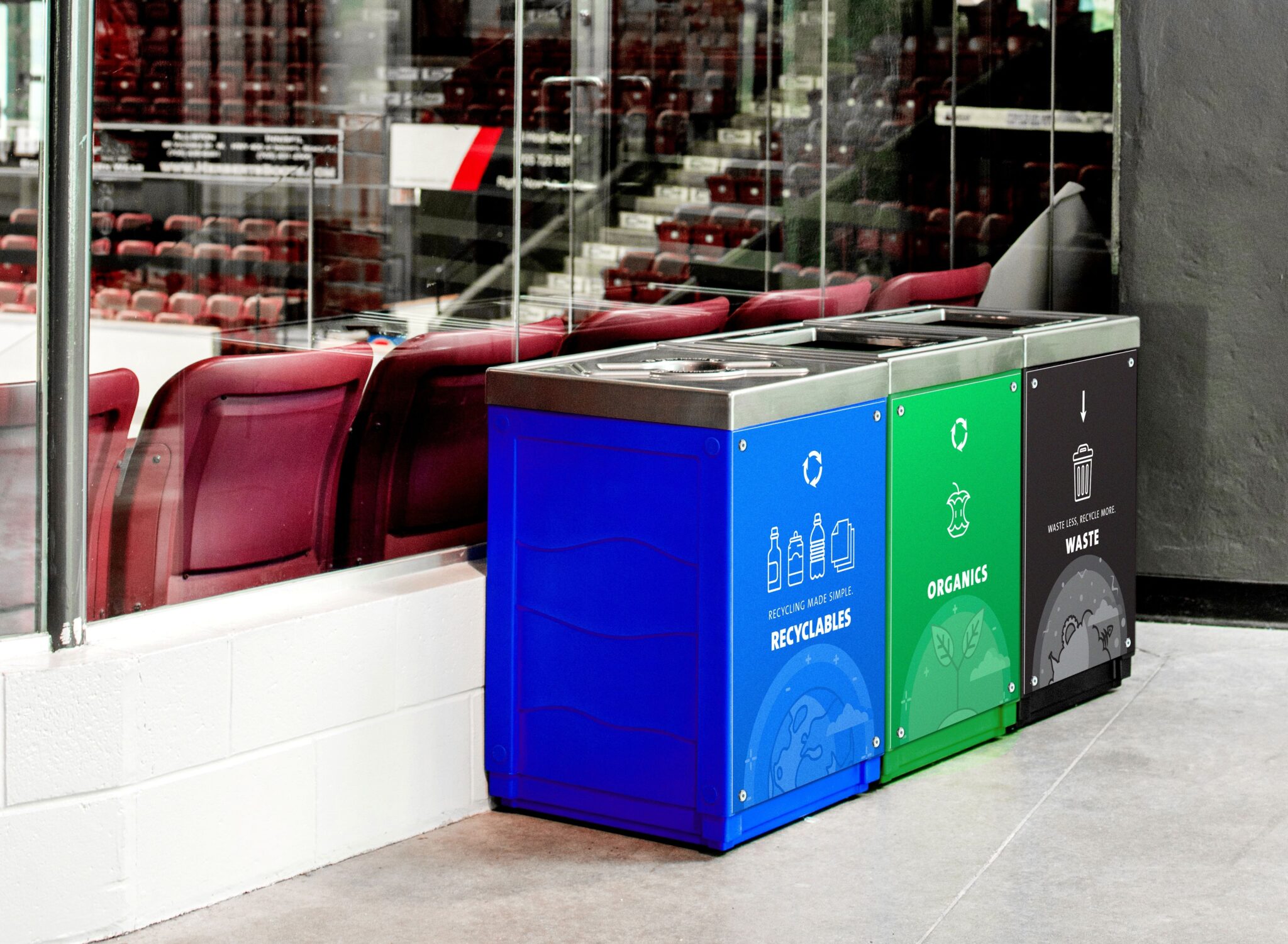
- Co-locate bins: Always place recycling, compost, and waste/trash bins together so fans can easily compare options and choose the correct stream. Single bins can increase contamination and missed diversion opportunities.
2. Clear Communication at the Bin
- Consistent colors and visual cues: Use standardized colors to differentiate each stream to help fans quickly recognize the correct bin, even in high-traffic or fast-paced settings.
- Clear labels and signage: Pair text with images of accepted items to reduce guesswork and improve sorting accuracy. Simple, highly visible signs and labels work best in crowded venues.
- Restrictive lids: Use lids with specific openings (e.g. bottle openings) to physically guide correct disposal and reduce contamination.
3. Choose Sustainable Materials
- Compostable and reusable options: Replace single-use plastics with compostable cups, utensils, and packaging, or encourage reusable containers where feasible.
- Vendor collaboration: Partner with suppliers to cut packaging and standardize sustainable materials, making sorting easier and operations more efficient.
4. Boost Fan Participation
- Staff guidance: Volunteers and staff stationed at bins can guide proper disposal and answer questions.
- Fan Rewards and Challenges: Encourage proper sorting with mobile app challenges, social media contests, or small rewards like discounts on concessions or merch. For example, fans who correctly sort waste during a game could earn points in the stadium app redeemable for a free bag of popcorn.
- Pre-event marketing/communications: Inform fans about zero-waste initiatives before they enter the stadium to set expectations and drive behavior.
5. Engage Stakeholders and Align Operations
- Continuous improvement: Collect feedback from facilities staff, vendors, and fans to identify opportunities for program improvements.
- Set sustainability standards for suppliers and sponsors: Ensure all vendors provide recyclable or compostable packaging and are aligned with zero-waste initiatives.
- Efficient collection and staffing: Coordinate teams and schedules to reduce overflow, contamination, and cleanup time.
6. Track, Analyze, and Optimize
- Data-driven decision-making: Use smart bins, collection tracking, or data dashboards to identify high-contamination items, peak waste zones, and fan behavior patterns.
- Adjust based on insights: Reposition bins, update signage, or change staffing schedules to improve diversion efficiency and ROI.
- Report results: Metrics like diversion rates, contamination rates, operational efficiency gains, and fan participation demonstrate both environmental and financial impact.
Measuring Zero-Waste Success
For managers, clear metrics make it easy to show progress:
- Overall diversion rates track how much waste is kept out of landfills.
- Many zero-waste programs aim for diversion rates of 90% or higher, making consistent measurement essential to long-term success.
- Contamination rates identify problem streams/items for corrective action.
- Fan participation levels can be measured through staff observations, sampling at key locations, app engagement, or pre/post surveys.
- ROI can be measured by tracking cost savings on disposal and hauling, labor hours saved, revenue from recovered materials, and reductions in overtime or emergency cleanups.
Regularly reviewing these metrics allows stadiums to adapt strategies quickly, justify continued investment, and maintain high diversion rates year after year.
Conclusion
Zero-waste game days prove that designing waste out of operations and engaging fans at scale can deliver both sustainability and operational performance gains. By combining strategically placed bins, clear communication, fan education, vendor standards, and data-driven insights, stadiums can reduce landfill waste, elevate fan experiences, and improve the financial bottom line.
Every game is an opportunity to turn waste into value, showing that thoughtful infrastructure and communication are as critical to success as the energy in the stands.
Key Takeaways (TL;DR)
- Bins matter: Proper placement, color-coding, restrictive lids, and clear signage and labels drive correct sorting and reduce contamination.
- Fan engagement is key: Staff guidance, incentives, and pre-game communication improve participation.
- Materials and vendors: Compostable or reusable products and standardized vendor packaging help to reduce stadium waste.
- Operations drive results: Frequent collection, trained staff, and optimized workflows prevent contamination and maximize ROI.
- Data informs decisions: Track diversion rates, contamination, and fan behavior to continuously improve programs.
- Sustainability + ROI: Thoughtful zero-waste programs reduce costs, recover valuable materials, and improve the fan experience.
Other Sources
Building a Successful Sports Venue Waste Diversion Program: 9 Essential Strategies
Webinar Recap: Recycling Under the Bright Lights
TRUE Program for Zero Waste Certification
Strategic Waste Reduction: Why Assessments Matter for Zero Waste Programs (Part 1)